Sourcing Die Casting From China
Most guides on this subject are written either by Western agencies who want you afraid, or by Chinese suppliers who want you comfortable. We are a Chinese factory, so treat the second suspicion as live and read accordingly. What follows is how the trade actually works, including the parts that do not flatter us.
The uncomfortable fact behind every story of a China sourcing disaster is that the buyer almost always had the information needed to avoid it, and did not know which questions turned it up. This page is those questions.
How do you source die casting from China without getting burned?
Sourcing die casting from China safely comes down to telling a factory from a broker and getting the right things in writing before steel is cut. Ask who cuts the tool steel, insist on speaking to the engineer not just sales, and pin down tool ownership and unconditional release terms. Sometimes a Western supplier is the better call, and an honest factory says so. Inox Die Cast is a real Dongguan factory and answers the eight questions this guide tells you to ask.
At a glance
- Most sourcing failures trace to questions the buyer never asked
- Eight questions that separate a real factory from a broker
- Get tool ownership and release terms in writing before the steel is cut
- Sometimes a Western supplier is the better choice — we say when
How the Bad Version Works
Start with the broker problem. A large share of the companies presenting themselves as die casting factories do not own a machine. They are trading companies with a good website, a responsive sales team, and a relationship with a workshop you will never see. This is not automatically fatal — some brokers manage production competently — but it means nobody who touches your part answers to the person you are emailing, and when a tool needs correcting, every ounce of pressure you can apply passes through a middleman whose margin depends on it not costing anything.
Then the quote that wins on price. It is common, it is deliberate, and it is not always dishonest so much as structural: a supplier who quotes what the market will accept and recovers the difference later through change orders, engineering fees, and revisions the drawing supposedly did not cover.
The tell is a quote that arrives fast, matches your target number closely, and asks you no questions. A factory that has actually studied your part comes back with objections — this wall will not fill, that boss needs a rib, this parting line will show on the visible face. The quote that asks nothing has costed nothing.
And the tooling ownership trap, which is the expensive one. You pay for a tool. Whether you own it, and whether you can physically retrieve it, are separate questions, and the second one is decided by a contract you probably did not read closely and a factory floor eight thousand miles away. Programs get held hostage this way — not by dramatic refusal, but by a tool that is somehow always mid-maintenance whenever you ask for it.

The Questions That Separate a Factory From a Broker
Ask who cuts the steel. A real factory names its tool room, tells you which machines are in it, and will show you. A broker answers with a partner's name, or with a sentence about their trusted long-term mould supplier. Neither is a crime. Only one of them is the company that can fix your tool on a Tuesday.
Ask to speak to the engineer, not the salesperson. This single request reorganises the relationship. Whoever answers your DFM questions is the person actually deciding your part, and if that person cannot be reached before the order, they will not be reachable after it. If every technical answer is relayed, ask yourself who is composing it.
Ask what they will refuse to quote. A supplier who claims every part, every alloy, every tolerance and every volume is telling you they have not evaluated any of them. We turn down parts that belong in investment casting, in machining, or in an injection mould, and we say so before the steel gets cut rather than after the trials fail. A factory with a real capability envelope knows where its edges are and will name them.
Ask what happens to the tool if you leave. The answer should be immediate, unambiguous and identical to what the contract says: the tool is yours, it is stored under your name, and it is released on request. Any hesitation, any conditional, any reference to outstanding commercial matters is your answer. Then ask about tool life and maintenance responsibility, because a tool you own that has been run to death is a tool you own.
Finally, ask about your drawings. Where do the CAD files live, who has access, does the supplier subcontract anything requiring your geometry, and what happens to the files when the program ends. The honest answer includes the word subcontract, because almost everyone subcontracts something — plating, anodising, occasionally machining. What matters is that they tell you before you find out.
What Should Be in Writing, Before the Steel Is Cut
Tool ownership and physical release terms, stated without conditions. Tool life expectation and who pays for maintenance, refurbishment and eventual replacement. First-article and sampling expectations, with the measurement method agreed rather than assumed. Scrap and rework responsibility, including who absorbs a batch that fails at your incoming inspection. Which operations are subcontracted and to whom. Packaging, labelling and Incoterms — surprisingly often the source of the first real argument. Who owns the CAD, and what happens to it afterwards.
None of this is exotic. All of it is routine to a supplier who has been through a program that went wrong, and all of it is a nuisance to one who intends to keep the ambiguity.
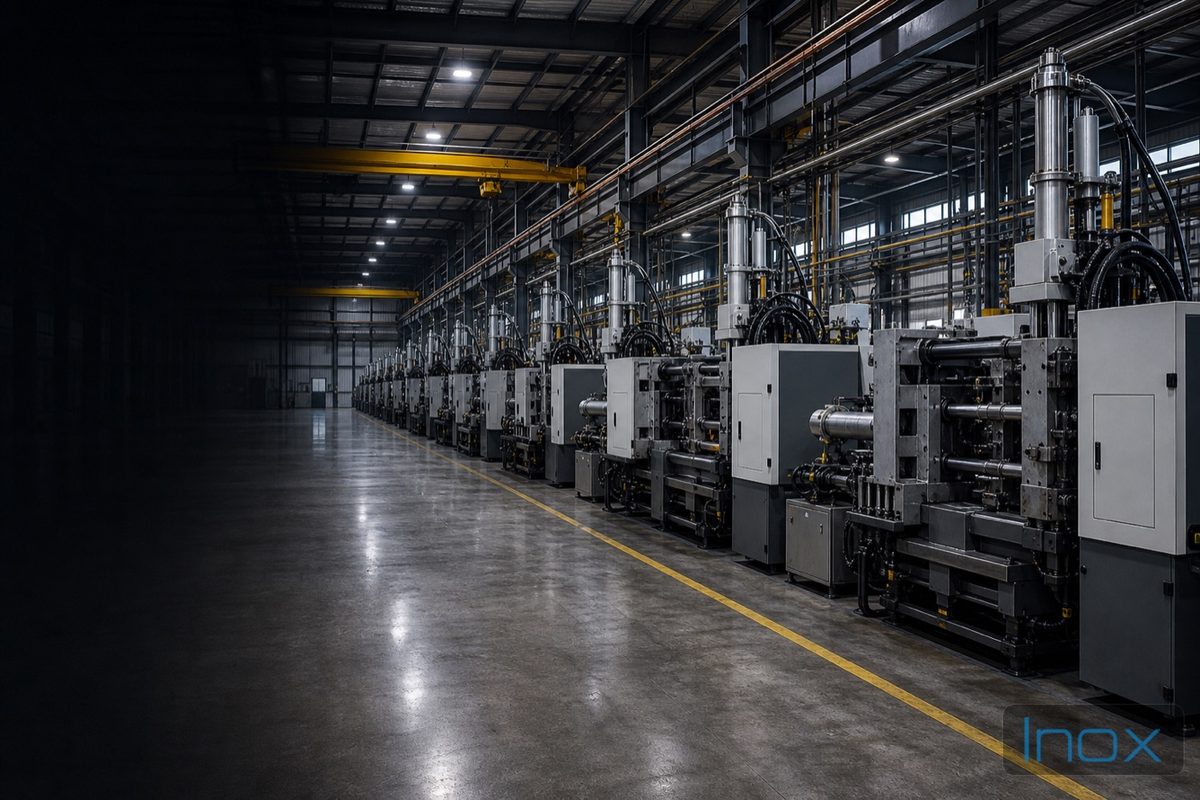
Representative application illustration — not a record of a specific customer program.
Eight Questions, and What the Answers Tell You
Ask these on the first call. You are not testing knowledge — you are testing whether the person on the line is the person who makes your part:
| What to ask | Why it exposes the truth | A real factory's answer | A broker's answer |
|---|---|---|---|
| Who cuts the tool steel? | Tool ownership of the process, not just the part | Names its own tool room and machines | Names a trusted partner |
| Can I speak to the engineer? | Whoever answers DFM decides your part | Puts an engineer on the call | Relays your questions and returns later |
| What tonnage machines do you run? | Determines whether your part fits at all | A specific list, and which cell your part lands in | Vague ranges, or whatever you need |
| What would you refuse to quote? | A real capability envelope has edges | Names processes and parts they turn away | Says they can do everything |
| If I leave, when do I get my tool? | The single most expensive ambiguity in the trade | Immediately; it is yours and stored under your name | Depends on the commercial situation |
| What is subcontracted? | Almost everyone subcontracts something | Names the plating or anodising shop | Says everything is in-house |
| Who sees my CAD files? | Tests whether IP handling exists as a practice | Names the people and what happens at program end | General reassurance about confidentiality |
| Can I visit unannounced? | A scheduled visit shows a prepared building | Yes, with a day's notice for site access | Proposes a date well in the future |
Frequently Asked Questions
When is a Western supplier simply the better choice?
More often than a Chinese factory will admit. At genuinely low volumes, the freight, duty and management overhead swallow the piece-price advantage before it arrives. For defence and export-controlled work, the question does not arise. Where a program lives or dies on a two-week turnaround for a design change, an hour's drive beats a time zone. And where your engineering team has no capacity to manage an offshore relationship, the saving is theoretical — someone still has to do that work, and their time is not free.
How should I handle tariffs and duties?
Get the classification settled before you get the quote, and never let the supplier's quoted price be the number you plan against. Rates change with the political weather, and any figure printed on a supplier's website is stale by the time you read it — which is why there are none on this one. What you should insist on is a quote whose Incoterm you understand, so that you know exactly where the supplier's responsibility ends and where landed cost begins. Ambiguity there is where budgets quietly break.
How do I protect my drawings and IP?
An NDA signed by a company you cannot sue in practice is a comfort document, not protection. What actually protects you is structural: keep the assembly knowledge distributed so no one supplier holds the whole product, know which subcontractors see your geometry, and prefer suppliers who volunteer that information rather than those from whom you extract it. Register what is registrable in the jurisdictions that matter. And be honest about how novel the part is — most die cast housings are not the thing worth stealing.
Is visiting the factory worth the trip?
Yes, and the visit tells you most in its first ten minutes, before anyone has finished being polite. Look at the tool room, because that is the part a broker cannot borrow. Look at whether the machines are running and whether the operators look at the parts. Ask to see a tool belonging to a customer who has left — how it is stored says everything about how yours will be. If you cannot travel, ask for a live walkthrough on a phone rather than an edited video.
What makes Inox different from what this page describes?
We answer our own questions. Inox is a Hong Kong company within SunOn Industrial Group, founded in 1997, casting in a 32,000 m² Dongguan factory with around 1,000 employees and an in-house tool room — we cut our own steel. Aluminum and zinc, MOQ from 1,000 pieces. The tool we build for you is yours, stored under your name, released on request. We tell you which finishing operations we subcontract. And we turn down parts that belong in another process, which is the only claim on this page that costs us money.
Where to Go Next
Ask us first
Use This Page Against Us
Take the eight questions to every supplier you are considering, including this one. The answers will sort the list faster than any quote comparison, and we would rather be chosen that way.
Last reviewed August 2026 · Inox Die Cast, Dongguan