Cold Chamber Die Casting
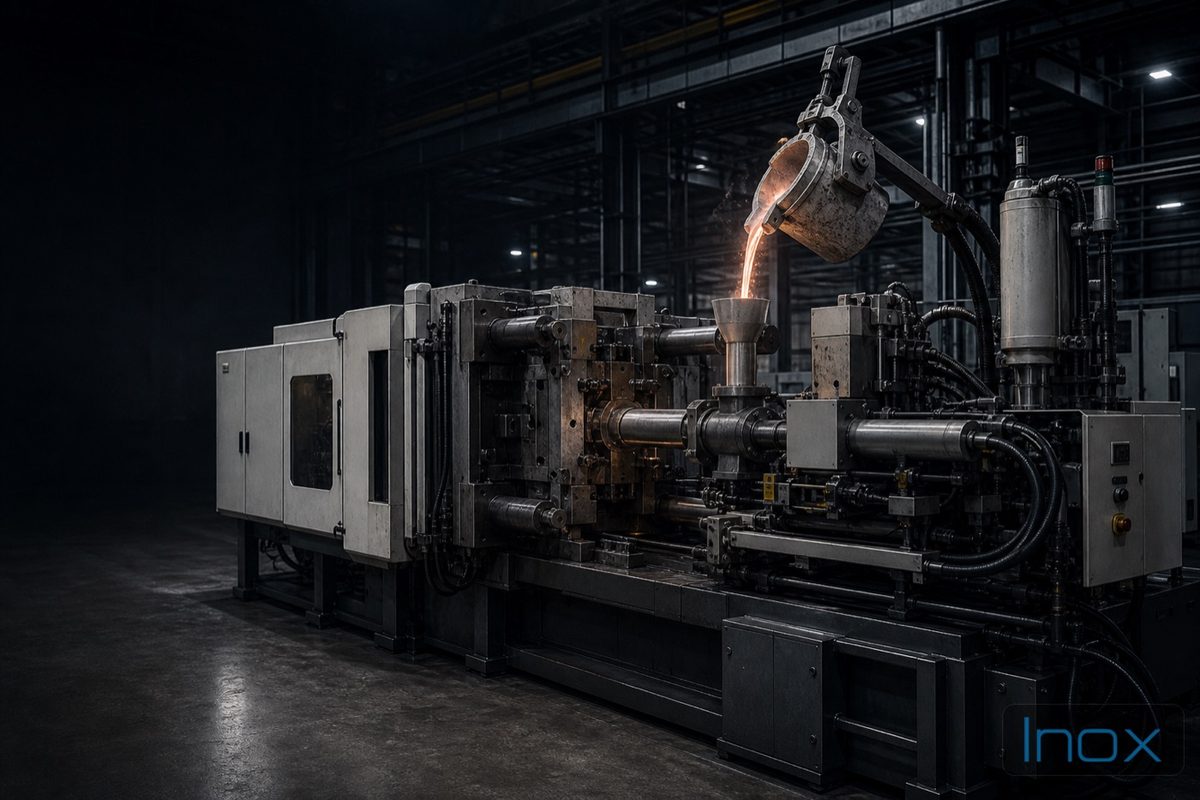
Cold chamber die casting solves a metallurgical problem: aluminum melts too hot and too aggressively to sit inside the injection system the way zinc can. So the machine keeps its distance — metal is ladled from a separate furnace into a shot sleeve for each cycle, and a plunger drives it into the die from there.
That one design change makes aluminum die casting possible at production scale, and it shapes everything buyers experience about the process: the cycle rhythm, the machine sizes, and the part types that thrive on this route. This factory runs cold chamber lines alongside hot chamber — the alloy decides which row your part visits.
What is cold chamber die casting, and what is it for?
Cold chamber die casting ladles molten metal into a cold shot sleeve for each shot, which lets the machine tolerate aluminum's high casting temperature that would destroy a hot-chamber system. It suits aluminum (and magnesium) and larger, more structural parts, at the cost of slower cycles than hot chamber. Inox Die Cast runs cold chamber for aluminum in Dongguan, with the tool room and inspection in the same building.
At a glance
- Melt ladled per shot, so the machine tolerates aluminum's temperature
- Larger parts, structural sections, higher clamping forces
- Aluminum's process: housings, frames, heat sinks
- Slower cycles than hot chamber, traded for the metals it can run
What Cold Chamber Means for Your Part
It means aluminum, first and foremost. Everything aluminum brings — the strength-to-weight ratio, the thermal conductivity that turns housings into heat sinks, the corrosion behavior that survives outdoors — arrives through a cold chamber machine. When your part's function says aluminum, this is the production route, full stop.
It means larger parts, too. Cold chamber machines are built in tonnages that hot chamber configurations never reach, so bigger housings, frames and structural components belong here regardless of the alloy conversation. The machine's clamping force must beat the injection pressure across your part's projected area — one of the quiet calculations behind every quotation.
The ladle transfer costs some cycle time versus hot chamber, and each shot's metal makes a short open-air journey — which is why process discipline matters more here: sleeve condition, ladle timing, metal temperature at the moment of injection. A factory that runs cold chamber well is displaying exactly the discipline your program will live on. Ask any candidate supplier how they control shot-to-shot metal temperature; the answer is a window into everything else.
The economics keep HPDC's shape — tooling investment amortized over volume — with aluminum tooling wearing faster than zinc tooling under thermal stress. Expected tool life is stated at quotation, and scheduled maintenance by our in-house tool room is how year-five castings keep measuring like year-one.
Cold Chamber Process Control
Metal temperature at injection, shot velocity profile, intensification pressure and die thermal balance are established at tooling trial and held in production. Porosity control — aluminum casting's perennial subject — is designed in through gate and overflow placement, then verified during trials by sectioning and in production by the methods your control plan names, from visual standards to leak testing where the drawing requires it. Certification scope documentation is available on request.
Parts That Belong in Cold Chamber
Motor and gearbox housings, telecom and power-electronics enclosures with cast-in fins, automotive brackets and mounts, pump bodies and fluid housings, industrial equipment frames, LED fixture bodies, appliance components near heat. The common thread: structural duty, thermal duty, or physical size — the three assignments aluminum takes and zinc declines.
Representative application illustration — not a record of a specific customer program.
Is Cold Chamber Right for Your Part?
Mostly-yes down this list means cold chamber aluminum is the route to price first:
| Question | Points to cold chamber if… |
|---|---|
| Does weight matter? | The part has a mass budget — aluminum is 40% of zinc's density |
| Does it run warm? | Service temperature or heat dissipation is in the spec |
| How big is it? | Medium to large — beyond hot chamber's comfortable envelope |
| Is it structural? | Carries load, mounts equipment, survives vibration |
| Does it live outdoors? | Weather exposure with a suitable finish system |
| What volume? | Thousands and up — HPDC economics apply as always |
Frequently Asked Questions
Is cold chamber slower than hot chamber?
Per cycle, yes — the ladle transfer adds seconds that hot chamber's immersed system never spends. But the comparison is mostly academic: your alloy choice assigns the machine, and parts that need aluminum cannot take the hot chamber discount anyway. Within cold chamber, cycle time is engineered through cooling design at the tooling review.
How do you control porosity in aluminum castings?
By design first: gate position, flow paths, overflows and venting are planned at the tooling stage so the last metal to freeze lands outside critical zones. Then by verification: trial sectioning, and in production whatever your control plan specifies — visual standards, X-ray sampling arrangements where justified, or leak testing for pressure-tight parts. Porosity is managed engineering, not luck.
What size parts can your cold chamber machines run?
From small brackets to housings sized for our machine range — the honest answer is always the specific one, because machine fit depends on projected area and shot weight, not just part length. Send the model with the RFQ and feasibility comes back with the quote, including which machine class your part would run on.
Can cold chamber parts be thin-walled like zinc parts?
Aluminum goes usefully thin with good design — short flow lengths, generous gating, ribs supporting large panels — but it will not match zinc's extremes. If your design lives or dies on minimum wall thickness, the aluminum-vs-zinc comparison is the conversation to have before the tooling conversation.
Where to Go Next
Cold chamber review
Put Your Aluminum Part on the Right Machine
Send the model, the weight and the volumes. The review returns machine fit, tooling direction and the porosity plan — the three things aluminum programs live on.
Last reviewed August 2026 · Inox Die Cast, Dongguan