Automotive Die Casting
Automotive programs come to die casting for one reason that outranks the others: mass. Every kilogram an aluminum bracket saves against a steel fabrication pays back in fuel economy or battery range for the vehicle's whole life. Inox Die Cast supplies automotive die castings factory-direct — with the tooling, machining and documentation discipline the industry's approval processes expect.
This page covers what die casting has to solve in vehicles, which parts typically convert, and how a supplier without a broker in the chain changes program risk.
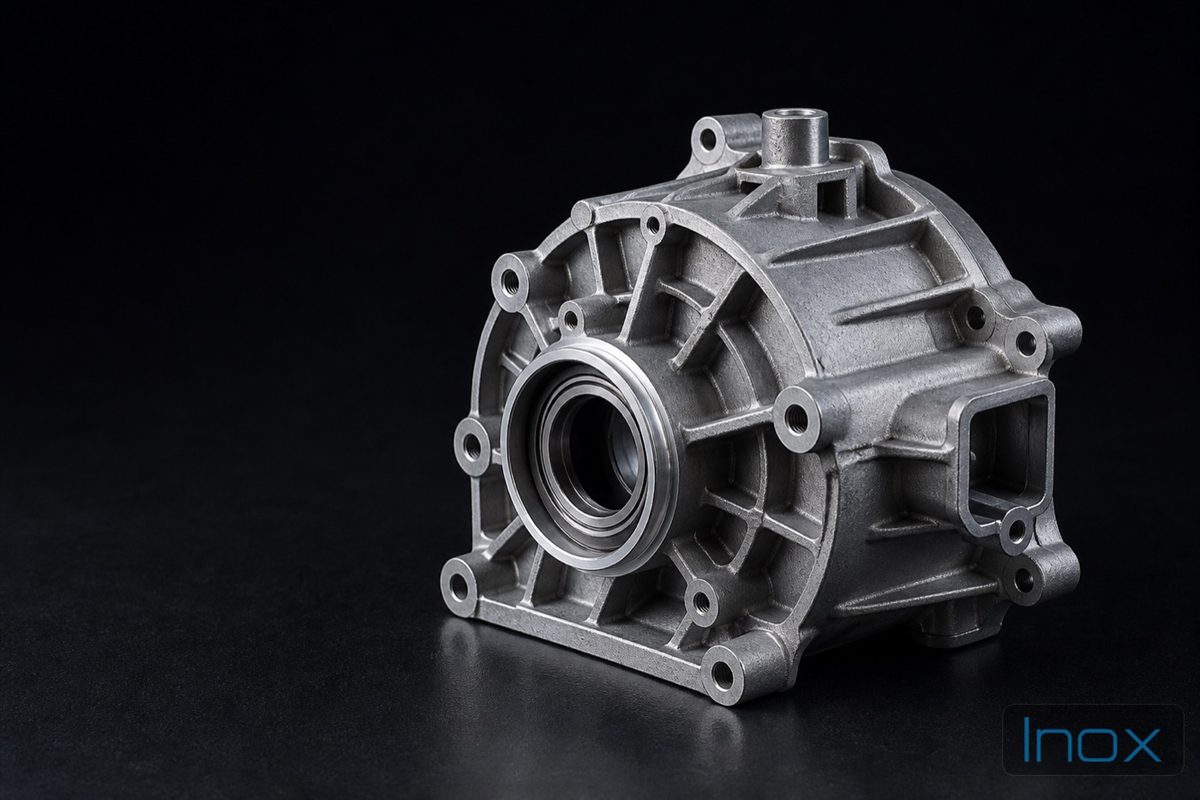
What does die casting do for automotive parts?
Automotive die casting produces aluminum and zinc components that trade steel's weight for cast strength — brackets, mounts, motor and inverter housings, and structural parts where every kilogram counts, especially in EVs where mass costs range. Aluminum carries structural load and sheds heat; zinc suits small plated mechanism and interior hardware. Inox Die Cast casts both, machines and finishes in-house, and prepares the first-article and process documentation automotive buyers expect.
At a glance
- Brackets, housings and structural parts converting from heavier processes
- First-article and process documentation automotive buyers expect
- Aluminum for mass and heat, zinc for small mechanism parts
- Consistency held over program life, not just at sampling
What Automotive Buyers Are Actually Solving
Lightweighting first. Aluminum castings replace steel weldments and iron castings in mounts, brackets and housings at a fraction of the mass, and near-net casting keeps the conversion economical at automotive volumes. Electrification sharpened this: motor housings, controller enclosures and battery-adjacent brackets are die casting's home turf.
Second, consolidation. A casting can merge a multi-piece welded assembly into one part — fewer joints, fewer fasteners, fewer tolerance stack-ups, fewer things to fail in the field or drift in the audit. The DFM review is where those consolidation opportunities surface, which is why sending the assembly rather than the single part often produces the better quote.
Third, supply-chain accountability. Automotive quality systems run on traceability, and a broker between you and the factory blurs every trail — who cast this lot, on which machine, against which control plan. Factory-direct, the paper answers those questions in one place: alloy certificates, process records, first-article and sampling data, all under one roof.
Documentation Automotive Programs Expect
Programs run with control plans agreed at the tooling review, dimensional reports tied to marked critical characteristics, material certificates per lot and traceable inspection records — the substance behind PPAP-style submissions, prepared to the level your program requires. Certification scope documentation is available on request as part of supplier evaluation.
Change management deserves its own mention because vehicles get facelifted and platforms get derivatives. Engineering changes route through the tool room that built the die, with first-article inspection repeated on affected characteristics and records updated in the program file — the discipline that keeps a running change from becoming a running defect. Designs expected to evolve can plan insert-based tooling from the start, and the review will suggest it where your change history warrants.
Capacity planning is stated up front: cavity count and machine assignment are decided from your annual volume and call-off pattern at the tooling review, so ramp curves and seasonal peaks are engineered into the program rather than discovered as shortages. Tell the review your honest takt, not your optimistic one — the tool lasts longer than the forecast.
Parts That Typically Convert to Die Casting
Engine and motor mounts, sensor and ECU housings, pump and thermostat housings, pulley brackets and accessory mounts, mirror and wiper components, EV motor and controller enclosures, connector shells and shielding parts in zinc. If the part is currently a steel weldment, an iron casting or a machined billet part at volume, it is worth a conversion review.
Representative application illustration — not a record of a specific customer program.
Automotive Part Types vs What Decides Them
Different vehicle parts stress different casting disciplines — this is where the review focuses by part type:
| Part type | What matters most | Casting discipline that answers it |
|---|---|---|
| Structural brackets & mounts | Fatigue life under vibration | Alloy selection, soundness at load paths, gating away from stress zones |
| Motor & ECU housings | Heat dissipation, EMI, sealing faces | Thermal design, machined sealing surfaces, cast-in fins |
| Fluid housings | Pressure tightness | Flow planning for porosity control, leak-test protocol |
| Visible trim & hardware | Cosmetics under plating | Zinc casting with cavity polish and finish planning |
Frequently Asked Questions
Can you support PPAP documentation?
We prepare the substance PPAP draws on — control plans, dimensional reports against marked criticals, material certificates and process records — to the submission level your program requires. State the PPAP level in the RFQ and the quote reflects the documentation scope explicitly, so there is no surprise at submission time.
Do you handle both aluminum and zinc automotive parts?
Yes. Aluminum carries the structural and thermal parts — brackets, mounts, housings — while zinc serves small precise components like connector shells, lock mechanisms and plated interior hardware. Both run in the same plant, which keeps mixed-metal programs on one schedule and one quality system.
What volumes do automotive programs run here?
From pilot quantities at our standard 1,000-piece MOQ through ongoing production scheduled against your call-offs. Cavity count and machine assignment are planned from your annual volume at the tooling review, so capacity questions are answered before the tool exists rather than discovered after it.
How do you control porosity on safety-relevant parts?
Porosity control is process design: gate and overflow placement, shot profile and thermal balance planned at the tooling stage, then verified — by sectioning during trials and by leak or integrity testing in production where the drawing requires it. Which verification applies to your part is agreed in the control plan, not improvised later.
Where to Go Next
Automotive program review
Put the Assembly on the Table, Not Just the Part
Send the drawing, the annual volume and the documentation level your program needs. If consolidation can delete parts from your BOM, the review will show you where.
Last reviewed August 2026 · Inox Die Cast, Dongguan