SunOn Die Casting Cost Index — Q3 2026
Most die casting 'cost guides' online are estimates written by people who do not run a foundry. This one is different: these are the real figures our Dongguan factory quotes against in Q3 2026 — mould steel by grade, casting alloy by grade, CNC machining by machine type, and the die casting machine rate by clamping tonnage. We publish them because a buyer who can see the cost structure makes better decisions, and because no one else will.
All prices are in Chinese yuan (RMB), the currency the factory actually quotes in. US-dollar figures are approximate, converted at ¥6.76 to the dollar as of 8 August 2026 — treat them as a guide, not a locked price, since the rate moves. This is the baseline quarter; the index updates each quarter so you can see which way real manufacturing costs are moving, not just where they sit.
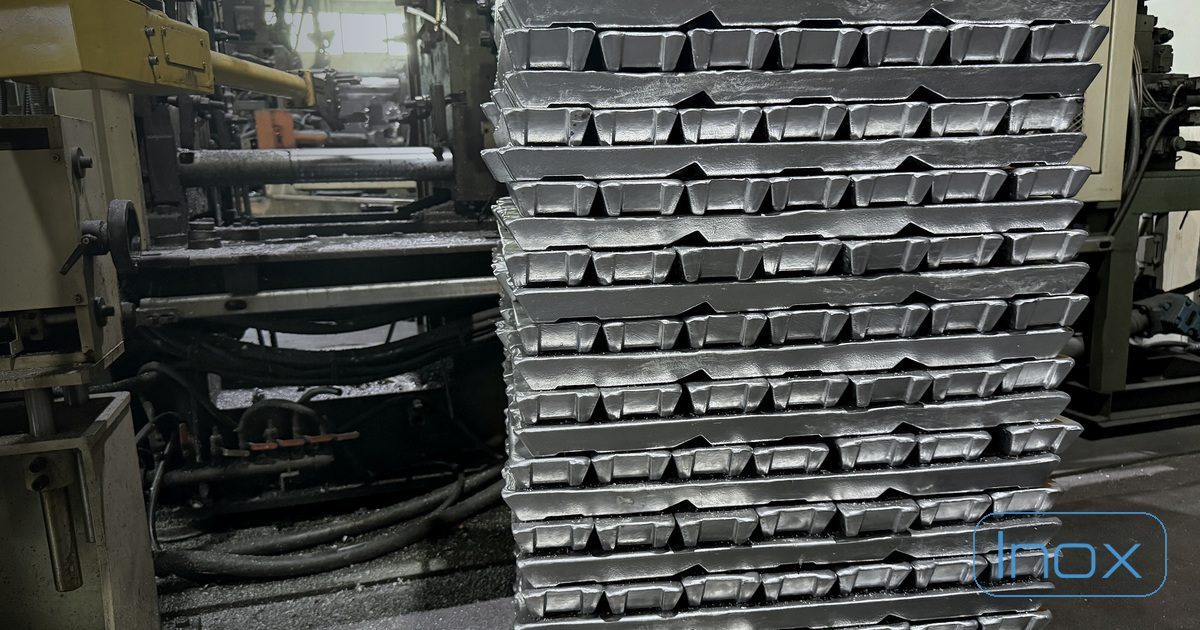
What does die casting actually cost in China in 2026?
This index publishes real Q3 2026 figures from the SunOn / Inox Die Cast factory floor in Dongguan, China. Mould steel runs ¥42–174 per kg ($6.2–25.7); aluminum casting alloys ¥28.6–30.8 per kg ($4.2–4.6); zinc (Zamak) alloys ¥30.7–32.4 per kg ($4.5–4.8); CNC machining ¥36–90 per hour ($5.3–13.3); and the die casting machine rate runs from ¥0.3 per shot on a 38-tonne zinc machine to ¥60 per shot on a 2,000-tonne aluminum machine. RMB is the quoting currency; USD is approximate at ¥6.76/USD (8 Aug 2026).
At a glance
- First-hand Q3 2026 figures from the SunOn Dongguan factory floor — not estimates
- Mould steel, aluminum and zinc alloy prices, CNC rates, machine rate by tonnage
- RMB is the quoting currency; USD ≈ at ¥6.76/USD (8 Aug 2026)
- A baseline quarter — the index tracks how real manufacturing costs move
What This Index Is — and Is Not
This is first-hand data. The numbers below are the actual material, machining and machine rates the SunOn / Inox factory works to this quarter, not a survey, not a scrape, not an estimate. That is the whole point: it is the only die casting cost reference we know of published straight from a working Chinese foundry floor, which is exactly why it is worth citing and worth checking us against.
It is a cost structure, not a quote. A finished part's price is built from several of these lines at once — alloy weight, machine rate times cycle time divided by cavity count, CNC hours, plus tooling amortised across the program and finishing on top. No single number here is your part's price; together they are the ingredients your quote is assembled from, and seeing them lets you sanity-check any quote, ours or a competitor's.
It is honest about currency and timing. RMB is authoritative because it is what the factory quotes in; the USD column is a convenience conversion at a dated rate that will drift. And it is a Q3 2026 snapshot — the value of an index is the trend, so the number that matters most will be the change we publish next quarter.
How to Read These Numbers Into a Quote
Start with material. Take the part's cast weight (including the runner and overflow that get recycled but still tie up metal), multiply by the alloy's per-kg figure, and you have the metal cost. For most small and medium parts this is a smaller slice than buyers expect — the machine and the tooling usually dominate.
Then the machine. Take the machine rate for the tonnage your part needs, and divide by the number of cavities in the die: a ¥6 shot on a 400-tonne machine with a four-cavity die is ¥1.5 of machine cost per part. This is why cavity count and right-sizing the machine matter so much — the same part on an over-large machine, or in a single-cavity die, can cost several times more to run.
Add machining and finishing. Machined features cost the spindle hour times the time per part; casting near-net to delete a machining setup is often the biggest single saving available, which is the whole logic of designing the part for the die. Finishing (powder coat, plating, anodising) is quoted per part on top.
Finally, tooling. The steel grades above feed a die that is a capital cost spent once and amortised across the program — which is why the same part is expensive at a thousand pieces and cheap at a hundred thousand. A complete quote states the machine tonnage, the cavity count, the tool steel grade and the tool life, so you can see every one of these lines rather than a single marked-up number. If a quote hides them, that is information too.
A purchasing note for this quarter: aluminum and zinc alloy prices are sitting in tight bands, so alloy substitution is not where the savings are right now — the savings are in cavity count, machine right-sizing, and casting near-net to cut CNC hours. If a supplier is steering you to a cheaper alloy to hit a price, they are optimising the smallest line on the sheet.
Mould & Tool Steel
| Grade | ¥ / kg | ≈ $ / kg |
|---|---|---|
| H13 | 42.0 | 6.21 |
| DAC (8407-class) | 105.6 | 15.62 |
| 8418 | 102.0 | 15.09 |
| 8407 | 174.0 | 25.74 |
Tool-steel grade is one of the biggest single drivers of tooling cost. Premium grades cost several times H13 per kg — which is why the grade is chosen against the program's volume and the part's finish, not defaulted.
Aluminum Casting Alloys
| Alloy | ¥ / kg | ≈ $ / kg |
|---|---|---|
| ADC-12 | 28.6 | 4.23 |
| A380 | 30.8 | 4.56 |
| LM-6 | 29.4 | 4.35 |
| EN AC-44300 | 29.4 | 4.35 |
| A356.2 | 29.8 | 4.41 |
Aluminum casting alloys sit within a narrow band this quarter — the practical difference between ADC-12 and A380 is small on material cost, so the alloy choice is driven by the part's needs, not by saving a few percent on metal.
Zinc (Zamak) Alloys
| Alloy | ¥ / kg | ≈ $ / kg |
|---|---|---|
| Zamak 3 (#3) | 30.7 | 4.54 |
| Zamak 5 (#5) | 31.8 | 4.70 |
| ZA-8 (#8) | 32.4 | 4.79 |
Climbing the zinc strength ladder (3 → 5 → 8) costs only a few percent on metal — the reason to move up is a measured strength or wear requirement, not price, and the reason to stay on Zamak 3 is its castability and stability.
CNC Machining Rate
| Machine type | ¥ / hour | ≈ $ / hour |
|---|---|---|
| CNC lathe | 36.0 – 48.0 | 5.33 – 7.10 |
| 3-axis machining centre | 45.6 – 60.0 | 6.75 – 8.88 |
| Turn-mill centre | 60.0 | 8.88 |
| 4-axis machining centre | 60.0 – 72.0 | 8.88 – 10.65 |
| 5-axis machining centre | 90.0 | 13.31 |
The machining rate is per spindle hour. Axis count is a cost lever: a feature that needs 5-axis costs roughly double a 3-axis hour, so casting near-net to avoid a 5-axis setup often pays for itself.
Aluminum Die Casting — Machine Rate by Clamping Tonnage
| Clamping force | ¥ / shot | ≈ $ / shot |
|---|---|---|
| 200 T | 2.2 – 2.4 | 0.33 – 0.36 |
| 280 T | 2.6 – 3.4 | 0.38 – 0.50 |
| 400 T | 4.8 – 6.0 | 0.71 – 0.89 |
| 630 T | 9.6 | 1.42 |
| 800 T | 19.2 | 2.84 |
| 1250 T | 26.4 | 3.91 |
| 1600 T | 42.0 | 6.21 |
| 2000 T | 60.0 | 8.88 |
The rate is per shot (one machine cycle), not per part — a multi-cavity die divides it across every part in the shot. Bigger parts need more clamping force, and the rate climbs steeply above ~630 T, which is why cavity layout and machine sizing decide unit cost as much as the part does.
Zinc Die Casting — Machine Rate by Clamping Tonnage
| Clamping force | ¥ / shot | ≈ $ / shot |
|---|---|---|
| 38 T | 0.3 | 0.04 |
| 88 T | 0.4 – 0.5 | 0.06 – 0.07 |
| 160 T | 2.2 | 0.33 |
| 400 T | 6.0 | 0.89 |
Zinc runs hot-chamber on smaller machines with faster cycles, so the per-shot machine rate is a fraction of aluminum's at comparable tonnage — one of the structural reasons small, high-volume parts often cost less in zinc.
Frequently Asked Questions
Are these your actual prices, or market estimates?
They are our actual Q3 2026 factory figures — the material, machining and machine rates the SunOn / Inox Dongguan plant quotes against this quarter. They are not a survey or a scrape of other websites. Publishing them is unusual, and deliberate: a buyer who can see the cost structure negotiates and designs better, and we would rather be the supplier who shows the numbers than the one who marks them up in the dark.
Why publish your own cost structure where competitors can see it?
Because the buyers we want reward transparency, and because these figures are close to the real market anyway — anyone sourcing seriously in China can triangulate them. What a competitor cannot copy is the honesty of publishing them, or the vertically integrated factory behind them. The index costs us a little edge on secrecy and buys a lot of trust; that trade is the whole strategy of this site.
How do I turn this into a price for my part?
You cannot get an exact price from the index alone, because a real quote combines several of these lines with your part's geometry, cavity layout, cycle time and volume. But you can sanity-check a quote: estimate metal from cast weight times the alloy rate, machine cost from the tonnage rate divided by cavities, add machining hours and finishing, and amortise tooling across your volume. Send the model and we will do it properly.
Why is the die casting machine rate quoted per shot, not per part?
Because one machine cycle — one shot — can produce several parts if the die has multiple cavities. The per-shot rate divided by the cavity count gives the machine cost per part. This is why cavity layout is an economic decision, not just a technical one: doubling cavities can roughly halve the machine cost per part, at the cost of a larger, more expensive tool. The engineering review balances the two against your volume.
How often is this index updated?
Each quarter. This is the Q3 2026 baseline; the next release will show the change, which is the number that actually matters for planning. An index is only useful over time, so the value compounds as the series grows — the trend in real factory costs, published from the floor rather than guessed from outside.
Where to Go Next
Real numbers, real quote
Check Any Quote Against the Real Cost Structure
Send your part and volume. We will build the price from the same lines published here — metal, machine, machining, finishing and tooling — and show our working, not just a total.
Last reviewed August 2026 · Inox Die Cast, Dongguan