Zamak Alloy Guide
Zamak is the alloy family that made zinc die casting what it is: fast cycles, walls thinner than any other production casting metal reaches, detail that arrives finished, and tooling that outlives its aluminum equivalents several times over. Nearly every zinc part you have handled today was Zamak of some kind.
This guide characterises the three grades we run — Zamak 3, Zamak 5 and ZA-8 — states plainly what each costs to gain, and explains why the ladder is one most parts should not climb.
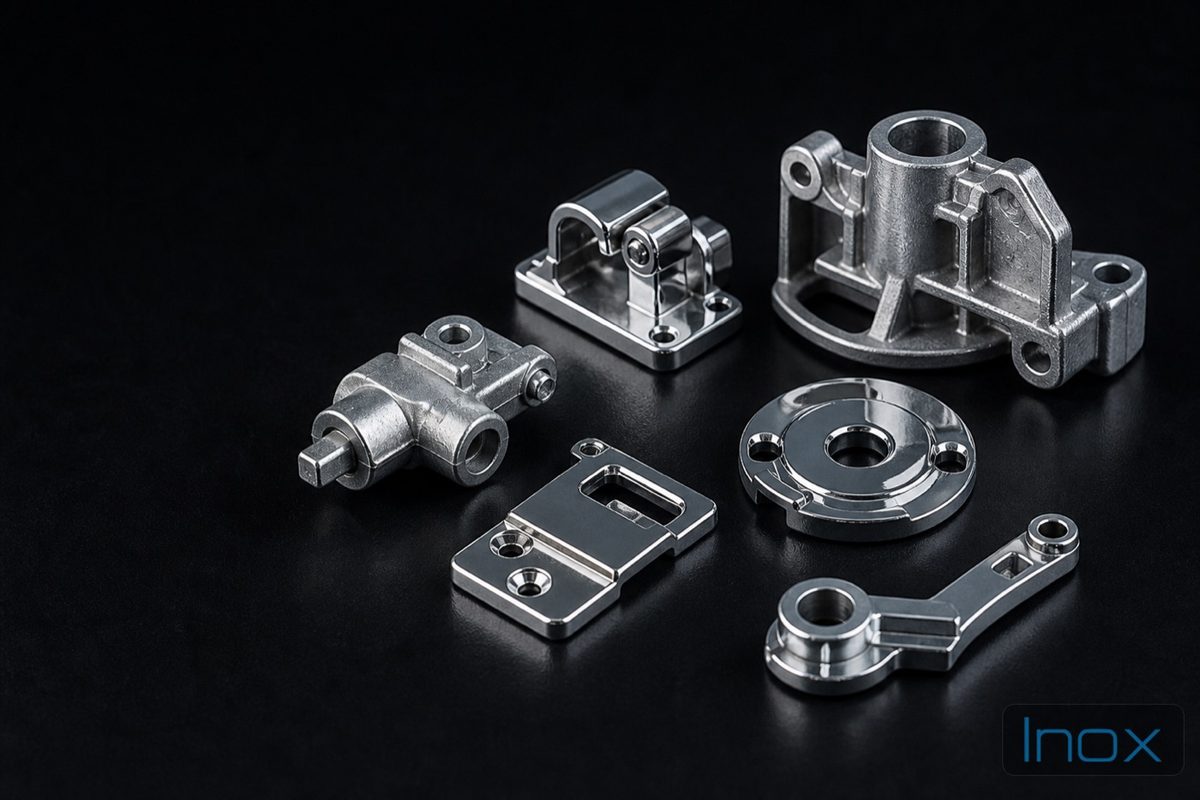
What is Zamak, and which grade should I use?
Zamak is the zinc die casting alloy family — Zamak 3 is the benchmark for castability, dimensional stability and plating; Zamak 5 adds copper for strength and hardness; ZA-8 reaches the highest strength that still runs hot chamber. Start at Zamak 3 and climb only against a measured requirement, because each rung up spends some castability. Inox Die Cast runs all three, confirmed against your loads and finish at the review.
At a glance
- Zamak 3 is the benchmark: castability, stability, the best plating substrate
- Zamak 5 adds copper for strength; ZA-8 reaches toward structural duty
- Climb the ladder only against a measured requirement
- All three run hot chamber in the same tooling class
Zamak 3 — the Benchmark, and Why It Wins
Zamak 3 is not the default because it is unambitious. It is the default because it does the two things zinc programs actually live on better than its stronger relatives: it casts with exceptional consistency, and it holds its dimensions over years of service without the slow drift that punishes precision assemblies.
It also plates like the material was invented for it — which, commercially, it nearly was. The dense, smooth as-cast skin gives decorative chrome and other electroplated finishes the substrate they want, which is why lock hardware, appliance trim and visible mechanism parts land here so reliably.
And it treats tooling kindly. Combined with hot chamber's low casting temperature and gentle metal delivery, a Zamak 3 tool can run through program volumes that would have retired an aluminum die twice over. On a part planned in the hundreds of thousands, that single fact reshapes the unit economics more than any property table.
Climbing the Ladder — Zamak 5 and ZA-8
Zamak 5 adds copper, and with it strength and hardness. It gives back a little ductility. The trade earns itself on wear surfaces and higher-load mechanism parts — hinges that swing for a decade, latches that click a hundred thousand times, gears that mesh under real torque. When service testing shows Zamak 3 marginal, this is the first rung.
ZA-8 sits at the strong end of what a hot-chamber machine can still run, which is precisely its value: it lends small zinc parts mechanical properties reaching toward structural duty while keeping zinc's fast cycles, fine detail and long tool life. When a part wants everything zinc offers but keeps failing a strength check, ZA-8 is what the review tries before conceding the part to aluminum.
What the ladder costs, at every rung: castability and dimensional serenity gradually give way as strength climbs. Reaching for a stronger grade because it reads better on a datasheet is how programs acquire problems Zamak 3 never had. Upgrade against a measured requirement, never against a feeling.
Published alloy datasheets are provided on request, and material certificates ship with production. We publish no property figures here: numbers your engineers design against belong in documents with their test conditions attached.
Where Each Grade Lands
Zamak 3: lock bodies and door hardware, connector shells, appliance fittings, plated decorative trim, general precision housings. Zamak 5: hinges, latches, gears and mechanism parts with wear surfaces or sustained loads. ZA-8: small structural brackets and mechanism components carrying loads that sit at zinc's ceiling, where an aluminum conversion would otherwise be the next step.
Representative application illustration — not a record of a specific customer program.
The Zamak Ladder, With Its Costs
Each rung buys strength and spends something. Qualitative directions, confirmed per part at the engineering review:
| Grade | What you gain | What you spend | Reach for it when |
|---|---|---|---|
| Zamak 3-type | Benchmark castability, dimensional stability, best plating substrate | Nothing — this is the reference | Nothing argues otherwise (most parts) |
| Zamak 5-type | Higher strength and hardness from added copper | Some ductility | A measured load or wear surface needs it |
| ZA-8-type | Highest strength of the hot-chamber family | Some castability and dimensional serenity | Small parts must carry loads near zinc's ceiling |
Frequently Asked Questions
What does 'Zamak' actually mean?
It is an acronym from the German names of its constituents — zinc, aluminum, magnesium and copper — and it names a family, not a single alloy. Zamak 3 and Zamak 5 differ chiefly in copper content, which is where Zamak 5's extra strength and hardness come from. ZA-8 belongs to a related zinc-aluminum series that reaches higher strength while still running hot chamber.
Should I default to Zamak 3?
Yes, and move off it only when a stated, measured requirement demands it. Its castability and long-term dimensional stability are genuine advantages that you spend when you upgrade. A supplier who steers you toward a stronger grade without naming the requirement is selling metallurgy, not solving your part.
Is ZA-8 a substitute for aluminum?
For small parts near the strength boundary, sometimes — it can preserve zinc's detail and tooling economics through a requirement that would otherwise force a metal change. For anything with a real weight budget, service heat or physical size, no. Those belong to aluminum regardless of what ZA-8's strength column suggests, and the alloy selector settles it in a minute.
Do all three plate the same?
All take decorative finishes well — zinc as a family is the classic plating substrate. Zamak 3's as-cast skin is the most forgiving starting point, one more quiet reason it dominates plated hardware. Where cosmetics decide the part, cavity polish and gate placement matter at least as much as the grade, and both are tooling decisions made at the review.
Does switching grade change my tooling?
Within the zinc family, no — all three run hot chamber in the same tooling class, so a grade change is comparatively cheap and can even wait for trial results. Switching metals is a different matter: a zinc die will not run aluminum, because shrinkage, gating and steel treatment all differ. That asymmetry is why the metal question gets settled before steel is cut.
Where to Go Next
Grade confirmation
Climb the Ladder Only When the Part Makes You
Send the loads, the wear surfaces and the finish. If Zamak 3 carries your part, you will hear why — and if it does not, you will hear exactly which rung does.
Last reviewed August 2026 · Inox Die Cast, Dongguan