Medical Equipment Die Casting
Medical equipment asks its mechanical parts for qualities that sound simple and are not: rigidity that keeps optics and sensors in alignment, surfaces that survive years of disinfection, and a paper trail that stands up to audit. Inox Die Cast supplies die cast frames, housings and mechanism components for medical and laboratory equipment with exactly that emphasis — structure, surface and traceability.
To be precise about scope: we manufacture equipment hardware — enclosures, chassis, brackets, mechanism parts. Regulatory clearance of the finished device remains with the device maker, and our role is to make the mechanical documentation easy to slot into yours.
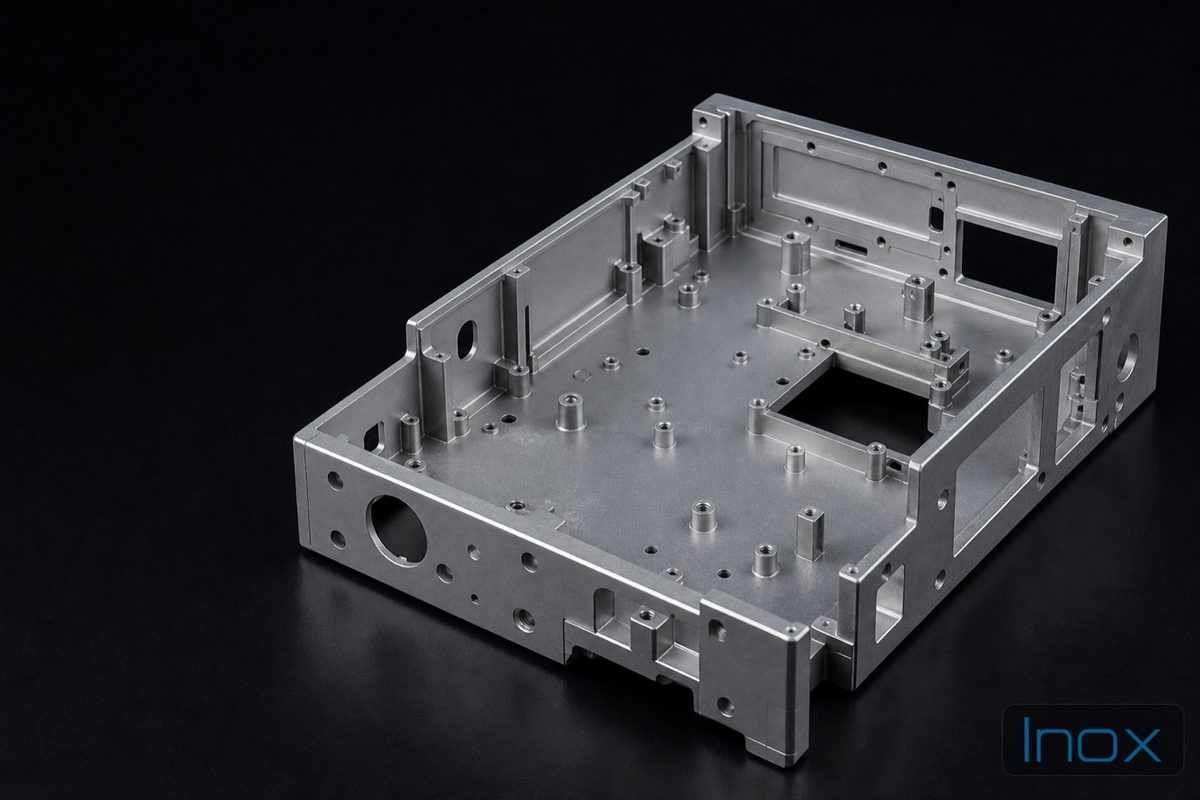
What does die casting do for medical equipment?
Medical equipment die casting makes durable, cleanable aluminum and zinc housings, frames and mechanism parts for devices and instruments where dimensions and finish both have to hold. Inox Die Cast prepares the documentation regulated customers' supplier audits expect and states plainly what it does and does not certify — a die-casting quality system built on records and measurement rather than a certificate that covers a different process.
At a glance
- Equipment housings and frames: durable, cleanable, precise where it matters
- Documentation prepared for regulated customers' supplier audits
- Zinc for fine mechanisms, aluminum for enclosures and heat
- We state plainly what we do and do not certify
What Medical Hardware Demands From Castings
Alignment first. Imaging equipment, analyzers and surgical support systems build their accuracy on rigid, dimensionally stable frames — exactly what a well-designed aluminum casting provides. One cast chassis replaces a bolted assembly of machined plates, deleting the tolerance stack-ups that misalign optics and the fasteners that loosen in transport.
Surfaces second. Hospital equipment is wiped down with aggressive disinfectants daily for years. That reality is a finishing specification: coating systems chosen for chemical exposure, applied over castings designed with smooth, drainable, crevice-conscious geometry. Because finishing runs in the same plant, the surface requirement is engineered with the part rather than discovered after it.
Traceability third. Equipment makers carry regulatory weight, and their suppliers either lighten it or add to it. Factory-direct means every question — which alloy lot, which machine, which inspection record — has one answer source, with documentation prepared to the depth your quality agreement specifies.
There is a fourth demand that rarely makes the specification sheet: program stability. Medical equipment platforms ship for many years, revisions arrive slowly and deliberately, and a supplier change mid-life triggers revalidation work nobody budgets happily. That argues for suppliers with their own tooling rooms, documented tool maintenance and the organizational patience for long programs — the profile this factory has built since 1997. The cheapest quote that cannot show you a ten-year-old tool still running is not the cheapest quote.
Mechanism feel matters too. Clinicians judge equipment partly through their hands — the latch that closes with a solid click, the adjuster that holds its position, the hinge that never develops play. Zinc die casting delivers that density and precision at production cost, which is why the small moving parts of medical equipment are classic zinc territory.
Documentation for Regulated Customers
Programs run against agreed control plans with marked critical characteristics, lot-level material certificates, first-article inspection reports and retained measurement records. Where your quality agreement requires specific inspection protocols or change-notification rules, they are written into the program at the start. Certification scope documentation is available on request as part of supplier evaluation.
Typical Medical Equipment Programs
Analyzer and diagnostic-instrument chassis, imaging-equipment frames and counterweights, pump and dispenser housings, monitor mounts and articulating-arm components, laboratory automation brackets and gear housings, and zinc mechanism parts — latches, hinges, adjusters — where fine detail and durable feel matter to clinicians.
Representative application illustration — not a record of a specific customer program.
Medical Hardware Requirements → Casting Decisions
The review translates equipment requirements into casting choices like this:
| Equipment requirement | Casting response |
|---|---|
| Optical / sensor alignment | One rigid cast frame instead of bolted plates; machined datum faces in one setup |
| Daily disinfection for years | Coating system specified for chemical exposure; smooth drainable geometry |
| Quiet, stable mechanisms | Zinc's density and detail for latches, hinges, adjusters |
| Audit-ready supply chain | One factory: alloy lot to inspection record in a single documentation trail |
| Field-service handling | Castings that survive technicians — integral bosses over glued inserts |
Frequently Asked Questions
Do you make regulatory-cleared or implantable products?
No — and any casting supplier who implies otherwise deserves suspicion. We manufacture equipment hardware: frames, housings and mechanism parts. Regulatory clearance belongs to the finished device and its maker, under whichever authority governs your market. What we provide is disciplined mechanical manufacturing with documentation designed to slot cleanly into your device master record.
Which coatings survive hospital disinfectants?
Coating systems are chosen against your named disinfection protocol — the actual chemicals and wipe frequency — rather than a generic 'chemical resistant' label. Powder and liquid systems both have suitable candidates depending on appearance requirements, and the finishing review pairs the specification with test criteria you can hold us to.
Can you meet our supplier quality agreement?
Send it with the RFQ. Control-plan depth, inspection protocols, change notification and record retention are program parameters we set at the start, and the quote reflects what your agreement actually requires. Agreeing to the paperwork after tooling exists is the wrong order — we price it in from the first conversation.
Why casting instead of machined plates or sheet metal for instrument frames?
Consolidation and stability. One casting replaces the bolted assembly, which removes tolerance stack-ups, fastener loosening and assembly labor — and at equipment volumes the tooling pays back quickly. For very low volumes machining still wins; the quote can show the crossover for your quantities.
Where to Go Next
Medical equipment review
Send the Drawing and the Quality Agreement Together
The mechanical review and the documentation commitment belong in the same conversation. You get back a casting plan priced with your audit requirements already inside it.
Last reviewed August 2026 · Inox Die Cast, Dongguan