Surface Finishing
A finish specification is a promise about how a part will look and survive — and it is only as good as the casting surface underneath it. Inox Die Cast runs painting, powder coating, plating, ED coating and screen printing within the same workflow that casts and machines the parts, so the finish is planned from the cavity polish up rather than rescued at the end.
This page maps the finish families to what they actually protect against, and explains why finishing quality is decided long before the coating line.
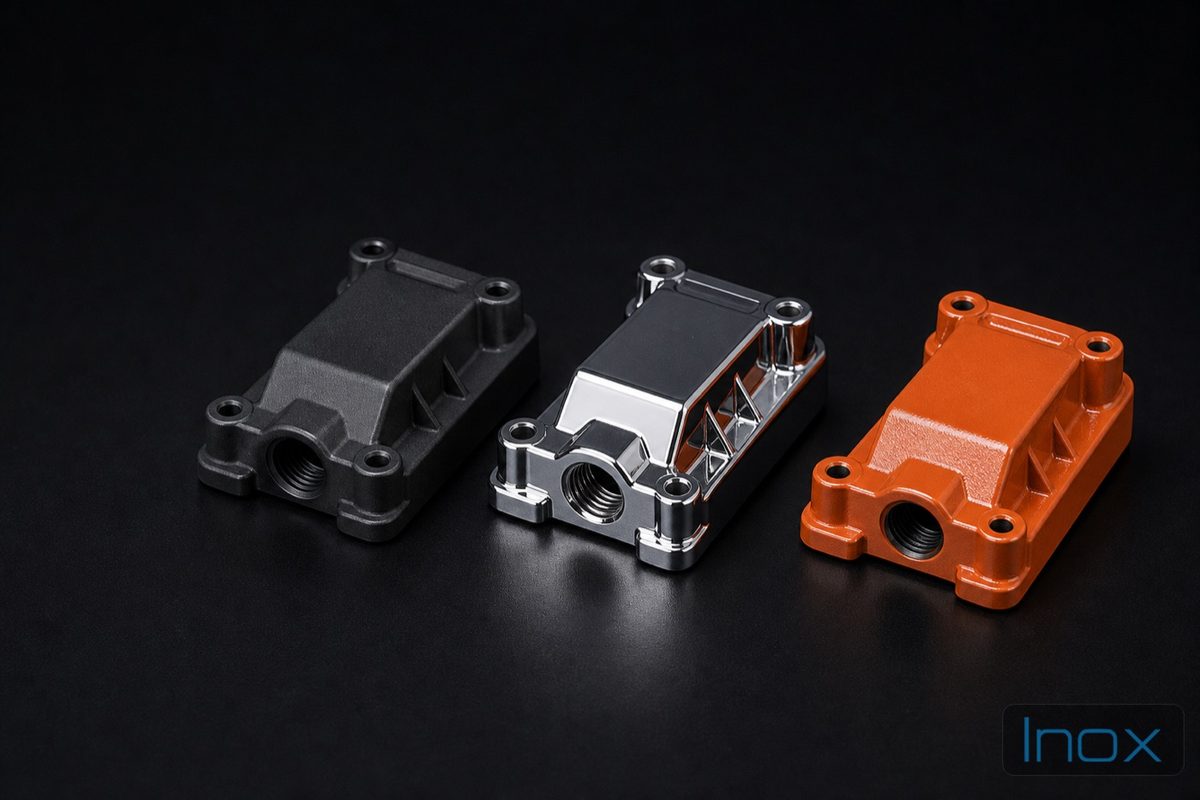
What surface finishes can die castings take?
Die castings take powder coat, wet paint, anodising, electroplating (including decorative chrome on zinc) and conversion coatings such as chromate — chosen with the alloy and service environment together. Finish quality starts in the die, because a plated or painted surface is only as good as the cavity finish beneath it. Inox Die Cast runs finishing in-house so a cosmetic defect traces back to the cavity that caused it, and names any specialist step it subcontracts rather than hiding it.
At a glance
- Finish quality starts in the die: cavity polish and gating set the substrate
- Powder coat, anodising, plating and more, matched to function
- Cosmetic standards agreed up front, then verified
- We are candid about which specialist finishes are subcontracted
Finish Quality Starts in the Die
Every finishing defect has an ancestry. A blister under powder coat traces to gas in the casting; a plating flaw maps to surface porosity; a visible ejector mark was decided when the tool was designed. Factories that only coat parts inherit these problems; a factory that casts, machines and finishes can prevent them — cavity polish, gate placement and ejector positions are chosen with the finish specification on the table.
Handling is the second quiet factor. Cosmetic parts that travel between vendors collect dings, fingerprints and mixed lots. Parts finished in the building that cast them move station to station in controlled trays, and one quality system owns the surface from first shot to final pack.
The third advantage is honest specification. Because no coating line here needs to sell itself, the recommendation follows the service environment: what exposure, what appearance, what budget. Sometimes that answer is 'as-cast with no finish at all' — zinc especially often ships bare.
Finish Verification
Finished parts check against the agreed specification: color and gloss against approved samples, adhesion by standard cross-hatch methods, coating coverage on the zones your drawing marks. Approved limit samples anchor cosmetic judgment so 'acceptable' means the same thing in month twelve as it did at first article. Records live with the program alongside casting and machining data.
One example is published in the case studies: threaded holes coming off the plating line with residue trapped in the thread form, rejecting 8% of parts at batch inspection. The fix was not a better cleaning step afterwards — it was plugging each hole with a stainless screw before plating so nothing could get in. Finishing problems are usually sequence problems.
Matching Finish to Function
Powder coat for outdoor housings and industrial equipment that needs a tough, thick skin; liquid paint where color matching and fine texture rule; electroplating — classically on zinc — for decorative hardware and wear surfaces; ED coating as a uniform corrosion base layer that reaches into recesses; screen printing for legends, logos and control-panel markings. Most programs combine two: a protective base and a cosmetic top.
Representative application illustration — not a record of a specific customer program.
Finish Families at a Glance
The specification conversation starts from what the surface must survive:
| Finish | Protects against / provides | Best on | Watch out for |
|---|---|---|---|
| Powder coating | Weather, abrasion, chemicals; thick uniform skin | Aluminum housings, outdoor and industrial parts | Thickness on tight-fit features — mask or machine after |
| Liquid painting | Color precision, texture options, thin films | Cosmetic consumer surfaces | Needs disciplined substrate prep |
| Electroplating | Decorative brilliance, wear resistance | Zinc hardware and trim | Design for drainage and racking points |
| ED coating | Uniform corrosion base, reaches recesses | Parts needing all-over protection under topcoat | It is a base layer, not the final look |
| Screen printing | Legends, logos, markings | Control panels, branded surfaces | Plan artwork with the finish stack, not after it |
Frequently Asked Questions
Which finish should I specify for outdoor aluminum parts?
Powder coating is the usual answer — thick, tough and weather-resistant — often over a conversion or ED base layer for belt-and-suspenders corrosion protection. The right stack depends on exposure severity and appearance requirements, which is exactly what the finishing review pins down before the quote commits to a specification.
Can you match our brand color?
Yes, against a provided color standard or physical sample, with approved limit samples established at first article so production judgment stays anchored. Gloss level and texture are part of the same approval. Bring the color reference early — it can affect which finish family we recommend.
Do zinc parts need finishing at all?
Often not for function — zinc's dense as-cast skin resists indoor environments well, and many mechanism parts ship bare. Finishing enters for appearance, for damp environments, or for wear surfaces. When parts do plate, zinc is the classic substrate: it is what decorative chrome was practically invented for.
How do you handle masking for selective coating?
Masked zones — threads, datum faces, electrical contact points — are identified on the drawing during the review, and masking is planned as a process step with its own check. Telling the coater which surfaces must stay bare is one of the highest-value lines you can add to a finish specification.
Can finishing be quoted separately from casting?
The value here is the combination — finish planned with the casting and handled in one workflow — so finishing is quoted as part of a casting program rather than as a standalone coating service. Within a program, the quote itemizes finishing so you can see exactly what the surface costs.
Where to Go Next
Finish planning
Define the Surface by What It Must Survive
Tell us the environment, the appearance standard and the zones that must stay bare. The finishing recommendation comes back integrated with the casting plan — one specification, one factory, one name on the certificate.
Last reviewed August 2026 · Inox Die Cast, Dongguan