Die Casting Tooling Transfer
Sooner or later a program outlives its supplier. Prices drift, quality slips, a factory changes hands or simply stops caring about a part that was never large to them. The tool is yours, or you believe it is, and moving it somewhere better looks like a procurement decision.
It is an engineering decision wearing procurement's clothes. A die is not a file you copy — it is a piece of steel that was tuned to one machine, one operator's habits and one shop's process window, and some of what made it work never got written down. This page is about what actually survives the truck, and what has to be re-earned at the other end.
Can I move my die casting tool to a new supplier?
Yes — a die casting tool can be transferred, but the steel travels while the process knowledge does not: a transferred tool is functionally one that has never run, and the receiving shop must find its own process window. Transfers fail at release, documentation or machine fit — all preventable if drawings and machine lists are checked before the tool ships. Inox Die Cast assesses fit and refurbishment from your tool and part drawings before anything moves.
At a glance
- The steel travels; the process knowledge does not
- A transferred tool is, functionally, a tool that has never run
- Transfers fail at release, documentation or machine fit — all preventable
- Send drawings before the tool: fit and risk are visible in advance
What a Tool Carries, and What It Leaves Behind
The steel travels. Cavity geometry, cores, slides, ejection layout — all of it arrives exactly as it left, which is why buyers reasonably assume the hard part is logistics. It is not.
What does not travel is the process: the shot profile, the intensification pressure, the die temperatures that stopped the part from sticking, the spray pattern and cycle time, the small corrections a tool-room hand made two years ago and never documented, the trim die that was fettled by eye.
That process knowledge is where the transfer lives or dies. A tool arriving at a new factory is, functionally, a tool that has never run. The receiving shop must find its own process window on its own machines, and the first shots will not look like the parts you have been receiving. This is normal. Treated as a surprise, it becomes a crisis.
The other thing that often fails to arrive is condition. A tool run to the end of a relationship is rarely a tool that was maintained through it. Expect worn parting-line faces, ejector pins that have galled, water lines that have scaled, slides with slop. None of this is fatal and all of it costs money nobody budgeted, which is why the receiving factory should inspect the steel before anyone commits to a timeline.

How Transfers Actually Fail
They fail at release. The incumbent supplier owns the physical tool even when the contract says you do, and a program that is leaving is a program with nothing left to bargain with. Tools go missing inside maintenance schedules, or emerge with an invoice attached for storage nobody agreed to. The time to prevent this is before the first order, in a contract that names release terms without conditions. If you are already past that point, negotiate the release as a commercial exit rather than an entitlement, and get the tool onto a truck before announcing anything.
They fail at documentation. The receiving factory needs the current drawing revision, not the one from program start, and it needs to know which of the differences between drawing and part are approved deviations rather than defects. Absent that, the new supplier will faithfully reproduce the drawing and you will receive parts that no longer fit an assembly which quietly grew around the old supplier's variation. Ask for the deviation history. Its absence is itself information.
They fail on machine fit. A die was clamped into a specific machine with a specific tonnage, tie-bar spacing, shot sleeve position and ejector pattern. A receiving shop with a different machine list may need bolster plates, a new ejector interface, or a shot sleeve change. Occasionally a tool simply cannot be run economically on any machine the new factory owns. This is discoverable in an afternoon, from a tool drawing and a machine list, and it should be discovered before the tool ships rather than after.
And they fail on expectations. A transfer is not a supplier swap that takes effect on a Monday. It is a re-qualification: inspect the steel, refurbish what needs it, mount, sample, measure, correct, sample again, and only then run production. The programs that go badly are the ones where somebody promised the assembly line a date, and every subsequent engineering judgement was made against that date rather than against the parts. Build inventory before you move, not during.
The Sequence That Works
Confirm ownership and release terms in writing before anything else. Build a bank of parts to cover the transition. Send the receiving factory the tool drawing, the current part drawing with revision history, the deviation record and the last inspection reports — before shipping anything, so machine fit and obvious risks surface first.
Ship, then inspect the tool as received and photograph everything. Agree the refurbishment scope and cost from that inspection, not from an estimate made blind. Mount, sample and measure. Correct against the measurements. Re-sample. Approve first articles against the drawing and against the deviations you accepted. Then, and only then, release production.
Where a tool turns out to be too worn or too badly matched to justify refurbishment, the arithmetic sometimes favours new steel with a corrected design — a conversation worth having openly rather than discovering three sampling rounds in.
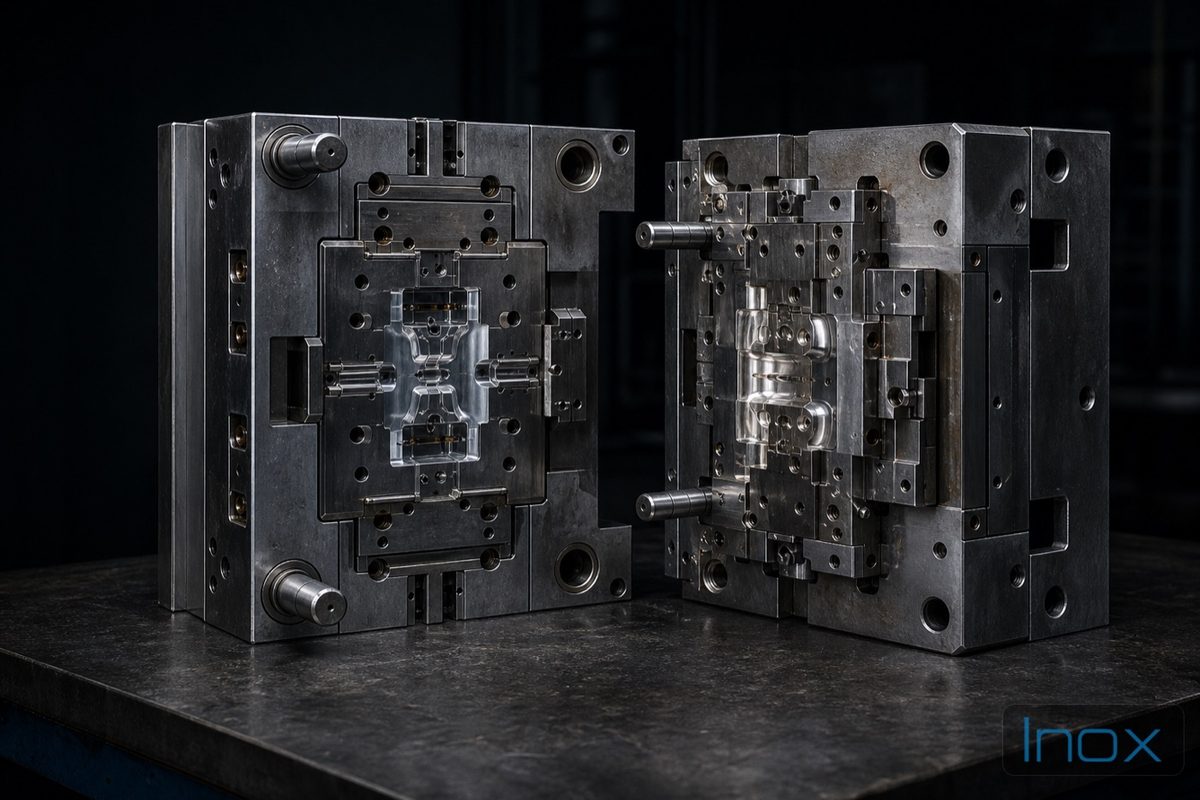
Representative application illustration — not a record of a specific customer program.
What Transfers, What Must Be Re-Proved
The distinction that explains almost every transfer surprise:
| Item | Travels with the steel | Must be re-proved | Who owns it |
|---|---|---|---|
| Cavity and core geometry | Yes | Only if damaged or worn | You |
| Slides, lifters, ejection layout | Yes | Fit and function after mounting | You |
| Shot profile and intensification | No | Entirely, on the new machine | Receiving factory |
| Die thermal profile and spray | No | Entirely | Receiving factory |
| Trim die and fixtures | Sometimes — often left behind | Verify existence before you plan | Check the contract |
| Approved deviations from drawing | Only if documented | Re-agreed with the new supplier | You, if you kept records |
| Machine interface (clamping, ejectors) | No | Checked from drawings before shipping | Receiving factory |
| Tool condition and remaining life | As-is | Inspected on receipt, before commitments | Negotiated from the inspection |
Frequently Asked Questions
My contract says I own the tool. Is that enough?
It is necessary and it is not sufficient. Ownership is a legal position; possession is a physical one, and the tool is sitting on a floor in a jurisdiction where enforcing the first against the second is slow and expensive. Read the release clause specifically: does it release on request, or on settlement of outstanding matters? The second formulation gives the incumbent a lever they will use. If you are still choosing a supplier, make unconditional release a condition of the order rather than a clause you discover later.
Will the first parts match what I was receiving?
Probably not exactly, and the difference is information rather than failure. The new factory is finding its own process window on different machines, and the first shots reflect that search. What matters is whether the parts converge on the drawing after correction, and whether the deviations you had quietly been accepting are visible now that someone is measuring against the print rather than against habit. Plan for sampling rounds. A transfer promised as a drop-in is a transfer that has not been thought about.
How worn is too worn?
The judgement is economic rather than metallurgical. Refurbishment makes sense while the corrected tool has enough remaining life to carry the program's remaining volume, and while the refurbishment cost sits well below new steel. Past that, you are paying to extend a tool whose design also predates everything you have learned about the part. We inspect and tell you which side of that line the steel is on, including when the answer is that it should not have been shipped. That conversation is cheaper before the truck than after.
Can you transfer a tool built by another factory in China?
Routinely, and it is a large part of why programs arrive here. The practical questions are the same regardless of origin: can we get the tool released, does it fit our machine list, what condition is it in, and does a drawing exist that the tool actually matches. Origin matters less than documentation. A well-documented tool from an unknown shop transfers more smoothly than an undocumented tool from a famous one.
What do you need from me to assess a transfer?
The tool drawing, the current part drawing with its revision history, recent inspection reports, any record of approved deviations, the annual volume, and photographs of the tool as it currently sits — parting faces, ejector side, water connections. From that we can tell you whether the tool runs on our machines, what refurbishment is likely, and where the risks are, before anyone commits to a date. If the honest answer is that new steel serves you better, you will hear that too.
Where to Go Next
Transfer assessment
Send the Drawings Before You Send the Tool
Machine fit, likely refurbishment and the real risks are all visible from a tool drawing, a part drawing and a few photographs. Find out before the steel is on a truck.
Last reviewed August 2026 · Inox Die Cast, Dongguan