Plastic to Metal Conversion
Products outgrow plastic for predictable reasons: heat that warps it, loads that crack it, shielding it cannot provide, or a market that stopped believing it feels premium. Plastic-to-metal conversion — usually to die cast aluminum or zinc — is how those products graduate without redesigning from scratch.
This group manufactures both plastic injection moldings and die castings, which gives this guide an unusual property: no side to take. Here is when conversion genuinely pays, when plastic deserves to stay, and how the switch is engineered when it is real.
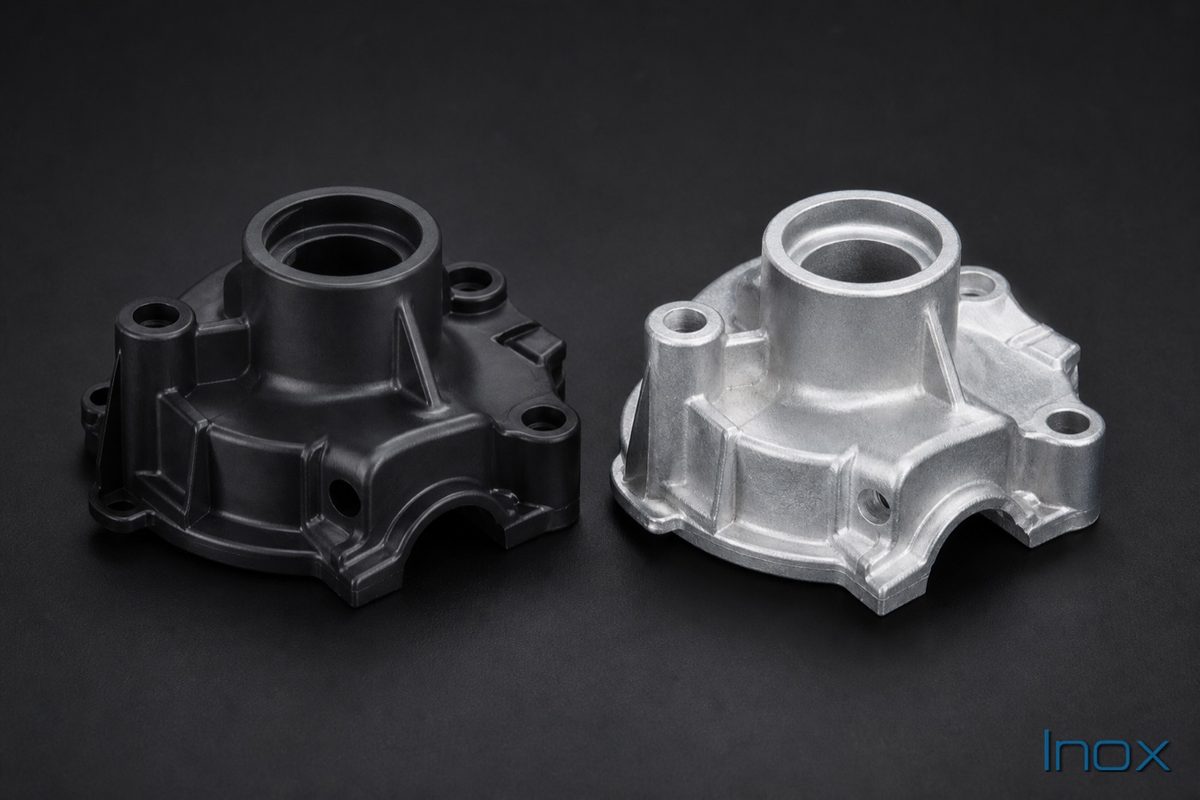
When should you convert a plastic part to die casting?
Convert plastic to metal die casting when the part needs more stiffness or strength, better heat resistance or dissipation, EMI shielding, a premium feel, or better dimensional stability than plastic gives — and when volume justifies a steel die. Conversion is a redesign, not a straight copy: walls, ribs and draft change for metal. Zinc's long tool life often makes the economics closer than teams expect. Inox Die Cast reviews whether your plastic part is a conversion candidate.
At a glance
- The five triggers that actually justify a metal conversion
- Conversion is redesign, not translation of the plastic geometry
- Zinc's tooling life makes the economics closer than most teams expect
- Conversions concentrate in housings, frames and cosmetic hardware
The Five Triggers That Justify Conversion
Heat is the loudest. As electronics densify, plastic enclosures become thermal prisons; a cast aluminum housing turns the enclosure itself into the heat sink, with fins formed in the die at no per-part premium. If your thermal engineer keeps adding vents and your plastic keeps creeping near hot components, the trigger has fired.
Structure is second: glass-filled plastics carry real load until fatigue, creep under sustained stress and impact brittleness catch up. A zinc or aluminum casting holds threads that don't strip, bosses that don't crack at the third service visit, and stiffness plastic reaches only with metal inserts — which are themselves a sign the material is asking to change. Shielding is third, and binary: metal enclosures are EMI shields by existence; plastic needs conductive coatings and gaskets that add cost and fail audits.
The quieter two: perceived quality — mass and coldness read as premium in the hand, which is why flagship products cast their visible hardware — and dimensional stability across temperature and humidity, where plastic's movement breaks precision assemblies and castings simply hold.
When plastic should stay: genuinely cost-driven parts with none of the five pressures, complex living hinges and snap architectures native to polymers, transparency, or weight budgets metal cannot meet. Conversion is a tool, not a destiny — and we mold enough plastic to say so without anxiety.
Conversion Is Redesign, Not Translation
The classic conversion failure is photocopying plastic geometry into metal. The materials want different things: plastic's ribs and walls follow molding rules; a casting wants its own wall uniformity, draft scheme, radii and boss design — usually thinner walls than the plastic needed, because metal is stiffer per millimeter. Fastening changes too: self-tappers give way to machine screws in tapped holes or inserts; snap fits become mechanical latches or spring elements. Done properly, the converted part is frequently lighter-walled, more consolidated and more serviceable than its plastic ancestor — done by photocopy, it is a heavy expensive disappointment. The DFM review is where the translation happens correctly.
Tolerances translate favorably, as a rule: die castings hold dimensions plastic parts drift away from with temperature and moisture, so assemblies that fought stack-up problems in polymer often simply stop having them in metal. But the finish specification needs rewriting from scratch — molded-in color and texture become coating and plating decisions, with masking zones and appearance standards that deserve the same early attention the geometry gets.
Where Conversions Concentrate
Power electronics and telecom enclosures chasing thermal headroom; motor housings and gearbox cases that outgrew glass-filled nylon; premium consumer hardware upgrading the touch surfaces to plated zinc; industrial handheld equipment whose drop-test failures got expensive; RF assemblies replacing coated-plastic shielding with the real thing. The pattern: the plastic part was correct at launch, and the product's success outgrew it.
The conversions that never should have happened share a pattern too: a metal part specified for prestige alone, carrying no thermal, structural or shielding duty, whose weight then cascaded through shipping costs and wall-mount hardware. The five triggers exist to prevent exactly that — conversion should be pulled by a physical problem, not pushed by a material fashion. When the review finds no trigger, staying plastic is the recommendation you will get.
Representative application illustration — not a record of a specific customer program.
Conversion Readiness Checklist
Score honestly — three or more 'yes' answers and the conversion review is worth a drawing:
| Question | Yes means |
|---|---|
| Is heat limiting the product? | Thermal trigger — aluminum's home game |
| Are bosses, threads or clips failing in service? | Structural trigger |
| Is EMI compliance costing coatings and gaskets? | Shielding trigger — metal is the shield |
| Does the market read the product as cheap? | Perception trigger — zinc's home game |
| Do precision assemblies drift with temperature? | Stability trigger |
| Is lifetime volume in the thousands? | The tooling economics will close |
| Can fastening and assembly be revisited? | The redesign can do its job properly |
Frequently Asked Questions
How much heavier will the metal part be?
Less than the raw density ratio suggests — metal's stiffness lets walls thin dramatically, and aluminum in particular often lands closer to the plastic part's weight than buyers expect. Zinc conversions accept more mass in exchange for detail and feel. The review returns actual projected weights from the redesigned geometry, not from density arithmetic.
Will conversion cost more per part?
Usually yes on the piece price, before counting what disappears: EMI coatings, metal inserts, heat sinks and their assembly, field failures, returns. Honest conversion math compares systems, not parts — and sometimes it says stay plastic, which we can say credibly because our group molds plastic too.
Can one product convert only some parts?
That is the normal pattern: the thermally or structurally stressed parts convert, the cost-driven internals stay polymer, and the product becomes a mixed-material assembly. A group that both molds and casts can supply and coordinate both sides of that split under one engineering conversation.
What does the conversion review need from us?
The current plastic part's model, the failure or pressure that triggered the question (heat numbers, field-return story, compliance issue), lifetime volume, and the assembly it lives in. Back comes the material recommendation, the redesign direction, projected weight and the tooling-inclusive economics — enough to decide with evidence.
How long does a typical conversion take, drawing to production?
The redesign and review phase moves as fast as decisions do — usually a few working sessions across a couple of weeks when the trigger data arrives complete. Tooling then follows the normal die casting timeline stated in the quotation, and validation parts can bridge from machined prototypes while steel is cut. The schedule realism you want: conversion is a quarter-scale project, not a week and not a year, and the quotation states your program's actual dates rather than a brochure promise.
Does the plated-cosmetic route change the conversion?
It changes the metal choice: parts converting for premium feel usually land in zinc, whose dense as-cast skin takes decorative chrome and other electroplated finishes better than any coating on plastic ever managed. The conversion review flags cosmetic zones early so cavity polish, gating and ejector placement protect the faces your customer will touch — decisions that cost nothing at design time and everything after.
Where to Go Next
Conversion review
Bring the Plastic Part and the Problem It's Causing
Heat, cracks, EMI or feel — name the pressure. The review returns the metal direction, the redesign plan and system-level economics, from a group with no material bias to defend.
Last reviewed August 2026 · Inox Die Cast, Dongguan