Zinc Die Casting
Inox Die Cast is a zinc die casting manufacturer specializing in small, detailed components where the casting has to arrive nearly finished: thin walls, crisp edges, smooth surfaces ready for plating. Zinc runs in hot-chamber machines with fast cycles and gentle treatment of tooling, which changes the economics of high-volume precision parts.
This page covers where zinc beats aluminum and machining, how the common zinc alloys differ, how the castings are controlled, and what to expect from a zinc program run factory-direct.
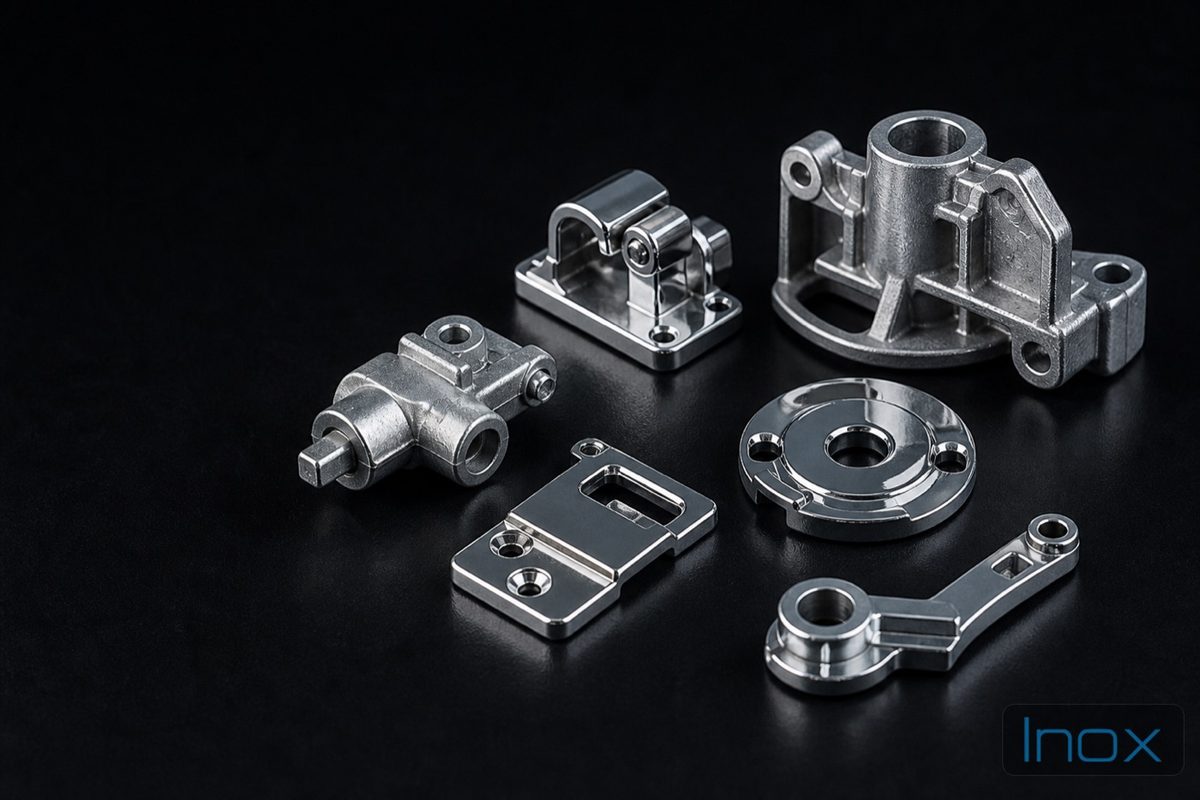
What is zinc die casting, and when should you choose it?
Zinc die casting injects molten zinc (Zamak) alloy in a hot-chamber machine to make small, highly detailed parts with thin walls, crisp features and a plating-ready surface — often finished straight off the die. Choose it for small, high-volume, precise or decorative parts: lock and door hardware, connector shells, gears and plated trim. Inox Die Cast runs Zamak 3, Zamak 5 and ZA-8 factory-direct in Dongguan, from 1,000 pieces, with tooling and finishing in-house.
At a glance
- The thinnest walls and finest detail of any production casting metal
- Hot chamber cycles fast; tooling outlives aluminum equivalents several times over
- The classic substrate for decorative plating; Zamak 3 prized for dimensional stability
- At its best on small, detailed, high-volume parts — often net-shape off the die
Why Zinc Earns Its Place
Zinc casts thinner and sharper than any other common die casting metal. Walls that would be risky in aluminum fill reliably in zinc, and features like snap fits, fine teeth and small bores often come out of the die needing no machining at all. When the casting is the finished part, the per-piece economics shift dramatically — every operation you delete is a cost and a handling step gone.
The second advantage is tooling life. Zinc's lower casting temperature is far gentler on die steel than aluminum, so a zinc tool typically survives several times as many shots. For programs measured in hundreds of thousands of pieces, tooling amortization per part becomes almost negligible — a structural cost advantage no discount can imitate, and one of the quiet reasons a part that looks marginal in aluminum turns profitable in zinc.
Third, zinc takes finishes beautifully. The dense, smooth as-cast skin is the preferred substrate for chrome and other decorative plating, which is why zinc dominates hardware, fittings and visible mechanical parts that must look as good as they work. It plates so willingly that the industry treats it as the default decorative casting metal.
Fourth, zinc holds its dimensions. Zamak 3 in particular is prized for dimensional stability over years of service — it does not drift the way some materials do — which is why precision mechanisms, lock components and parts that must keep fitting an assembly for a decade land in zinc. Stability plus fine detail is a combination aluminum cannot match at the small end.
The honest limits: zinc is dense — about two and a half times aluminum's weight for the same geometry — its thermal conductivity is far lower, and it is not the material for hot environments or large structural panels. When mass or heat rules the design, we will tell you, and the aluminum page takes over. That candour is the point of a supplier who casts both metals: the recommendation follows the part, not a sales target.
Process Control on Zinc Lines
Hot-chamber machines hold the melt inside the machine and deliver it through a gooseneck, which stabilizes temperature and shot consistency — the process advantage that makes zinc's repeatability famous. Because the metal is never ladled in the open, shot-to-shot variation is lower than cold-chamber aluminum, which is part of why zinc holds fine features and tight, repeatable dimensions across long runs.
On top of that, our castings run against the same control-plan discipline as everything in the plant: incoming alloy certificates verified by XRF, in-process checks at the machine, and outgoing inspection against the dimensions your drawing flags as critical, measured on CMM or functional gauges as the feature demands.
Because tooling is built and maintained in the same building, cavity polish — which zinc's cosmetic applications depend on — is restored on schedule rather than when a broker notices complaints. A plated part is only as good as the cavity finish underneath it, and that finish is a tool-room responsibility we keep in-house rather than hand to a partner who owns the steel.
The industry has published standards for this, and we use them as the shared language. Zinc die casting alloys are specified under ASTM B86 (and the international equivalents), and die casting design and tolerance practice is codified in NADCA's published standards. Naming those in the DFM review means your engineers and ours describe the same alloy and the same tolerances by the same terms. Certification scope documentation is available on request, stated honestly for the entity and scope it actually covers.
Typical Zinc Programs
Lock bodies and door hardware, connector shells and shielding parts, gears and small mechanism components, appliance fittings, decorative trim that gets plated, and telecom parts where detail and shielding matter more than weight. Automotive interior hardware and mechanism parts land here too, where zinc's plated finish and dimensional stability outweigh its density on a small part.
The common thread is not the industry — it is the part: small, precise, high-volume and usually visible or mechanical. If your part is small, precise, high-volume and visible, zinc is probably the material to model first, and the alloy selector settles the metal question in about a minute before the review confirms it.
Representative application illustration — not a record of a specific customer program.
Common Zinc Alloys Compared
Alloy choice is confirmed at engineering review; this is the direction each family pulls:
| Alloy family | Castability & detail | Strength character | Best suited for |
|---|---|---|---|
| Zamak 3-type | The benchmark for castability and dimensional stability | Good general mechanical properties | The default for most zinc parts — hardware, housings, mechanisms |
| Zamak 5-type | Very good, slightly less ductile than Zamak 3 | Higher strength and hardness from added copper | Parts needing extra strength or wear resistance over Zamak 3 |
| ZA-8-type | Good, hot-chamber castable at higher strength | Highest strength of the hot-chamber zinc family | Small structural parts where zinc's detail meets higher loads |
Frequently Asked Questions
When does zinc beat aluminum?
When the part is small, detailed, high-volume or destined for decorative plating. Zinc casts thinner walls and finer features, cycles faster in hot-chamber machines, and its tooling lasts several times longer. Aluminum wins when the part is large, load-bearing relative to its weight, or lives in a hot environment. The aluminum vs zinc page compares the two in detail, and the alloy selector gives a directional answer in a minute.
Which zinc alloys do you run?
Common Zamak-family alloys, with Zamak 3 as the usual starting point, Zamak 5 where added strength and hardness are needed, and ZA-8 where a small part must carry loads near zinc's ceiling. The choice is confirmed during engineering review against your part's loads, finish and environment, and alloy certificates ship with production. All three run hot chamber in the same tooling class, so a grade change is comparatively cheap.
Do zinc castings need machining, or are they net-shape?
Often net-shape — that is much of zinc's value. Fine features, snap fits and small bores frequently come off the die finished. Machining enters only where a tolerance or a mating feature is tighter than casting holds, or where a threaded or sealing face needs it. We tell you at the review which features are net-shape and which need a secondary operation, so the routing and the cost are known before the tool is cut rather than discovered after.
Can zinc castings be chrome plated?
Yes — zinc is the classic substrate for decorative chrome and other electroplated finishes, and plating-bound parts are planned as such from the tooling stage: cavity polish, gate placement and ejector positions are chosen so the visible surfaces come out clean. Plating runs within our finishing workflow, and any specialist step we subcontract is named honestly rather than hidden.
How thin can zinc walls go, and how fine the detail?
Thinner than any other production casting metal, though the exact figure depends on the flow length, the feature and where it sits relative to the gate — which is why we review the model rather than quote a universal number. Zinc's fluidity and low casting temperature let it fill sections and hold fine teeth, text and snap features that aluminum would freeze off or round over. If thinness or fine detail is what rules your part, zinc is usually the answer.
Is zinc suitable for outdoor or damp environments?
Zinc handles indoor and moderately damp service well, especially with plating or powder coating. For continuously wet, salt-spray or outdoor-exposed applications the finish system does the heavy lifting, and we review the exposure conditions during quoting so the coating specification matches reality rather than a catalog line. Salt-spray testing can be built into the control plan where the part demands it.
What volumes make sense for zinc?
Zinc rewards volume: fast hot-chamber cycles and long tooling life mean per-part costs keep falling as quantities climb. Production starts at our standard 1,000-piece MOQ, but the programs where zinc shines brightest are the ones planned in the tens of thousands per year and up, where the tooling amortises to almost nothing per part.
Where to Go Next
Zinc project review
Find Out What Your Part Looks Like in Zinc
Send the model and the annual volume. An engineer will confirm whether zinc's thin walls, detail and tooling economics work in your favor — with numbers, not adjectives.
Last reviewed August 2026 · Inox Die Cast, Dongguan