CNC Machining
Most die castings need machining somewhere — a sealing face, a bearing bore, a thread the die cannot form. The question is who does it and how it is planned. Inox Die Cast machines castings in the same plant that casts them, with the datum strategy decided alongside the tooling design, so the casting and the machined result are one engineered outcome instead of two vendors' interpretations.
This page explains the cast-then-machine logic, which features belong to each process, and why the interface between them is where quality programs are won or lost.
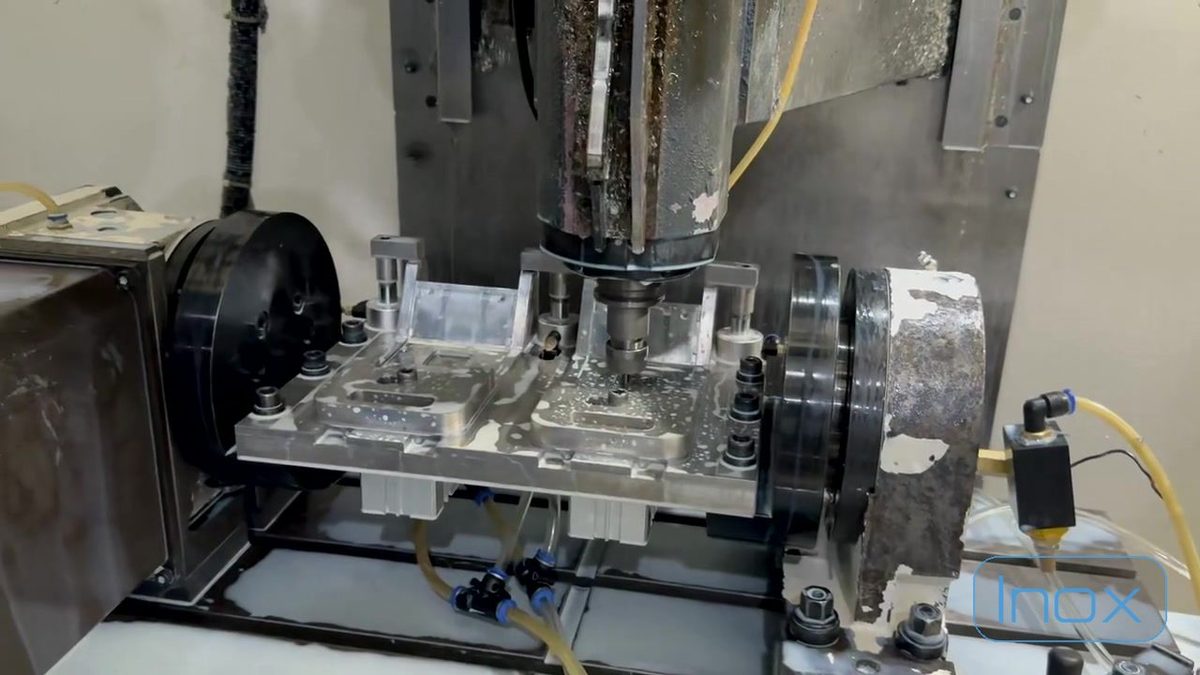
Why are die castings CNC machined, and what gets machined?
A die casting arrives near-net, but features tighter than casting holds — bearing bores, sealing faces, threads and datum surfaces — are finished by CNC machining. Doing it in the same factory as the casting keeps the datum relationship between cast and machined features inside one quality system, so a bore and its mounting face cut in one setup stop depending on how well a second shop fixtured the part. Inox Die Cast casts near-net and machines only what earns it.
At a glance
- Cast near net, machine only the features that need it
- Casting and machining share one control plan and one set of datums
- Bearing bores, sealing faces and threads finished in the same factory
- One supplier owns the tolerance chain from die to finished part
Cast Near-Net, Machine What Matters
Every feature machined from solid costs cycle time on every part, forever. Every feature the die forms costs tooling once. The economics of cast-then-machine follow directly: let the die produce the geometry, and reserve machining for the features whose tolerance or function genuinely demand it — datum faces, sealing surfaces, precision bores, threads.
The interface between the two processes is where programs succeed or fail. Machining a casting means fixturing on cast surfaces, which means the machining datums must be surfaces the die controls well. When the casting supplier and the machine shop are different companies, that conversation happens through purchase orders and blame. Here it happens at the tooling review, in one room.
There is also a quieter advantage: castings move from machine to mill without leaving the quality system — no transport damage, no mixed lots, no second incoming inspection, and one name on the certificate of conformance for the finished part.
Machining Under the Same Control Plan
Machined features carry their own entries in the control plan: gauge methods, sampling intervals and records, agreed at the same review that plans the casting. Fixtures are built against the datum scheme on your drawing, and first-article inspection covers cast and machined dimensions together — one report for one part, not two partial stories.
Chip control and cleanliness get their own attention because castings are not billets: interrupted cuts across as-cast skin, coolant management around cored passages, and washing before finishing all have process answers that a shop machining castings daily has already learned. The practical result you care about — threads that gauge, faces that seal, bores that fit — arrives with records instead of anecdotes.
Sequencing matters as well. Machining before coating protects tight fits from coating thickness; machining after plating protects plated cosmetics from fixturing marks. Because both operations live in this building, the routing decision is made per feature at the review rather than defaulting to whatever order two separate vendors find convenient.
There is a worked example in the case studies: a feed opening being finished by hand, varying enough in height that the housing interfered with its mating part on assembly. Moving that one operation from the bench to a CNC cell took the batch reject rate from 12% to zero — not because machining is glamorous, but because a repeatable process replaced an operator's judgement.
What Typically Gets Machined
Mating and sealing faces that gaskets or O-rings depend on; bearing and shaft bores where fit is the function; tapped holes and thread milling; connector interfaces; flatness-critical mounting planes on housings and heat sinks. If a print marks it with a tight tolerance or a surface-finish callout, it probably belongs to the mill — and the review will say so explicitly.
Representative application illustration — not a record of a specific customer program.
As-Cast or Machined? Feature Triage
The review walks your drawing feature by feature; this is the logic it applies:
| Feature type | Usual route | Why |
|---|---|---|
| General walls, ribs, bosses | As-cast | The die forms them repeatably; machining adds cost, not function |
| Mounting faces & datums | Machine | Flatness and position anchor everything else measured on the part |
| Sealing surfaces | Machine | Gasket and O-ring performance needs controlled finish |
| Bores for bearings/shafts | Machine (cast pilot) | Cast the hole near-net, machine the fit |
| Threads | Machine or insert | Die-formed threads are rarely worth their tooling complexity |
| Cosmetic exterior | As-cast + finishing | Cavity polish and coating beat cutter marks |
Frequently Asked Questions
Why not just machine the whole part from billet?
For low quantities, machining from solid is often right — no tooling cost. The crossover comes with volume: casting forms the geometry once per shot in seconds, while billet machining pays for every feature on every part. If your volumes are near the crossover, the quote can show both routes and let the numbers decide.
How do you hold position between cast and machined features?
By deciding the datum scheme before the tool is built. The surfaces machining will fixture on are identified at the tooling review and controlled in the die accordingly, so the relationship between cast geometry and machined features is engineered rather than hoped for. This is the concrete benefit of casting and machining under one roof.
Can you machine castings supplied by someone else?
Our machining exists to serve castings we produce — that is where the datum-planning advantage lives. For a transferred program where we take over both the tool and the machining, the tooling inspection settles feasibility first. Pure job-shop machining of others' castings is not the service offered here.
What about deburring and thread integrity?
Deburring, thread verification and washing are planned operations with their own control-plan entries, not afterthoughts. Threads get gauged at defined sampling rates, and parts leave machining clean and ready for finishing — the next station in the same building.
Where to Go Next
Machining handoff
Separate Near-Net Geometry From Controlled Interfaces
Mark the datums, sealing faces and threads on your drawing and send it over. The review returns a feature-by-feature routing — cast, machine, or redesign — with one factory accountable for all of it.
Last reviewed August 2026 · Inox Die Cast, Dongguan