Precision Die Casting
Precision die casting is high-pressure casting planned backwards from the part's function: which surfaces matter, which dimensions are critical, where the metal must be sound. Inox Die Cast runs both hot-chamber lines for zinc and cold-chamber lines for aluminum, with the tool room and inspection stations in the same building — so the process plan, the tooling and the quality method are decided together.
This page explains how the process works, when each machine type applies, and what a casting-route review looks like when you send us a drawing.
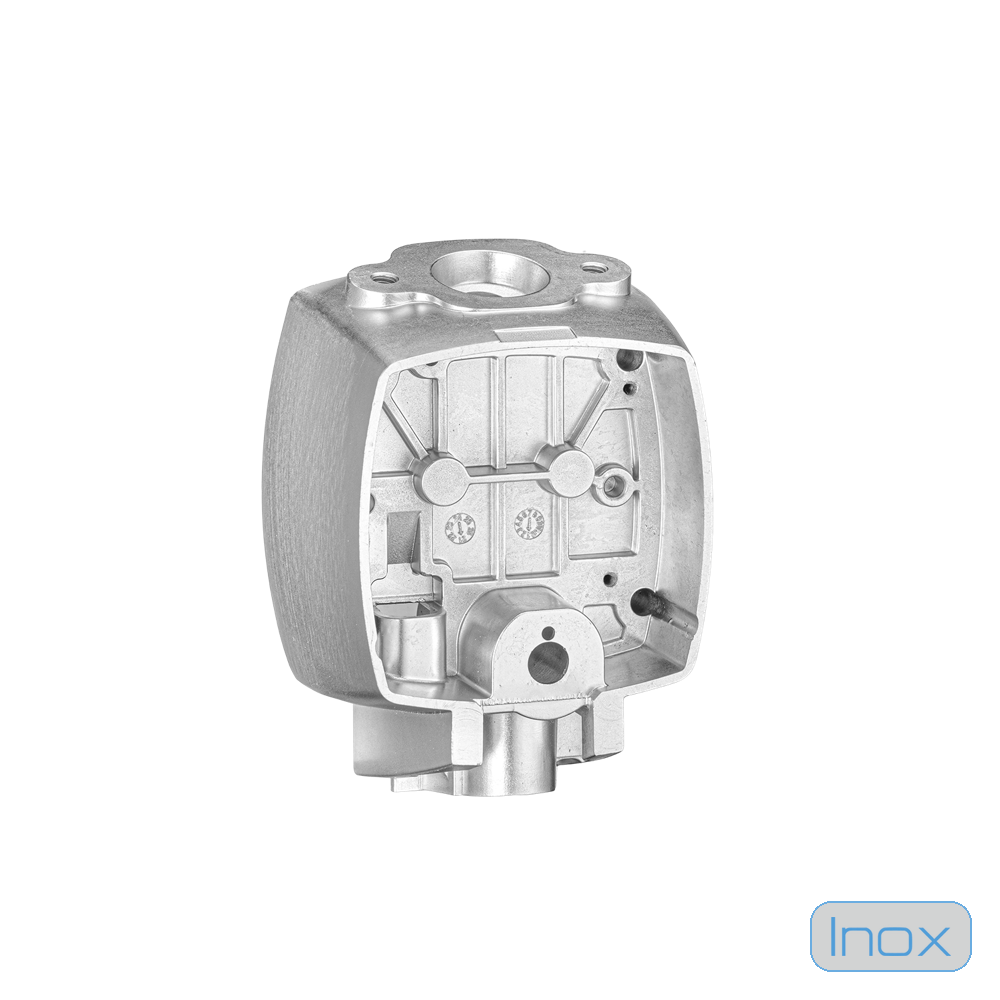
What is precision die casting?
Precision die casting is high-pressure die casting planned backwards from the part's function — deciding which surfaces matter, which dimensions are critical and where the metal must be sound, then designing the gating, venting and thermal balance to deliver them shot after shot. Inox Die Cast runs precision aluminum (cold chamber) and zinc (hot chamber) casting in Dongguan with its own tool room and inspection stations, so the process plan, the tooling and the quality method are decided together rather than across suppliers.
At a glance
- High-pressure die casting in aluminum and zinc — hot and cold chamber on one floor
- Process controlled from melt to measurement under one plan
- Machine assignment follows the part, not the equipment list
- Near-net parts that keep machining only where it earns its cost
What High-Pressure Die Casting Buys You
Die casting injects molten metal into a hardened steel die at high pressure, filling thin sections and fine detail that gravity processes cannot reach, then repeats that result shot after shot for the life of the tool. For parts in the thousands and up, no metal process matches its combination of speed, repeatability and near-net geometry.
Near-net matters most. A well-planned casting arrives with bosses, ribs, bores and mounting features already formed, leaving machining only for the surfaces that genuinely need it. Every feature that comes out of the die instead of off a mill is cycle time and cost removed from your part forever.
Precision is a planning outcome, not a machine setting. Gate position decides how metal enters; overflow and venting decide where the last, coldest metal ends up; thermal balance decides dimensional stability across a shift. These decisions happen at the tooling review — which is why a factory that designs its own tools can promise process behavior a reseller cannot.
Repeatability is the quiet product. A single good part proves nothing; a die casting program lives or dies on the ten-thousandth part measuring the same as the first. That consistency comes from a stable process window — controlled metal temperature, a repeatable shot profile, a thermally balanced die that does not drift as it heats through a shift — none of which a supplier can guarantee if they did not build the tool and cannot correct it in the same building.
The tolerance you can hold is a conversation, not a catalog number. It depends on the feature's size, whether it crosses the parting line, how far it sits from the gate, and the alloy. That is why precision here starts with your drawing rather than a specification sheet: the review identifies which dimensions the casting will hold, which need machining, and which are asking for more than the process gives — before steel is cut, when the answer is still cheap.
Process Control From Melt to Measurement
Alloy arrives certified and is verified at incoming inspection. Machine parameters — metal temperature, shot profile, intensification pressure — are set from the tooling trial and monitored in production. Castings sample against the control plan at defined intervals, and the dimensions your drawing marks critical are the dimensions the inspection room measures.
When something drifts, the answer is in the building: the tool room adjusts the die, process engineering adjusts the machine, and the record of both lives with the program. Certification scope documentation is available on request.
One habit worth stealing for your own supplier audits: ask to see the control plan and the first-article report for any existing program, names redacted. Those two documents reveal how a factory actually thinks about precision — what it measures, how often, and what it does when numbers move. We show ours; the suppliers who cannot are telling you something.
Precision also has a shared vocabulary, and using it removes argument. Die casting design and tolerance practice is codified in NADCA's published standards (the industry's linear-tolerance and feature-tolerance system), and the aluminum and zinc alloys themselves are specified under the Aluminum Association designations and ASTM B86 respectively. Referencing those in the review means a tolerance called out on your drawing means the same thing to our engineers as it does to yours — precision described in a common language rather than in adjectives.
Hot Chamber or Cold Chamber?
Zinc runs hot-chamber: the injection system sits in the melt, cycles are fast, and shot-to-shot consistency is exceptional — ideal for small precise parts at volume. Aluminum runs cold-chamber: metal is ladled per shot into a cold sleeve, tolerating aluminum's higher temperature at the cost of cycle speed. You do not have to choose the machine — you choose the material and the geometry, and the process follows. Both routes live on our floor.
That both families run under one roof matters more than it sounds. A supplier with only one machine type will steer your part toward the metal they run, whatever the part actually wants — a hidden bias baked into their equipment list. Running both, the recommendation can follow the part honestly: aluminum when mass, size or heat rules; zinc when detail, thin walls, plating or tooling economics rule; and a plain answer when the part could genuinely go either way. The machine assignment is an outcome of your part's requirements, not a constraint imposed by ours.
Representative application illustration — not a record of a specific customer program.
Casting-Route Review Checklist
These are the questions our engineers work through when your drawing arrives — bring answers to the ones you have, and expect questions about the rest:
| Review item | What we are deciding | What helps from your side |
|---|---|---|
| Function & loads | Which features are structural, sealing, cosmetic | A drawing that flags critical features, not just dimensions |
| Alloy direction | Aluminum vs zinc family, then specific alloy | Service temperature, environment, weight budget |
| Gate & flow plan | Where metal enters and where it knits | Which surfaces must be cosmetic or pressure-tight |
| Parting & draft | Die split, ejector positions, draft angles | Tolerance for witness lines and ejector marks |
| Downstream operations | What gets machined, what gets finished | Datum scheme and finish specification |
| Volume & duration | Machine size, cavity count, tooling class | Annual quantity and expected program life |
Frequently Asked Questions
What size parts can you cast?
From small zinc components weighing a few grams to aluminum housings sized for our machine range. Rather than publishing a tonnage table that goes stale, we confirm machine fit during the quotation — send the model and the weight, and feasibility comes back with the quote.
How precise is die casting really?
Precise enough that many features ship as-cast, with machining reserved for datum faces, threads and sealing surfaces. Achievable tolerance depends on the feature's size, position relative to the die parting line and the alloy — our tolerance guide explains the factors, and the engineering review pins down numbers for your part.
Do you handle low-volume or prototype runs?
Production starts at 1,000 pieces. For validation before tooling commits, we discuss bridge options during the review — machining a handful of parts from solid, or sampling from a single-cavity tool that later scales. The right answer depends on how close your design is to frozen.
What information do you need for a quote?
A 3D model (STEP preferred) or dimensioned drawing, the material direction if you have one, expected annual volume, and any finish or critical-feature requirements. With that, an engineer reviews the casting route and returns questions or a quotation — the form on the request-a-quote page starts the process.
How is precision die casting different from ordinary die casting?
The process is the same; the discipline is not. Ordinary die casting aims to fill the cavity and eject a part. Precision die casting plans the gating, venting, thermal balance and machining split backwards from which features must hold dimension, seal or look right — and then proves the process holds them across the whole run, not just on the first sample. The difference shows up at part ten thousand, not part one.
Do you cast both aluminum and zinc precision parts?
Yes — cold-chamber aluminum and hot-chamber zinc both run on our floor, which is deliberate. It lets the material recommendation follow your part rather than our equipment: a single-metal supplier has a built-in reason to steer you toward what they run. Send the part and the requirements and the review tells you which metal and which process fit, with reasons, even when the honest answer is that it could go either way.
How do you hold precision across a long production run?
With a stable, documented process window and a tool room in the same building. Metal temperature, shot profile and intensification are set at the trial and monitored in production; the die is thermally balanced so it does not drift as it heats through a shift; and when a dimension starts to walk, the tool comes off, gets corrected next door, and goes back in days rather than the weeks it takes when the steel lives in someone else's shop. The record of every correction stays with the program.
Where to Go Next
Casting project review
Plan the Process Around Your Part
Send the drawing, the critical features and the volume. The review comes back from engineers who will stand next to the machine that runs your parts.
Last reviewed August 2026 · Inox Die Cast, Dongguan