Zinc Alloy Selection
Zinc's alloy conversation is shorter than aluminum's and, for most parts, easier: Zamak 3 unless something specific argues otherwise. The interesting question is what counts as specific — and that is where strength, wear and hot-chamber castability start pulling against each other.
This page characterises the three families we run in production, states what each gives up, and explains how the grade is settled against your part rather than promised here.
How do you choose a zinc die casting alloy?
Zinc die casting alloy selection usually has one answer — Zamak 3 — unless a measured requirement moves you. Zamak 3 is the benchmark for castability, dimensional stability and plating; Zamak 5 adds copper for strength and hardness; ZA-8 reaches the highest strength that still runs hot chamber. Each rung up spends some castability, so climb only when a load or wear surface needs it. Inox Die Cast confirms the grade against your part at the review.
At a glance
- Three families, one usual answer: Zamak 3 unless something argues otherwise
- Zamak 5 buys strength with copper; ZA-8 reaches zinc's ceiling
- Grade changes within zinc are cheap; metal changes are not
- Confirmed against loads and finish at the review
Three Families, One Usual Answer
Zamak 3-type is the benchmark, and it deserves the position. It casts beautifully, holds dimensions over time with unusual stability, plates like it was designed to, and asks nothing unusual of the tooling. The overwhelming majority of zinc parts belong here, and a supplier who steers you away from it without a stated reason is worth questioning.
Zamak 5-type buys strength and hardness with added copper, and pays with a little ductility. When a part carries more load than Zamak 3 comfortably handles, or when a wear surface takes repeated contact through a long service life, the trade is usually worth making. Latches, hinges and mechanism parts that see thousands of cycles are its natural territory.
ZA-8-type sits at the strong end of what a hot-chamber machine can still run — which is the whole point. It gives small zinc parts mechanical properties that edge toward structural duty without surrendering zinc's fast cycles and detail. When a part wants zinc's precision but keeps failing zinc's strength check, ZA-8 is the family the review reaches for before conceding to aluminum.
Note what the ladder costs: as strength climbs, castability and dimensional serenity gradually give way. Reaching for ZA-8 because it sounds better is how programs acquire problems Zamak 3 never had.
How the Grade Is Confirmed
The review reads four things: what load and wear the part actually sees, how fine the geometry gets, whether the surface is plated or bare, and how long the program runs. Those four narrow the family, and the tooling design then tunes to it — gate size, cavity polish and thermal balance all respond to the alloy chosen.
Published alloy datasheets are provided on request, and material certificates ship with production. We publish no invented property figures here: numbers your engineers will design against belong in documents with their test conditions attached.
Where Each One Tends to Land
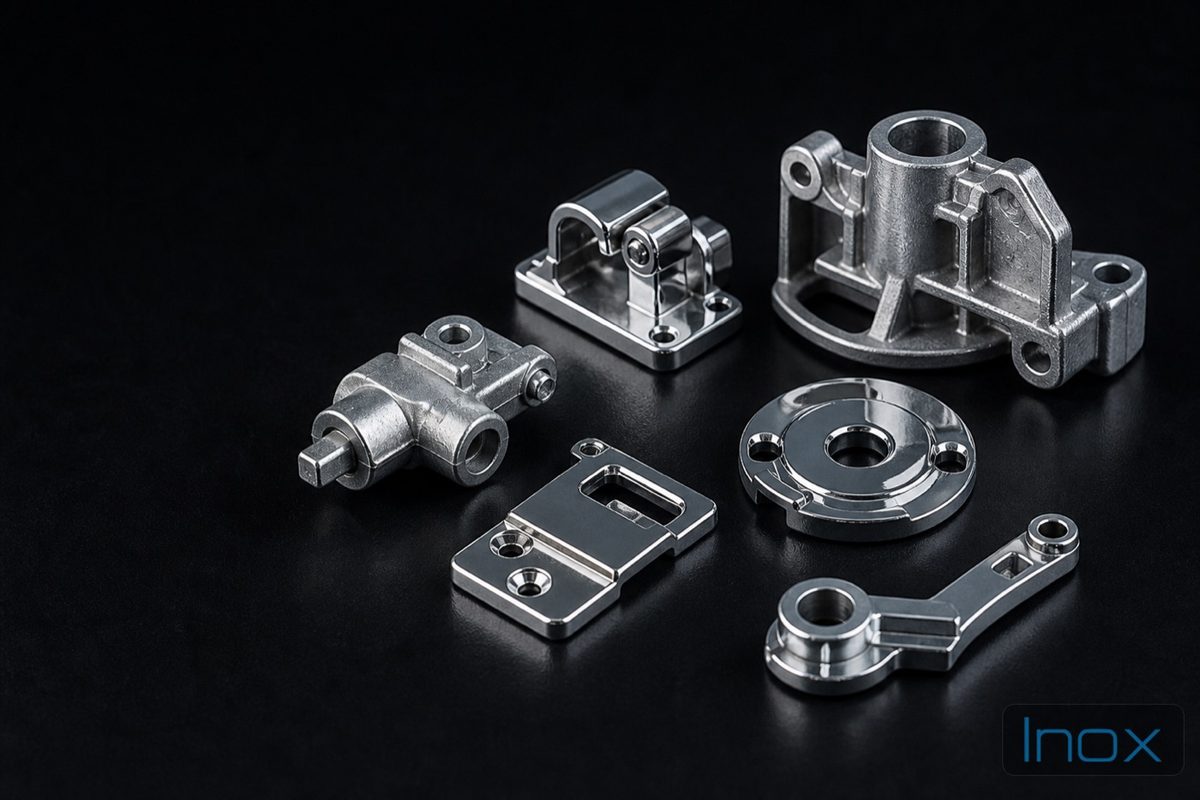
Zamak 3: lock bodies, appliance hardware, connector shells, plated decorative trim, general precision housings. Zamak 5: hinges, latches, gears and mechanism parts with wear surfaces or higher loads. ZA-8: small structural brackets and mechanism components where zinc's detail must survive loads that would otherwise force an aluminum conversation.
Representative application illustration — not a record of a specific customer program.
Zinc Alloy Families Compared
Qualitative directions, confirmed per part at the engineering review:
| Family | Castability & detail | Strength character | Reach for it when |
|---|---|---|---|
| Zamak 3-type | The benchmark — outstanding castability and dimensional stability | Good general mechanical properties | Nothing argues otherwise — the correct default |
| Zamak 5-type | Very good, slightly less ductile | Higher strength and hardness from added copper | Extra strength or a wear surface is required |
| ZA-8-type | Good, still hot-chamber castable | Strongest of the hot-chamber zinc family | Small parts must carry loads near zinc's ceiling |
Frequently Asked Questions
When should I move off Zamak 3?
When a stated requirement demands it — a measured load Zamak 3 does not carry, or a wear surface that fails in service testing. Not because a datasheet column looks larger. Zamak 3's castability and long-term dimensional stability are genuine advantages you spend when you upgrade, and the review will ask what you are buying with them.
Is ZA-8 a replacement for aluminum?
For small parts near the boundary, sometimes — it lets zinc's detail and tooling economics survive a strength requirement that would otherwise force a metal change. For anything with a real weight budget, heat duty or physical size, no: those belong to aluminum regardless of what ZA-8's strength column says. The alloy selector settles most of these in a minute.
Do all three plate equally well?
Zinc as a family is the classic plating substrate, and all three take decorative finishes. Zamak 3's as-cast skin is the most forgiving starting point, which is one more quiet reason it dominates plated hardware. Where cosmetics are the point, cavity polish and gate placement matter at least as much as the grade — those are tooling decisions made at the review.
Does the grade change tooling or machine?
No — all three run hot chamber in the same tooling class, so switching within the zinc family is a comparatively cheap decision. Switching metals is not: a zinc die will not run aluminum. That asymmetry is exactly why the metal question gets settled before steel is cut and the grade question can wait for the trial.
Do you publish mechanical property tables?
Not here. Published alloy datasheets are provided on request at the engineering review, with their test conditions intact, and material certificates accompany production. A property number stripped of its test method is decoration, not engineering — we would rather hand you the real document.
Where to Go Next
Grade confirmation
Default to Zamak 3 Until the Part Objects
Send the loads, the wear surfaces, the finish and the volumes. If your part needs to climb the ladder, the review will say so — and say why.
Last reviewed August 2026 · Inox Die Cast, Dongguan