Hot Chamber Die Casting
Hot chamber die casting keeps the injection system immersed in the molten metal itself: a gooseneck fills from the furnace with every cycle and a plunger drives the shot into the die. No ladling, no transfer, no waiting — which is why hot chamber machines cycle faster and shoot more consistently than any other die casting configuration.
The catch is metallurgy: only alloys that melt low enough to live with a submerged steel injection system qualify. In production practice that means zinc — and it is why zinc's famous speed, detail and repeatability are really hot chamber's speed, detail and repeatability.
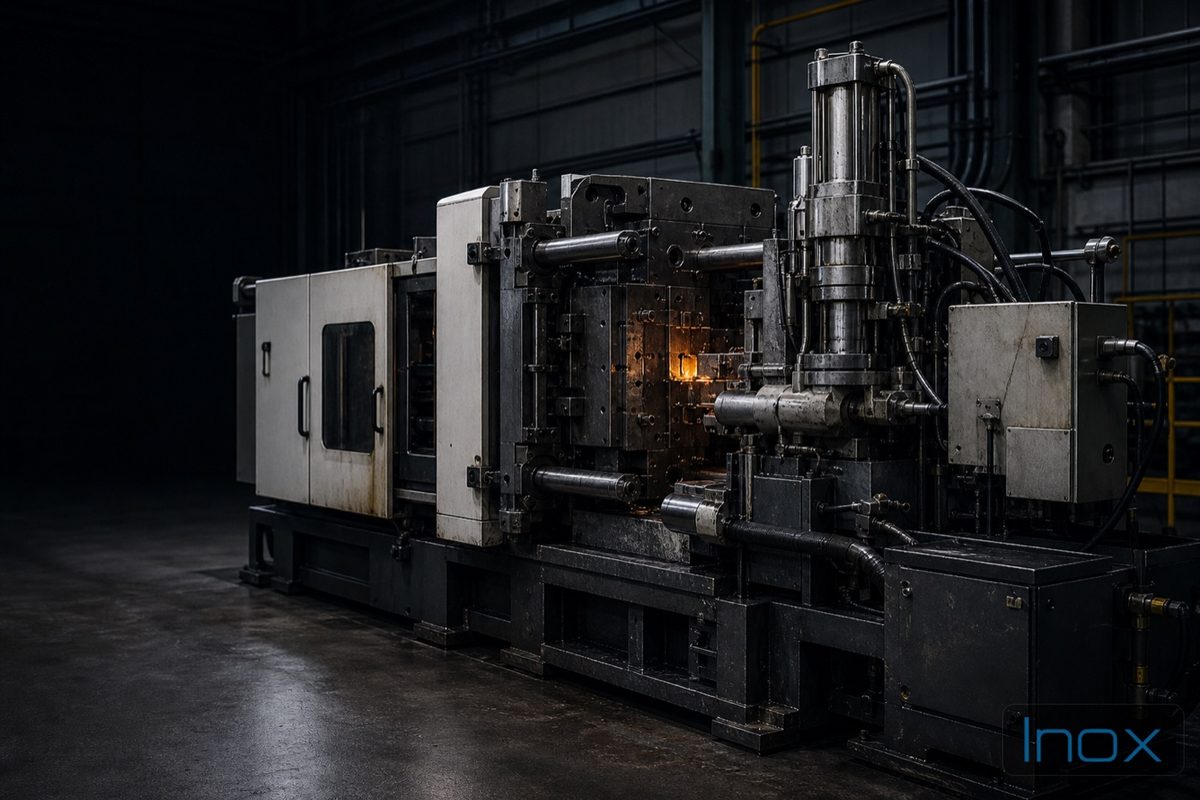
What is hot chamber die casting, and what is it for?
Hot chamber die casting keeps the injection system submerged in the molten metal and delivers it through a gooseneck, giving fast cycles, stable temperature and exceptional shot-to-shot consistency. It suits low-melting-point metals — zinc (Zamak) above all — and excels at small, detailed, high-volume parts. It cannot run aluminum, whose temperature would attack the immersed system. Inox Die Cast runs hot chamber for zinc in Dongguan.
At a glance
- The injection system sits in the melt: fast cycles, gentle metal delivery
- Zinc's home ground — thin walls, fine detail, long tool life
- Small parts at high volume are the sweet spot
- Not for aluminum — the melt attacks the immersed system
What the Hot Chamber Configuration Buys
Cycle speed first. Because the metal is already at the machine — inside it, in fact — the cycle collapses to inject, freeze, eject, repeat. Small zinc parts run at cycle rates aluminum can only envy, and at high annual volumes that speed converts directly into unit price.
Consistency second. The metal travels centimeters through a heated gooseneck instead of being ladled through open air, so shot temperature and volume repeat with exceptional precision. That stability is the foundation under zinc's reputation for holding fine tolerances shot after shot — the machine simply gives the process fewer ways to vary.
Gentleness third, and it is underrated: zinc's lower casting temperature combined with the hot chamber's smooth delivery treats die steel kindly. Tools last several times longer than aluminum tooling, which rewrites the amortization math for long-running programs. A hardware product planned in the hundreds of thousands should always price the hot chamber route before committing elsewhere.
The limits are honest ones: the immersed system rules out aluminum (it attacks the submerged steel), and shot sizes suit small-to-medium parts. When your part is aluminum or large, the cold chamber page takes over — same factory, different machine row.
Running Hot Chamber in Production
Furnace temperature, gooseneck condition and plunger performance are the process variables that matter, and each is maintained and monitored against set points from the tooling trial. Cavity-level sampling per the control plan closes the loop, and on multi-cavity dies each cavity carries its own identity in the records — drift gets caught by its number, not by your incoming inspection. The result buyers see: month-twelve parts that measure like month-one parts, documented per lot. Certification scope documentation is available on request.
Parts That Belong in Hot Chamber
Lock bodies and door hardware, connector shells and RF shielding, gears and small mechanism components, appliance fittings and plated decorative parts, zipper and fastener hardware, small housings with fine detail. The pattern: small, precise, high-volume, often cosmetic — zinc's home territory, served by the machine built for it.
Representative application illustration — not a record of a specific customer program.
Is Hot Chamber Right for Your Part?
Run your part down this checklist — mostly-yes means hot chamber zinc deserves the first quote:
| Question | Points to hot chamber if… |
|---|---|
| What alloy does the function need? | Zinc's strength, detail and plating response fit the job |
| How big is the part? | Small to medium — palm-sized and below is the sweet spot |
| How thin and detailed? | Thin walls, sharp features, snap fits, fine teeth |
| What annual volume? | Tens of thousands and up — the speed pays there |
| Is it visible or plated? | Zinc's as-cast skin is the classic plating substrate |
| How hot is the service environment? | Modest temperatures — zinc dislikes sustained heat |
Frequently Asked Questions
Why can't aluminum run in a hot chamber machine?
Molten aluminum aggressively dissolves the iron of a submerged injection system, destroying the gooseneck and contaminating the alloy. Aluminum therefore runs in cold chamber machines, where metal is ladled into an external sleeve per shot. It is a metallurgy constraint, not a machine-buying decision — the alloy picks the machine.
How fast do hot chamber machines actually cycle?
Small zinc parts can run cycles measured in a few seconds, with rate depending on part mass, wall sections and cooling design. Rather than quote a universal number, we state the expected cycle for your part at the tooling review — it is an engineered outcome of the die design, and it directly sets your unit price.
Does hot chamber limit part size?
Practically yes — the configuration favors small-to-medium parts within our zinc machine range. Larger zinc parts are possible up to machine limits, and genuinely large parts usually want aluminum in cold chamber anyway for weight reasons. Send the model and the fit is confirmed with the quote.
Is hot chamber zinc more precise than cold chamber aluminum?
Generally yes, for the same feature class: steadier shot delivery, lower thermal stress and slower tool wear all tighten repeatability. That is why fine mechanisms live in zinc. Our tolerance guide explains the factor system; the review pins numbers to your drawing.
Where to Go Next
Hot chamber review
See What Zinc Speed Does to Your Unit Price
Send the part and the annual volume. If hot chamber fits, the quote will show cycle-speed economics no slower process can match — and if it doesn't fit, we'll say so and point to the right route.
Last reviewed August 2026 · Inox Die Cast, Dongguan