Aluminum & Zinc Die Casting
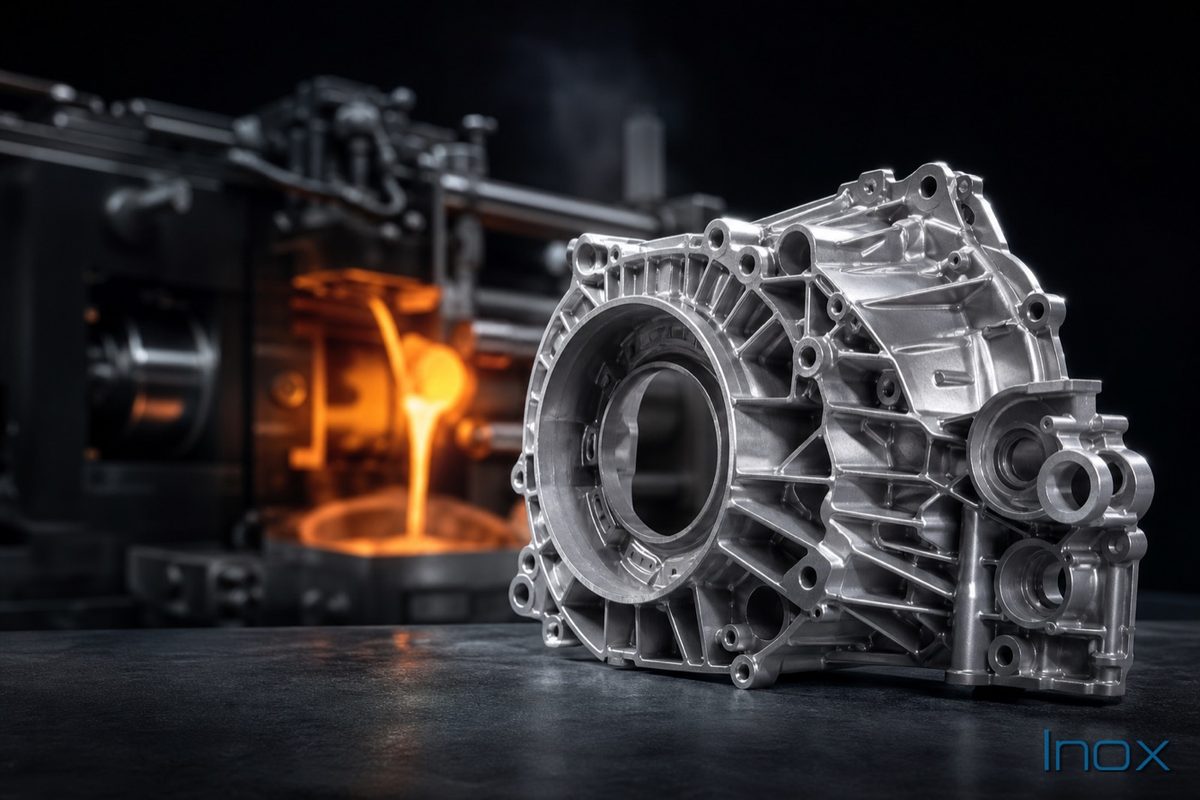
High-pressure casting cells for aluminum and zinc alloys, from thin-walled electronics housings to structural brackets. Alloy and process guidance comes from the casting floor, not a catalog.
Inox Die Cast is a precision die casting manufacturer producing aluminum and zinc components with in-house tooling, CNC machining and surface finishing. The factory has operated in Dongguan, China since 1997 as part of SunOn Industrial Group, and you work directly with the plant that casts your parts — no trading company between your drawing and the machine.
Buyers come to us with a part that has to hold its shape, hit its cost target and arrive on schedule. Because mold making, casting, machining and finishing run under one roof, design questions get answered by the people who will actually build the tool, and accountability for quality never leaves the building.
At a glance
A trading company quotes your part, then shops it to factories you never meet. Factory-direct means the engineer who reviews your drawing walks the same floor as the die casting machines that will run your production. Design-for-manufacturing feedback arrives before the tool is cut, not after the first article fails inspection.
It also changes economics. One margin instead of two, engineering changes negotiated with the source, and tooling that stays in the plant that built it — so cavity maintenance, spare inserts and process records live in one place for the life of your program.
Since 1997 the plant has grown to roughly 32,000 square meters and around 1,000 employees across mold making, die casting, machining and finishing. Production starts at a minimum order of 1,000 pieces, which keeps the door open for hardware startups running pilot volumes as well as established OEMs.

High-pressure casting cells for aluminum and zinc alloys, from thin-walled electronics housings to structural brackets. Alloy and process guidance comes from the casting floor, not a catalog.
Molds are designed and built in-house, so gate positions, slide actions and cooling layout are decided by the team that answers for the parts the tool produces.
Cast near-net, then machine only the features that need it — datum faces, threads, sealing surfaces. One supplier owns both the casting and the machined result.
Painting, powder coating, plating and screen printing finish parts in the same workflow that cast them, protecting appearance parts from extra handling and mixed accountability.
Incoming material, in-process casting parameters and outgoing dimensional checks are controlled at defined stations, with measurement equipment maintained in-house. Quality planning starts at the tooling review: critical features are identified on the drawing, and the inspection method for each is agreed before production begins. Certification scope documentation is available on request as part of a supplier evaluation.
The result is a paper trail your sourcing team can audit — from alloy certificates through first-article reports to outgoing inspection records — held by one factory instead of scattered across a broker's supply chain.
Typical programs include automotive brackets and housings, consumer electronics enclosures that need thin walls and clean cosmetic surfaces, medical equipment frames, industrial machine components, and appliance and telecommunications hardware. Industry pages below walk through what die casting has to solve in each of these environments.
Representative application illustration — not a record of a specific customer program.
The full comparison lives on our aluminum vs zinc page, but three rows decide most projects:
| Decision factor | Aluminum favors | Zinc favors |
|---|---|---|
| Weight against strength | Lightweight structural parts and heat-exposed housings | Small parts where mass matters less than detail |
| Thin walls and surface finish | Good thin-wall capability with sound design | Exceptional thin walls and near-net cosmetic surfaces |
| Tooling life and part cost | Competitive at moderate volumes | Long tool life that rewards high-volume programs |
Production orders start at 1,000 pieces. That threshold keeps tooling economics sensible while staying reachable for startups running a first production batch. For volumes below that, tell us about the project anyway — sometimes a bridge plan makes sense while demand ramps.
We cast common aluminum die casting alloys and zinc alloys selected to match your part's strength, thermal and finishing requirements. Rather than promising a catalog of grades, we review your application and confirm the alloy choice during the engineering review, with material certificates supplied for production.
Yes. Mold design and mold making happen inside the factory. You review the tooling design before steel is cut, the tool stays in our plant for maintenance, and ownership terms are stated plainly in the quotation.
Send your 3D model or drawing with the expected annual volume through the request-a-quote form. An engineer reviews geometry, alloy direction and secondary operations, then comes back with questions or a quotation. Drawings are handled confidentially, and an NDA can be signed first if you prefer.
Start the conversation
Send the part, the volume and the problem you are trying to solve. You will hear back from an engineer at the plant that would cast it — with questions first, then a quotation.