Choosing a Die Casting Supplier
Choosing a die casting supplier is really choosing three things at once: the factory that will run your parts, the tool that will live there for years, and the engineering relationship that will answer every hard question in between. Buyers who evaluate all three make good decisions; buyers who compare unit prices alone discover the other two the expensive way.
This guide gives you the questions that separate factories from brokers, capability from claims, and a supplier for one order from a supplier for a program. Use the checklist at the bottom on every candidate — including us.
How do you choose a die casting supplier?
Choosing a die casting supplier starts with one question: factory or broker? A real factory owns its machines and tool room, puts an engineer on your DFM questions, and releases your tool on request. Verify capability against your part class and volume, ask to read a redacted control plan and first-article report, and get tool ownership in writing. Inox Die Cast answers those questions directly — and publishes the checklist to use against every supplier, including itself.
At a glance
- First question: factory or broker?
- How to verify capability and quality claims before the order
- Match the supplier to your program's volume and documentation needs
- Sourcing from China specifically? That has its own guide
First Question: Factory or Broker?
A surprising share of 'die casting manufacturers' online own no die casting machines. Brokers and trading companies quote your part, then shop it to factories you will never meet — adding a margin, blurring the quality trail, and turning every engineering question into a game of telephone. Sometimes a broker's convenience is worth it; it should never be invisible.
The diagnostic questions are simple. Where exactly is the factory, and can we visit or video-walk it? Who builds and maintains the tooling, and where does it physically live? Who employs the engineer answering our DFM questions? Vague answers to any of these are an answer.
The follow-up test is engineering depth: send a real drawing and read the response. A factory's review comes back with specific questions — about your critical features, gating implications, alloy trade-offs. A broker's response comes back with a price and adjectives. The quote that asks you nothing has understood nothing.
Verifying Capability and Quality Claims
Ask for evidence in this order: the equipment list (machine types and tonnage range — does it match your part size?), the tool room (in-house or outsourced, and who does cavity maintenance?), the measurement room (what instruments, calibrated how?), and the document set they would produce for your program — control plan, first-article report, material certificates, sampling records.
Sequence matters because each answer gates the next: a machine list that cannot physically cast your part makes every other claim irrelevant, and an outsourced tool room makes the maintenance promises secondhand. Work down the chain and stop at the first layer that fails — it saves everyone's time, including the supplier's.
On certifications: ask for the actual certificate documents and read the named entity and the scope line. Certificates borrowed from affiliates, expired documents and scopes that cover a different process than yours are common enough in sourcing that checking is standard diligence, not rudeness. A supplier who volunteers the documents and explains their scope plainly is telling you how they will handle every other hard question too.
Matching the Supplier to Your Program
A prototype-stage startup, a mid-volume equipment OEM and an appliance-scale buyer need different suppliers — or a supplier with the range to serve all three stages. Check MOQ against your honest volumes, vertical integration (casting plus machining plus finishing under one roof, or a chain of subcontractors?), engineering-change handling for designs that will evolve, and communication cadence in your time zone. The best unit price with the wrong program fit costs more within a year.
Weigh the relationship's second year, not just its first order. Ask how the candidate handled their last tooling transfer in, and their last customer departure out — both happen, and both reveal character. Ask who your named contacts would be and how long those people have worked there; a factory with ten-year veterans answering email is structurally different from one staffed by whoever was hired this quarter. And ask what happens when they make a mistake: the supplier who can describe a real defect, its containment and its corrective action is showing you their system working. The one who has never had a defect is showing you their imagination.
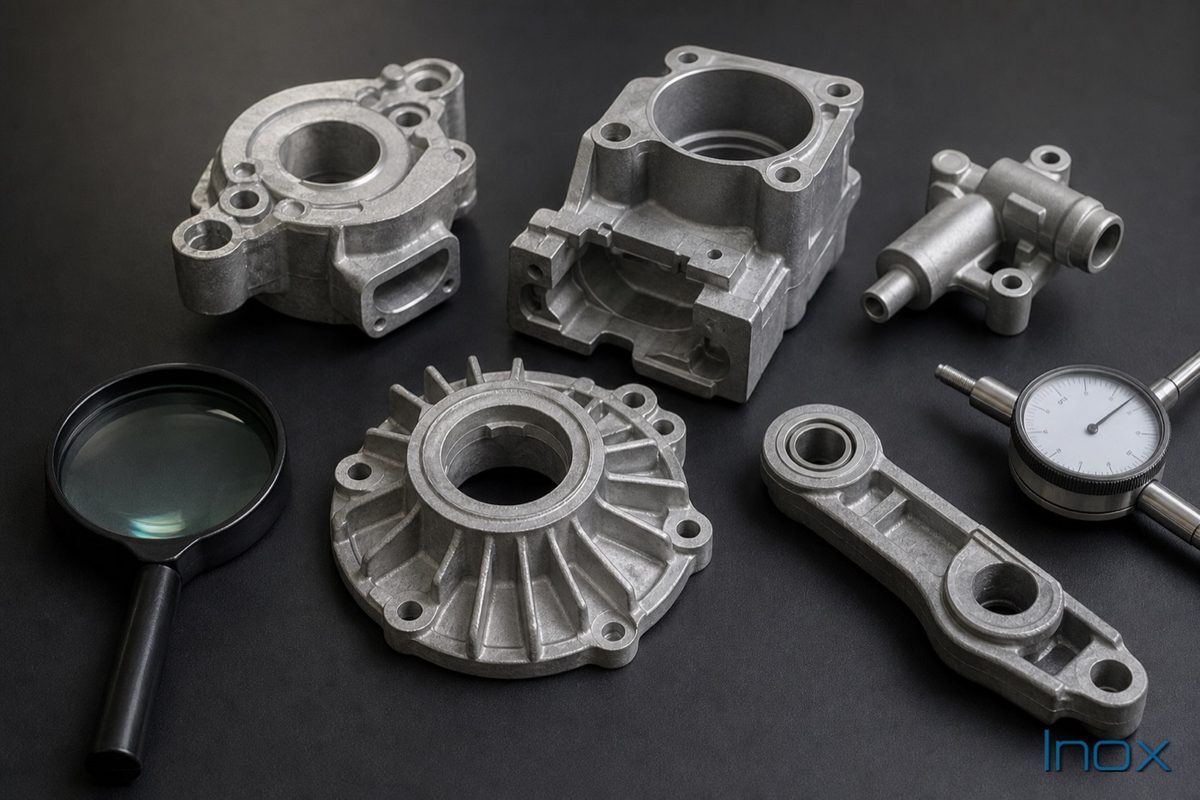
Representative application illustration — not a record of a specific customer program.
The Supplier Scoring Checklist
Score each candidate 0-2 on every row (0 = no/vague, 1 = partial, 2 = verified). Below 12, keep looking; ties break on engineering-review quality:
| Criterion | What 'verified' looks like |
|---|---|
| Factory identity | Address, machines and floor confirmed by visit or live video walk |
| In-house tooling | Tool room on site; maintenance records shown for an existing die |
| Engineering review depth | Your test drawing returned with specific, geometry-aware questions |
| Quality documentation | Sample control plan, FAI report and material cert from a real program |
| Certificates checked | Entity and scope on the actual documents match the supplier and process |
| Vertical integration | Casting, machining and finishing walked through in one building |
| Program fit | MOQ, capacity and change-handling match your volumes and design maturity |
| Communication | Engineering answers in your working hours, in writing, from named people |
| Commercial transparency | Tooling ownership, payment terms and price-change triggers in writing |
Frequently Asked Questions
Is buying from China still a good idea for die castings?
For most programs the economics remain strong — if you buy from a factory rather than a fog of intermediaries. The risks buyers fear (quality drift, communication gaps, IP anxiety) are mostly broker-chain diseases; direct relationships with a verified factory, written control plans and honest documentation address them. Apply this guide's checklist ruthlessly and the geography takes care of itself.
How do I verify a supplier without flying to China?
Live video factory walks have made remote verification practical: ask to see the machines running, the tool room, the inspection area, and your quote's engineer on camera. Cross-check the address, request real program documents with names redacted, and send a test drawing. A factory with nothing to hide finds these requests routine — hesitation is data.
What should tooling terms include?
In writing: who owns the tool, where it lives, what maintenance is included, expected life against your volumes, what happens at end-of-life or if you move the program, and how engineering changes are priced. Tooling disputes are the classic die casting sourcing failure, and every one traces back to terms that lived in somebody's memory instead of the contract.
Why do quotes for the same part differ so much?
Usually because the quotes assume different things: cavity count, alloy, machining scope, finish, inspection level, and whether a broker's margin sits inside. Normalize the assumptions before comparing numbers — and treat a quote that arrived without a single engineering question as the most expensive one on the table, whatever its price says.
How does Inox Die Cast score on this checklist?
Run it on us — the checklist exists to be used. Factory in Dongguan since 1997 within SunOn Industrial Group, tool room and finishing in-house, documentation samples on request, and the engineering review is how every program starts. Certificate scope documentation is provided as part of evaluation, and video factory walks are routine.
Where to Go Next
Put us on the scoresheet
Send the Test Drawing. Grade the Review.
The fastest way to evaluate any casting supplier is to make them do engineering. Send your drawing and volumes — judge us by the specificity of the questions that come back.
Last reviewed August 2026 · Inox Die Cast, Dongguan