Secondary Operations
A casting leaves the die close to finished — but 'close' has a supply chain inside it: trimming, deburring, machining, thread work, inserts, finishing, sometimes sub-assembly. Secondary operations are where casting programs quietly succeed or bleed, because every operation is a handling step, a quality interface and a schedule dependency.
This page maps the standard secondary operations, how each gets planned into your part's routing, and why running them under one roof changes the risk math buyers actually live with.
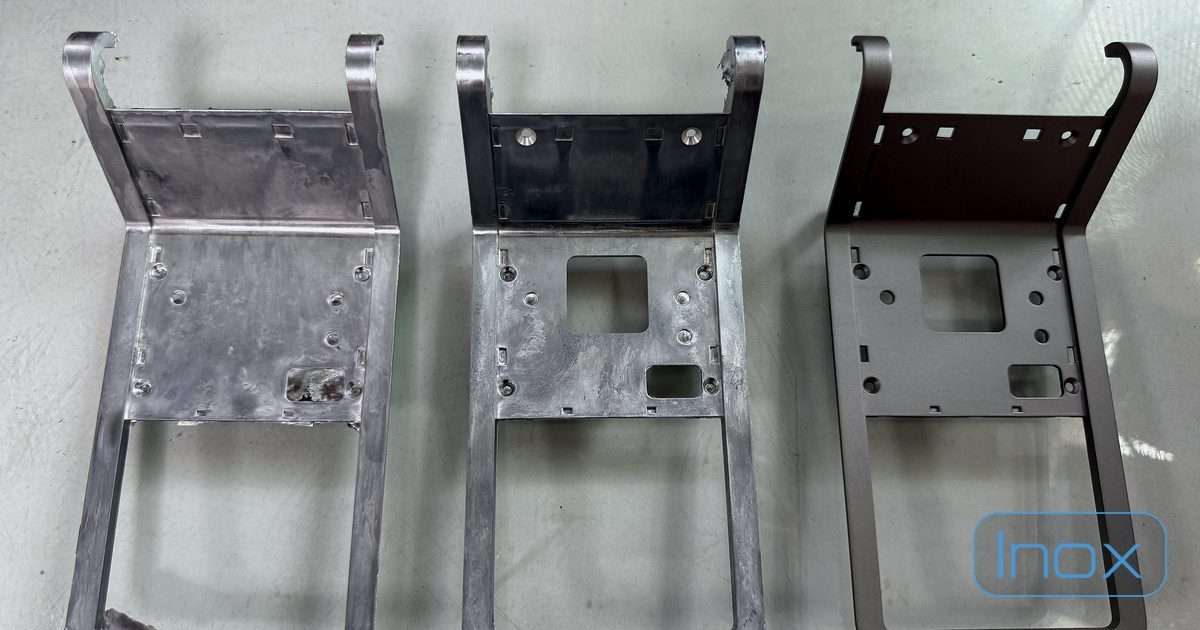
What secondary operations follow die casting?
Secondary operations after die casting include trimming and deburring, CNC machining of critical features, threading and inserts, surface finishing (powder coat, plating, anodising) and sometimes sub-assembly — the steps between a raw casting and a finished part. Running them under one roof collapses three suppliers and three quality interfaces into one routing with one record. Inox Die Cast performs them in-house and names any specialist step it subcontracts.
At a glance
- Trimming, machining, finishing and assembly on one routing
- One record follows the part through every operation
- Typical packages: machined features, finish, packaging, delivered ready to use
- Fewer suppliers, fewer interfaces, fewer arguments
The Standard Route, Operation by Operation
Trimming and degating come first: the casting separates from its runners and overflows, by trim die at production rates or by hand at bridge volumes. Trim quality is designed at the tooling stage — a well-planned trim die leaves witness the finish can live with, exactly where the DFM review said it would land.
Deburring and surface conditioning follow: tumbling, vibratory finishing or targeted hand work depending on the part's cosmetic zones and edge-condition requirements. This unglamorous step decides how parts feel out of the box and how coatings adhere — it gets a routing entry and an acceptance standard like everything else, not an assumption.
Then the precision operations: CNC machining for datum faces, bores, threads and sealing surfaces; thread inserts where engagement outlives cast threads; pressed-in bushings, studs and captive hardware where assembly design calls for them. Each is planned against the datum scheme set at the tooling review, so cast geometry and machined features stay in engineered relationship.
Finishing closes the route — coating, plating, printing per the specification — and where programs want it, kitting and sub-assembly: castings arriving as tested assemblies with their hardware installed rather than as bags of parts for your line to marry. Every operation the factory absorbs is a vendor, a transit and a finger-pointing interface deleted from your program.

One Routing, One Record
Each part carries a routing: operations in sequence, each with its acceptance check and record. Because trimming, machining, inserts and finishing run inside one quality system, the certificate of conformance at the end speaks for the whole route — and when something needs correcting, the correction happens between departments, not between companies. Routings are agreed at quotation and changes to them are documented like engineering changes, because an undocumented process edit is how consistent parts quietly stop being consistent. Certification scope documentation is available on request.
Typical Secondary Packages
Telecom enclosures: machine sealing faces, install threaded inserts, powder coat, mask grounding points. Appliance hardware: deburr, polish-grade surface prep, chrome plate. Motor housings: machine bearing bores in one setup, press bushings, leak test. Equipment panels: machine, ED base coat, top coat, screen print legends. Your routing is designed from the drawing, not from a menu.
Representative application illustration — not a record of a specific customer program.
Secondary Operation Routing Logic
How the review routes each requirement — and the sequencing rules that prevent expensive surprises:
| Requirement | Operation | Sequencing rule |
|---|---|---|
| Edge condition / feel | Deburr, tumble or vibratory | Before any coating; standard agreed via samples |
| Precision fits & datums | CNC machining | Before coating that adds thickness |
| Durable threads | Tap or insert | Inserts after machining; mask before coating |
| Captive hardware | Press/stake operations | After finish unless finish must cover |
| Corrosion / cosmetics | Coating or plating | After all metal-cutting operations |
| Markings & legends | Screen print / laser | Last — on the final surface |
| Ship-ready modules | Sub-assembly & kitting | After all part-level checks pass |
Frequently Asked Questions
Why not just source castings and do secondaries locally?
Sometimes that is right — when your line already owns the machining or the finish is a local specialty. But every split adds transit damage risk, a second incoming inspection, and an accountability seam where defects become negotiations. Price the one-roof route against the split route with all the hidden costs visible; the quote makes that comparison honest.
Can you install our specified hardware and inserts?
Yes — specify the hardware (or have us source equivalents for approval), and installation becomes a routing operation with its own verification: torque, retention or presence checks as the function requires. Consigned hardware is handled with lot control like any other material entering the system.
How do machining and coating sequence with each other?
By function: fits and datums machine before coatings that add thickness; plated cosmetics machine before plating so cutter witness disappears under the finish; masked zones get defined on the drawing so threads and grounding faces stay bare. The routing states the order explicitly — sequencing assumptions are where split supply chains classically fail.
Do secondary operations change the MOQ or lead time?
They shape lead time (each operation adds queue and cycle) and the quote states the full-route time honestly. MOQ stays our standard 1,000 pieces. What secondaries mostly change is the value question — a casting with machining, inserts and finish absorbed is a very different per-unit comparison than a bare casting price, so compare quotes at equal routing depth.
Where to Go Next
Full-route review
Quote the Part as It Ships, Not as It Casts
Send the drawing with its finish spec, hardware and assembly intent. The quote returns the complete routing — every operation, every check, one accountable factory.
Last reviewed August 2026 · Inox Die Cast, Dongguan