Die Cast Tooling
The tool decides most of what your casting will ever be — its dimensional stability, its surface, its cycle time, its cost floor. Inox Die Cast designs and builds die cast tooling in the same plant that will run it, which closes the loop most supply chains leave open: the mold maker answers for the parts, not just the steel.
This page covers how tooling decisions get made here, what the design review looks like from your side, and the questions — ownership, maintenance, changes — that buyers wish they had asked before the first tool.
What is die casting tooling, and why does building it in-house matter?
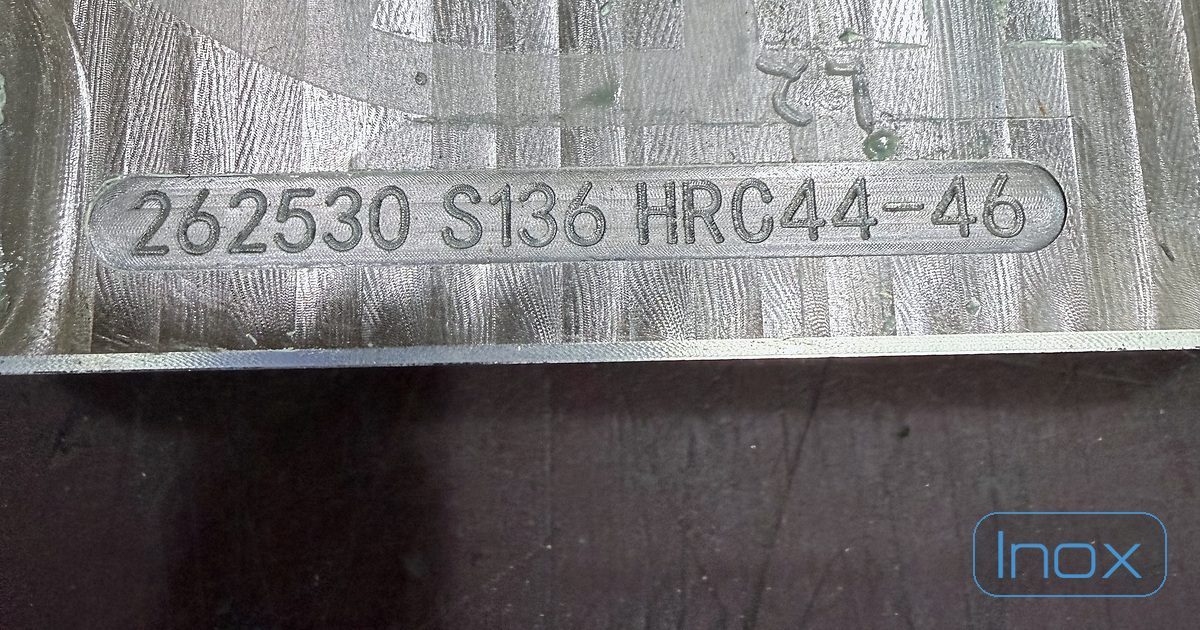
Die casting tooling is the hardened steel die that shapes every part — the largest up-front cost and the thing that decides whether a program fills, ejects and holds tolerance. Building and maintaining it in-house means gating, venting and thermal balance are designed with the caster, and a worn or drifting die is corrected in days in the same building rather than weeks across a supplier boundary. At Inox Die Cast the tool room is on-site, and the tool we build for you is yours.
At a glance
- Tool steel cut in our own tool room — no subcontracted mould making
- Tooling records survive the program: steel, corrections, maintenance
- Single-cavity trial tools through multi-cavity production dies
- Tools built for you are yours, stored under your name
Why the Tool Room Being Downstairs Matters
When mold making is outsourced, every tooling decision is a negotiation between two companies with different incentives: the mold shop wants to ship steel, the caster wants to run stable process. In-house tooling collapses that conflict. Gate positions, cooling layout, slide actions and ejector schemes are chosen by people who will live with the consequences on the casting floor for years.
Design-for-manufacturing review happens before steel is cut. Your 3D model gets examined for draft, wall transitions, undercuts and features that fight the process — and the feedback arrives while changes still cost a CAD session rather than a tool rework. Expect specific questions: which surfaces are cosmetic, where can witness lines fall, which dimensions are truly critical.
After launch, the same room maintains the die. Cavity polish, insert replacement and dimensional restoration run on a schedule informed by the shot counter, not by customer complaints. When an engineering change arrives mid-program, the people modifying the tool are the people who built it — with its full history on file.
Tooling Records That Survive the Program
Every tool carries its documentation: design files, steel and heat-treatment records, trial reports, and the maintenance log that accumulates over the program's life. First-article inspection validates the tool against your drawing before production is released, and that report anchors every later question about drift or change.
Ownership terms are stated in the quotation, in plain language. The tool built for your program is accounted for, maintained and available for audit — a paper trail that matters when programs run for years.
A worked example of why this matters is in the case studies: a cast boss measuring 8.41 mm against a 9.7 mm requirement, traced to an ejector pin deforming the feature every time the part was pushed out. The fix was a tooling change — swap the pin for a fixed insert — and the boss came back at 9.72 mm. That diagnosis needs someone who knows the die, and the correction needs the die in the building.
From Single-Cavity to Production Tools
Programs typically start where your volume and design maturity sit: a single-cavity tool to validate a new design, multi-cavity production tools when quantities justify them, and family tools where related small parts share a shot. Slide mechanisms, threaded-insert placement and overmold-ready details are planned case by case during the tooling review.
Representative application illustration — not a record of a specific customer program.
Tooling Review Checklist
Before tooling is quoted, these items get settled — the more you bring, the faster the quote:
| Item | Why it decides tooling | Bring if you have it |
|---|---|---|
| Design maturity | Frozen designs justify multi-cavity; moving designs argue for staged tooling | Honest ECO forecast |
| Annual volume & life | Cavity count, tooling class, steel selection | Yearly quantity and program duration |
| Critical features | Which dimensions the tool must protect over its life | Drawing with marked criticals |
| Cosmetic zones | Cavity polish level, gate and ejector placement | Which faces the customer sees |
| Undercuts & threads | Slides, lifters and inserts add cost and cycle | Whether features can redesign away |
| Change expectations | Insert-based designs absorb changes cheaper | Known areas likely to evolve |
Frequently Asked Questions
Who owns the tooling?
Ownership terms are written into the quotation before you commit — typically the customer owns the tool they paid for, while it stays in our plant for production and maintenance. The maintenance record and design files are part of what ownership means here, and the terms travel with the paperwork, not with anyone's memory.
How long does a die casting tool last?
It depends on the alloy and the care. Zinc tooling routinely outlives aluminum tooling several times over because of its lower casting temperature. Steel selection, heat treatment and scheduled maintenance stretch either. Expected tool life for your volume is stated at quotation rather than promised generically.
What does tooling cost?
Cavity count, part size, slide mechanisms and cosmetic requirements drive it — which is why credible tooling prices only exist after a drawing review. What we can promise generically: the quote itemizes what the tool includes, and there is no hidden line item waiting after commitment.
Can you modify an existing tool from another supplier?
Sometimes. A transferred tool gets inspected first — steel condition, cavity dimensions against your drawing, remaining life — and the honest answer follows. Some transferred tools run for years here; some cost more to rescue than to replace. The inspection tells us which conversation to have.
How do design changes get handled mid-program?
Through the same tool room that built the die, with the change quoted, the tooling records updated, and first-article inspection repeated on affected dimensions. Insert-based construction planned at the design stage makes expected changes cheaper — one reason the tooling review asks where your design is still moving.
Where to Go Next
Tooling review input
Get the Tool Questions Answered Before Steel Is Cut
Send the current model, the volume plan and where the design is still moving. The DFM feedback comes from the room that will build — and maintain — your die.
Last reviewed August 2026 · Inox Die Cast, Dongguan