Aluminum Die Casting
Inox Die Cast is an aluminum die casting manufacturer producing housings, brackets, heat sinks and structural components directly from our Dongguan factory. Aluminum earns its place when a part must be light, stiff and able to move heat — and it keeps that place when the tooling, casting, machining and finishing all answer to one production team.
This page explains where aluminum die casting fits, how the alloy gets chosen, how the castings are controlled, and what happens between your drawing and the first production shipment.
What is aluminum die casting, and who is it for?
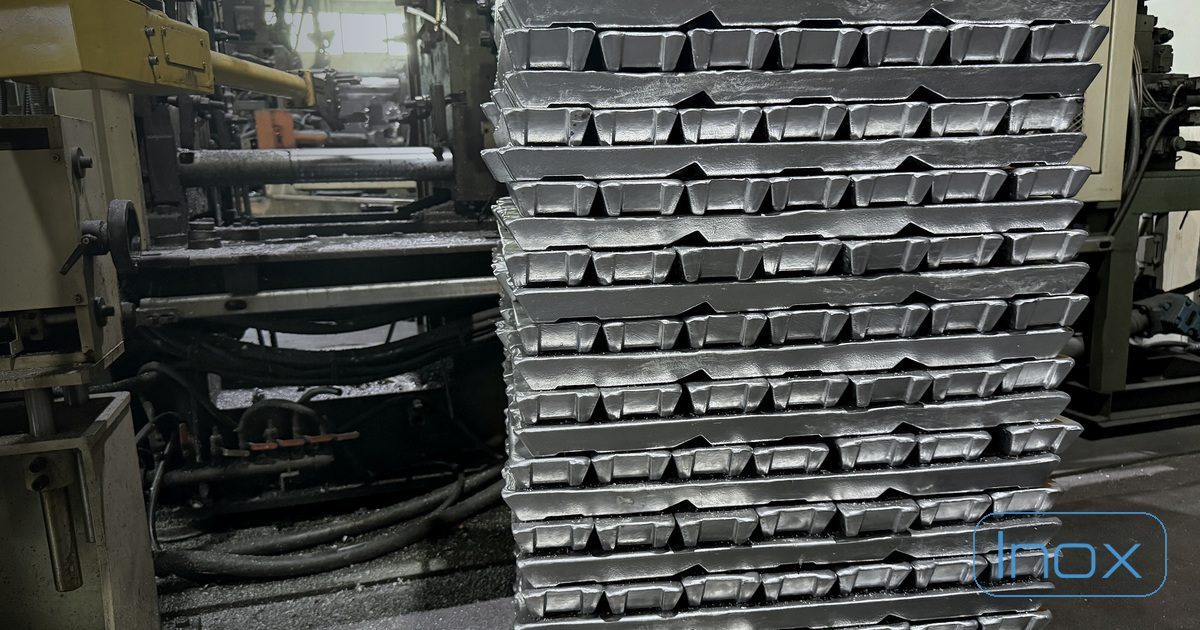
Aluminum die casting injects molten aluminum alloy under high pressure into a hardened steel die to make light, stiff, thermally conductive metal parts at production volume. It suits housings, brackets, heat sinks and structural components that must be lighter than steel, shed heat, or survive outdoors. Inox Die Cast runs it factory-direct in Dongguan — A380, ADC12 and A413 families, cold chamber, from 1,000 pieces, with tooling, machining and finishing under one roof.
At a glance
- Light, stiff and thermally conductive — the default metal for housings
- A380, ADC12 and A413 families run on our cold chamber lines
- Controlled from ingot certificate to final measurement, verified by XRF and CMM
- Typical programs: enclosures, heat sinks, brackets, EV, telecom and automotive parts
What Aluminum Does Well in a Die Cast Part
Aluminum's strength-to-weight ratio is the headline. A cast aluminum bracket carries structural load at a fraction of the mass of steel, which is why the material dominates automotive mounts, motor housings and anything a person has to lift or a vehicle has to carry. In electric vehicles, where every kilogram of structure costs range, that ratio is not a nicety — it is the reason the part is cast rather than fabricated.
The second act is thermal behavior. Aluminum conducts heat well enough that a casting can be the heat sink — LED fixtures, motor controllers, telecom enclosures and power-conversion housings routinely cast the cooling fins straight into the part, removing an assembly step and a thermal interface. A bolted-on sink adds paste, bolt tension and an interface that degrades over thermal cycles; a cast-in fin field does not.
Aluminum also holds its properties outdoors. With the right alloy and finish, castings resist corrosion in weather-exposed and washdown environments, which keeps it on the shortlist for infrastructure, appliance and industrial-equipment programs. The as-cast surface off a well-polished die also takes paint, powder coat and most conversion coatings with little preparation, which quietly removes cost downstream.
Pressure-tightness is where aluminum casting earns or loses a program. Housings that hold fluid, gas or an ingress rating depend on sound metal in the sealing zones, and that soundness is decided by gate position, wall transitions and how the thick sections are fed — not by inspection after the fact. Designing the pressure boundary with the caster, before steel is cut, is the difference between a part that seals first time and one that leaks through porosity nobody can machine out.
The trade-offs are real. Aluminum runs in cold-chamber machines with longer cycle times than zinc, tooling sees more thermal stress and shorter life than a zinc die, and very thin cosmetic walls ask for careful design. That is exactly the conversation our casting engineers have with you before steel is cut — factory-direct means those constraints shape the design early, when changing them is cheap rather than after a tool exists.
How Aluminum Castings Are Controlled Here
Alloy ingots arrive with material certificates and are checked at incoming inspection, and composition can be verified by XRF against the certificate rather than taken on trust. Melt temperature, injection parameters and cooling are monitored in-process at the machine, and castings are inspected against the control plan agreed at the tooling review — critical dimensions, surface zones and any feature your drawing flags.
Because the mold shop is in the same building, cavity wear and dimensional drift get corrected at the source rather than negotiated across a supplier boundary. When a dimension starts to walk, the tool comes off the machine, gets corrected in the room next door, and goes back — a loop that takes days in a vertically integrated plant and weeks when the tool lives in someone else's shop.
Dimensional verification runs on coordinate measuring equipment against the datums agreed with you, with gauge methods matched to feature type — CMM for position-critical geometry, functional gauges for production-rate checks. Where a part carries a pressure or ingress requirement, leak or pressure testing is built into the control plan rather than assumed, and the sealing zones are the features the tool is set up to protect.
Metal soundness starts before the shot. Molten aluminum picks up hydrogen and oxide as it sits, and both end up as porosity or inclusions in the casting if the melt is not managed — which is why melt handling, degassing and dross control matter as much to the finished part as the injection profile does. Porosity that lands in a sealing zone becomes a leak; porosity in a conduction path becomes a thermal defect; porosity at a machined face opens up under the tool. Controlling it is cheaper at the furnace than diagnosing it after a tool is cut, and it is one more reason the metal and the mould belong to the same team.
The industry has a common language for this, and we use it. Aluminum casting alloys follow the Aluminum Association designation system (the A360 / A380 / A383 / A413 families and their international equivalents), and North American die casting design and tolerance practice is codified in NADCA's published standards. Referencing those in the DFM review means your engineers and ours are describing the same tolerances and the same features by the same names — not trading adjectives. Certification scope documentation is available on request as part of your supplier evaluation, stated honestly for the entity and scope it actually covers.
Typical Aluminum Programs
Automotive and EV: brackets, mounts, motor and inverter housings, and structural components that trade steel for mass savings while carrying real load. Electronics and telecom: enclosures and radio housings that double as heat sinks, cooled passively outdoors. Industrial equipment: frames, gearbox and pump housings, and machine components that must hold their dimensions over years of service.
Lighting: LED luminaire bodies where the fixture's service life is decided by how well the casting sheds the junction's heat. Appliances: components that live near heat or moisture and still have to look right at consumer volume. Energy and power conversion: charger, inverter and controller housings where the thermal path and the enclosure are the same aluminium part. If your part carries load, sheds heat or lives outdoors, aluminum is usually the first material we model — and if it should not be aluminum, the review says so.
Representative application illustration — not a record of a specific customer program.
Common Aluminum Die Casting Alloys Compared
Alloy selection is confirmed during engineering review against your part's function — this table shows the direction each common alloy pulls:
| Alloy family | Castability & thin walls | Strength character | Thermal & corrosion behavior | Typically chosen for |
|---|---|---|---|---|
| A380-type | Excellent general castability, fills complex geometry | Good all-round mechanical balance | Good thermal conductivity, acceptable corrosion resistance | General housings, brackets, covers — the default starting point |
| ADC12-type | Very good fluidity, friendly to thin sections | Similar balance to A380, widely available in Asia | Comparable thermal performance | High-volume consumer and appliance parts sourced in China |
| A413-type | Outstanding fluidity for intricate, pressure-tight parts | Moderate strength | Good corrosion resistance | Pressure-tight housings, complex thin-wall geometry |
Frequently Asked Questions
Which aluminum alloys do you cast?
Production runs common die casting alloys in the A380, ADC12 and A413 families, confirmed per project during the engineering review. We match the alloy to your part's structural, thermal and finishing needs rather than defaulting to whatever is in the furnace, and material certificates accompany production shipments. If your drawing calls out a specific grade or an international equivalent, we work to that; if it does not, the review recommends one with reasons.
Can aluminum die castings be pressure-tight or leak-tight?
Yes, when the pressure boundary is designed into the casting rather than hoped for. Pressure-tightness comes from sound metal in the sealing zones, which is a function of gate position, wall transitions and how the thick sections are fed — decisions made at the DFM review, not after the tool exists. Where a part carries a leak or ingress requirement, the test is written into the control plan and the sealing surfaces are the features the tool is set up to protect. A419 and A413-type alloys are common choices where pressure-tightness rules the part.
Can aluminum castings be machined and finished in-house?
Yes — that is the point of the factory. Castings move to CNC machining for datum faces, threads and sealing surfaces, then to painting, powder coating, anodising or plating without leaving our quality system. One factory answers for the final part, not three vendors pointing at each other, and the datum relationships between cast and machined features stop depending on how well a second shop fixtured the part.
What surface finishes can aluminum die castings take?
Powder coat is the workhorse for durability and colour; wet paint suits fine cosmetic control; anodising suits some architectural and wear applications, though die-cast aluminium's silicon content changes how it anodises versus wrought aluminium, which we flag at the review. Chromate and other conversion coatings improve corrosion resistance and paint adhesion. The finish is chosen with the alloy and the service environment together, and specialist steps we subcontract are named honestly.
How thin can aluminum walls go?
It depends on the alloy, the flow length and where the wall sits relative to the gate. Rather than quoting a single number that may not survive your geometry, we review the 3D model and tell you which walls are comfortable, which need ribs or gating changes, and which should move to zinc if thinness rules the design. High-fluidity alloys such as A413-type reach thinner sections than a general-purpose A380-type.
How does aluminum die casting compare to CNC machining my part?
Machining pays per part forever; casting pays for a steel die once and then rewards you for the rest of the program. Below the volume that amortises the die, machining from billet genuinely wins, and we will say so. Above it, the piece-price gap on an aluminium housing running through a product's life is usually the largest single cost lever the program has — and the two are not exclusive, since most castings are machined near-net for their critical features anyway.
Is aluminum or zinc cheaper for my part?
For larger structural parts aluminum usually wins on material cost per part; for small, high-volume precision parts zinc's faster cycles and longer tool life can make it cheaper overall. Our aluminum vs zinc comparison walks the decision factor by factor, and the quote will show the numbers for your specific geometry rather than a rule of thumb.
What causes porosity in aluminum die castings, and how is it controlled?
Two sources: gas (hydrogen absorbed by the molten metal, plus air trapped during a turbulent fill) and shrinkage (thick sections that solidify last with nothing left to feed them). Control is upstream, not downstream — melt degassing and dross management for gas, and gating, venting and wall-transition design for both. You cannot machine or inspect porosity out of a part that was designed to trap it, which is why the pressure-tight and load-bearing zones are engineered at the review and the melt is managed at the furnace rather than left to chance.
What is the minimum order for aluminum castings?
Production starts at 1,000 pieces. Tooling is quoted separately and stays in our plant for maintenance — and the tool we build for you is yours. If you are validating a design before committing to volume, tell us; sample and pilot arrangements are part of the normal project flow.
Where to Go Next
Aluminum project review
Test Your Aluminum Direction Against the Real Part
Share the drawing, the loads, the thermal picture and the finish you need. A casting engineer will confirm the alloy direction — or tell you plainly if zinc or machining suits the part better.
Last reviewed August 2026 · Inox Die Cast, Dongguan