Die Casting Manufacturer
Search for a die casting manufacturer and most of what comes back is not one. Trading companies, sourcing agents and brokers dominate the results, all describing a factory floor they do not own and cannot walk you across. The difference matters the first time a tool needs correcting.
Inox Die Cast is the factory. We cast aluminum and zinc in Dongguan, China, in a plant that has been manufacturing since 1997, and we build our own tooling in the same building. This page is about how to tell a manufacturer from a middleman — including the questions to put to us.
What should you look for in a die casting manufacturer?
A real die casting manufacturer owns its machines and tool room, puts an engineer on your drawing before quoting, and releases your tool on request. Inox Die Cast is that manufacturer: aluminum and zinc die casting in a 32,000 m² Dongguan factory operating since 1997, with around 1,000 employees, in-house mould making, CNC machining and surface finishing under one roof. MOQ from 1,000 pieces. We also publish our actual factory cost rates each quarter — something a broker cannot do.
At a glance
- The factory itself — machines, tool room and finishing under one roof since 1997
- Aluminum and zinc, so the metal recommendation follows your part, not our equipment
- Your tool is yours, stored under your name, released on request
- We publish our real factory cost rates each quarter — a broker cannot
What a Real Manufacturer Owns
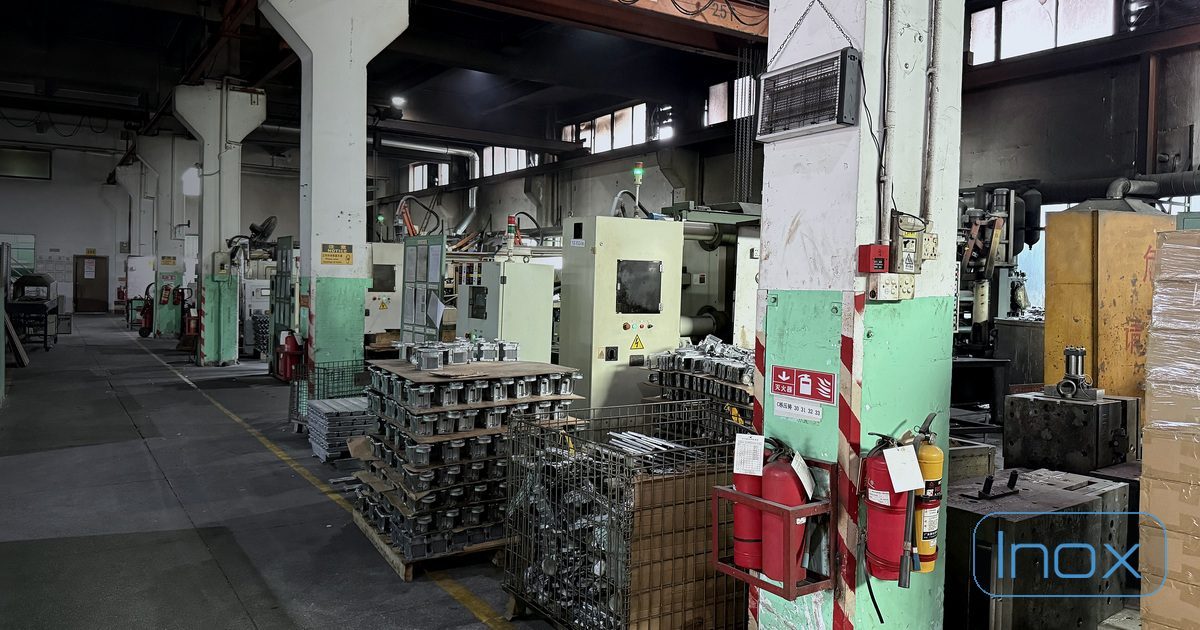
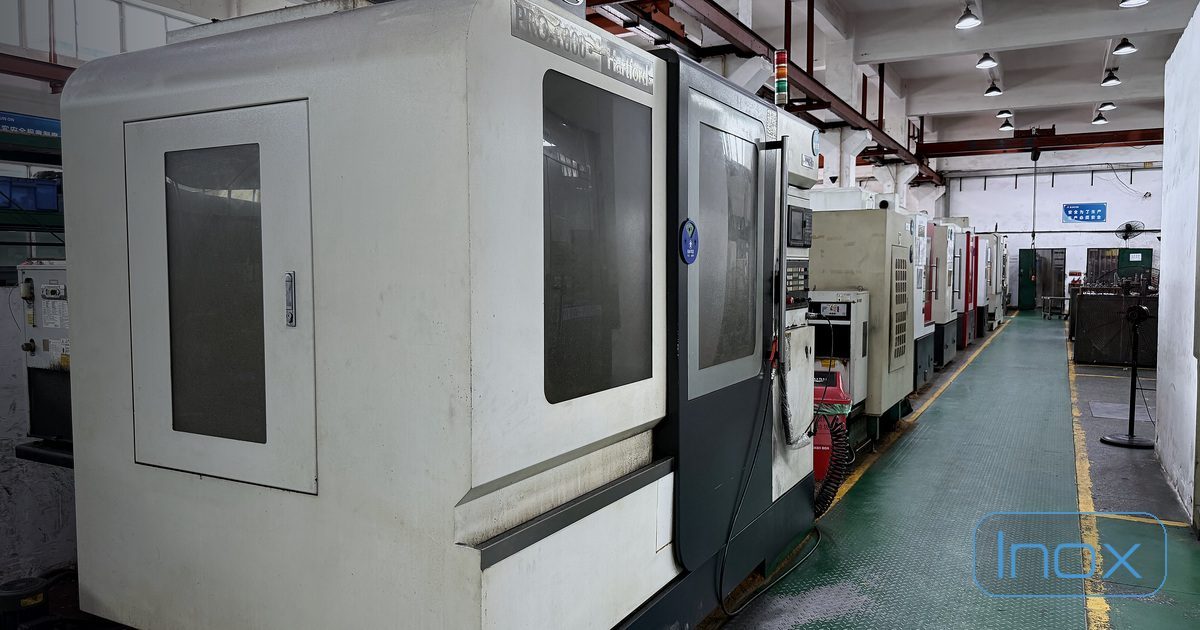
The machines. We run cold-chamber lines for aluminum and hot-chamber lines for zinc, from small tonnages up through the sizes that take structural housings. Owning both families is not a boast — it removes a bias. A supplier with one machine type steers every part toward the metal they run; running both lets the recommendation follow your part honestly, including when the answer is that it could go either way.
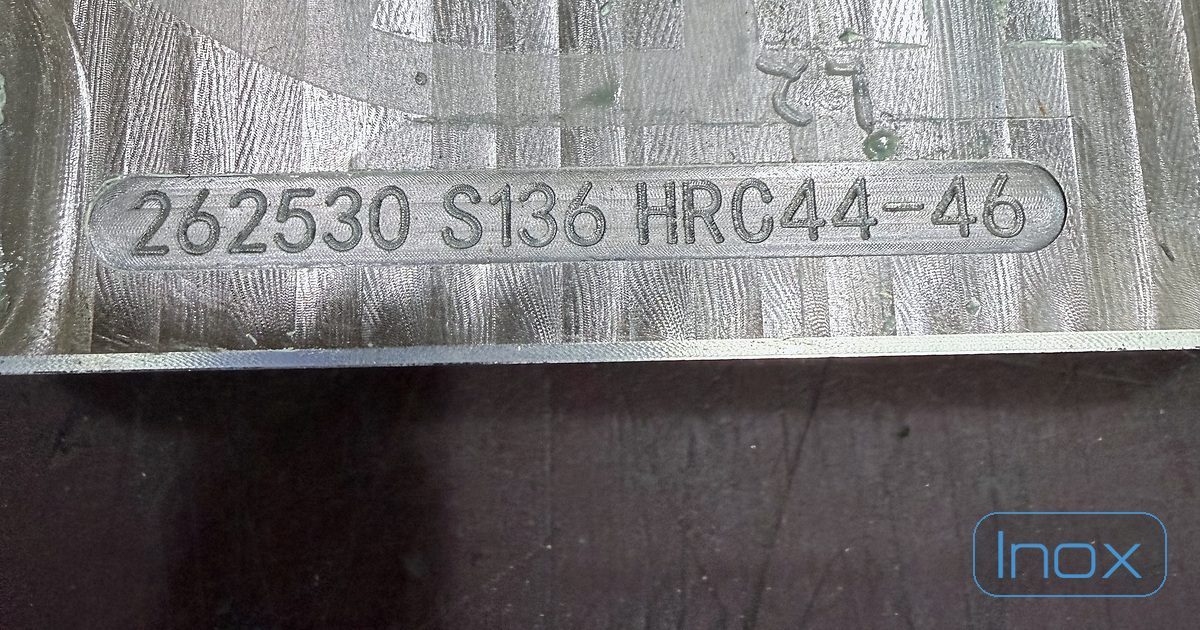
The tool room. Our dies are designed and cut in the same building as the casting cells. That single fact governs how a program behaves for years: when a dimension starts to drift, the tool comes off the machine, gets corrected next door, and goes back in days. When the steel lives in someone else's shop, that loop takes weeks and passes through a middleman whose margin depends on it costing nothing.
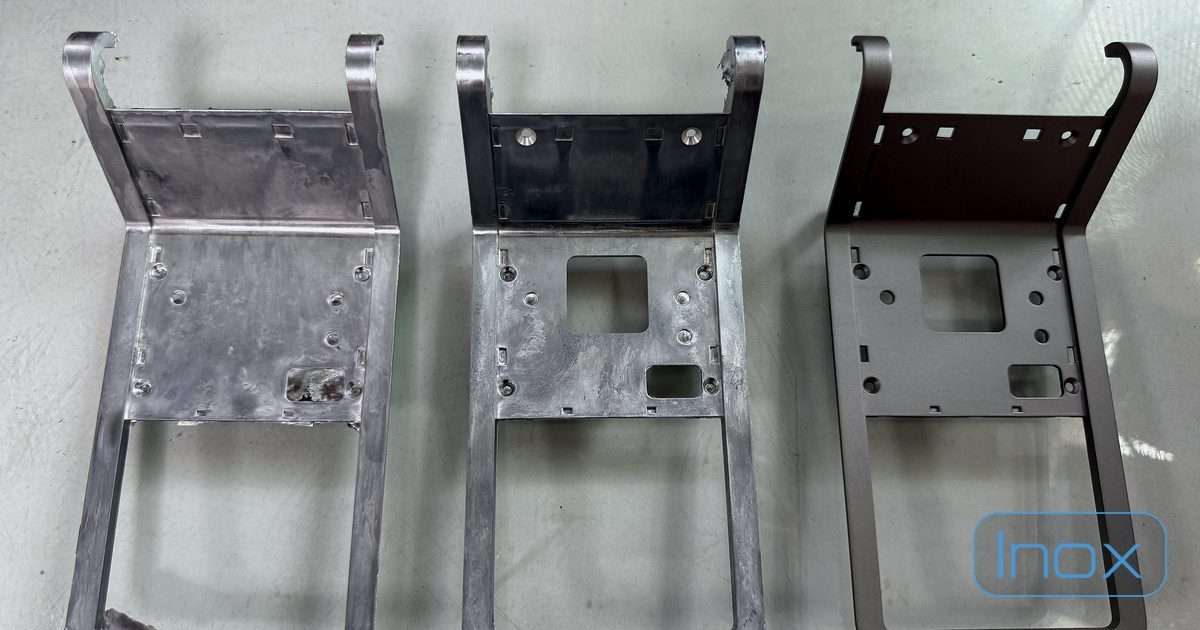
The downstream operations. CNC machining, deburring, powder coating, plating and assembly-adjacent work run under the same quality system and the same routing. One record follows the part from melt to shipped carton, which is why a cosmetic defect can be traced back to the cavity that caused it instead of argued between three vendors.
The records. Material certificates per lot, first-article reports, control plans, tool maintenance history. Ask any supplier for a redacted sample set during evaluation — the ones who can produce it quickly are the ones who actually keep it. We publish more than most: our quarterly cost index puts our real alloy, machine and machining rates on the open web.
The accountability. Factory-direct means no trading company sits between your engineering question and the person who answers it, and no one can blame an unnamed partner when something goes wrong. The tool we build for you is yours, stored under your name, released on request. That last sentence is where a surprising number of supplier relationships quietly fail.
The people. A factory's real capability lives in the tool-room hands who correct a die by eye, the process engineer who knows which machine runs a thin wall best, and the inspector who knows which dimension on your part actually moves. Around 1,000 people work in this plant, and the ones who matter to your program are reachable — that is what factory-direct means in practice, rather than as a slogan.
How to Tell a Manufacturer From a Broker
Ask who cuts the tool steel. A manufacturer names its own tool room and the machines in it, and will show you. A broker names a trusted partner. Neither is a crime — but only one of them can fix your die on a Tuesday.
Ask to speak to the engineer, not the salesperson. Whoever answers your DFM questions is the person actually deciding your part. If every technical answer is relayed and returns a day later, ask yourself who is composing it. Our reviews come back from engineers who stand next to the machine that will run your parts.
Ask what they will refuse to quote. A supplier who claims every part, every alloy, every tolerance and every volume has evaluated none of them. We turn down parts that belong in investment casting, in machining, or in an injection mould — and we say so before the steel is cut rather than after the trials fail. A real capability envelope has edges, and a manufacturer can describe them.
Ask what happens to the tool if you leave. The answer should be immediate and unconditional. Any hesitation, any reference to outstanding commercial matters, is your answer. This is the single most expensive ambiguity in the trade, and it surfaces at exactly the moment you have the least bargaining power left.
Then check the answers against the building. Ask for a live walkthrough on a phone if you cannot travel — a real floor is unmistakable, and a broker cannot borrow one at short notice. Our supplier guides publish the full checklist, including the questions that are hardest for us to answer well.
Finally, ask what they publish. A manufacturer that puts its real alloy prices, machine rates by tonnage and machining rates on the open web is making a claim any buyer can check — and would be caught immediately if the numbers were invented. Marketing copy costs nothing to write; auditable numbers cost something to publish. That asymmetry is the point, and it is why our quarterly cost index exists.
What We Manufacture
Aluminum: housings and enclosures, heat sinks and thermally loaded covers, structural brackets and mounts, gearbox and motor housings, telecom and EV power-electronics parts — anywhere mass, stiffness or heat rules the design. Zinc: connector shells, lock bodies and door hardware, gears and small mechanism parts, plated decorative trim — anywhere thin walls, fine detail or a plating-ready surface rules it.
Industries we serve regularly: automotive and EV, consumer electronics, robotics and automation, LED lighting, medical equipment, industrial equipment, appliances and telecom. Parts described here are representative of our work rather than a customer list — we publish no customer names or program figures without permission.
Representative application illustration — not a record of a specific customer program.
The Floor and the Parts
Real photographs from our plant and real parts we have cast and machined. Representative of the work — not records of specific customer programs, and no volume or savings figures are claimed.
Manufacturer, Broker or Platform — What You Actually Get
Three routes turn up in the same search results. They behave very differently once a program is running:
| What matters | Factory-direct manufacturer | Trading company / broker | Online quoting platform |
|---|---|---|---|
| Who owns the machines | The company you are talking to | A workshop you never see | A network of subcontractors |
| Who answers DFM questions | The engineer who will run your part | Relayed from an unnamed party | Automated, then a coordinator |
| Tool correction loop | Days — the tool room is in the building | Weeks, through a middleman | Depends which shop got the job |
| Tool ownership and release | Yours, released on request | Often conditional in the contract | Varies by platform terms |
| Traceability | One record, melt to carton | Fragmented across parties | Per-shop, rarely unified |
| Where margin sits | One margin, in the factory | Two or more, stacked | Platform fee plus shop margin |
| Best suited to | Production programs with a life ahead of them | Buyers who want one contact for many processes | Prototypes and low volumes, fast |
Frequently Asked Questions
Are you a die casting manufacturer or a trading company?
A manufacturer. Inox Die Cast is the die casting channel of SunOn Industrial Group, which has manufactured in Dongguan since 1997 — a 32,000 m² plant with around 1,000 employees, its own tool room, casting cells, CNC machining and finishing lines. Inox is the Hong Kong-registered company that faces customers; the factory floor behind it is the group's own. We state that structure plainly because suppliers who blur their identity create exactly the sourcing risk our own guides warn buyers about.
What is your minimum order quantity?
Production starts at 1,000 pieces. Tooling is quoted separately and stays in our plant for maintenance — and the tool built for you is yours. If you are validating a design before committing to volume, say so in the RFQ; bridge options such as machined samples or a single-cavity tool that later scales are part of the normal project flow.
Which metals and alloys do you cast?
Aluminum and zinc. On the aluminum side, A380, ADC12, A356.2, LM-6 and EN AC-44300 families run on our cold-chamber lines; on the zinc side, Zamak 3, Zamak 5 and ZA-8 run hot chamber. We do not cast magnesium, steel or copper alloys, and we do not do investment casting or sand casting — when your part belongs in one of those, the review says so rather than taking the order.
Do you own the tooling I pay for?
No — you do. A tool built for your program belongs to you, is stored under your name, and is released on request without conditions. We put that in writing because the alternative is the most common way a die casting relationship traps a buyer, and because our own China sourcing guide tells buyers to demand exactly this from every supplier they evaluate, including us.
How do I get a quote, and what do you need?
Send a 3D model (STEP preferred) or a dimensioned drawing to info@inoxdiecast.com, with the expected annual volume, the material direction if you have one, and any finish or critical-feature requirements. An engineer reviews the casting route and comes back with questions or a quotation. You will hear which walls will fill, where the parting line wants to run, and which features should be machined rather than cast.
Why publish your own cost rates?
Because buyers who understand the cost structure design better parts and negotiate better programs, and because almost no manufacturer will. Our quarterly cost index publishes real figures from this floor — alloy prices per kg, machine rates per shot by clamping tonnage, CNC rates per hour — so you can sanity-check any quote, ours included. It costs us a little edge on secrecy and buys the kind of trust a marketing page cannot.
Where to Go Next
Talk to the factory
Put the Questions on This Page to Us
Ask who cuts the steel, ask to speak to the engineer, ask when you would get your tool back. Then send the drawing — the review comes back from the people who will actually build it.
Last reviewed August 2026 · Inox Die Cast, Dongguan