The Person Behind the Factory
This site promises, in several places, that no trading company sits between your engineering question and the person who answers it. That promise is worth very little unless the person is named.
So here he is, with the history a buyer can verify and the failures kept in.
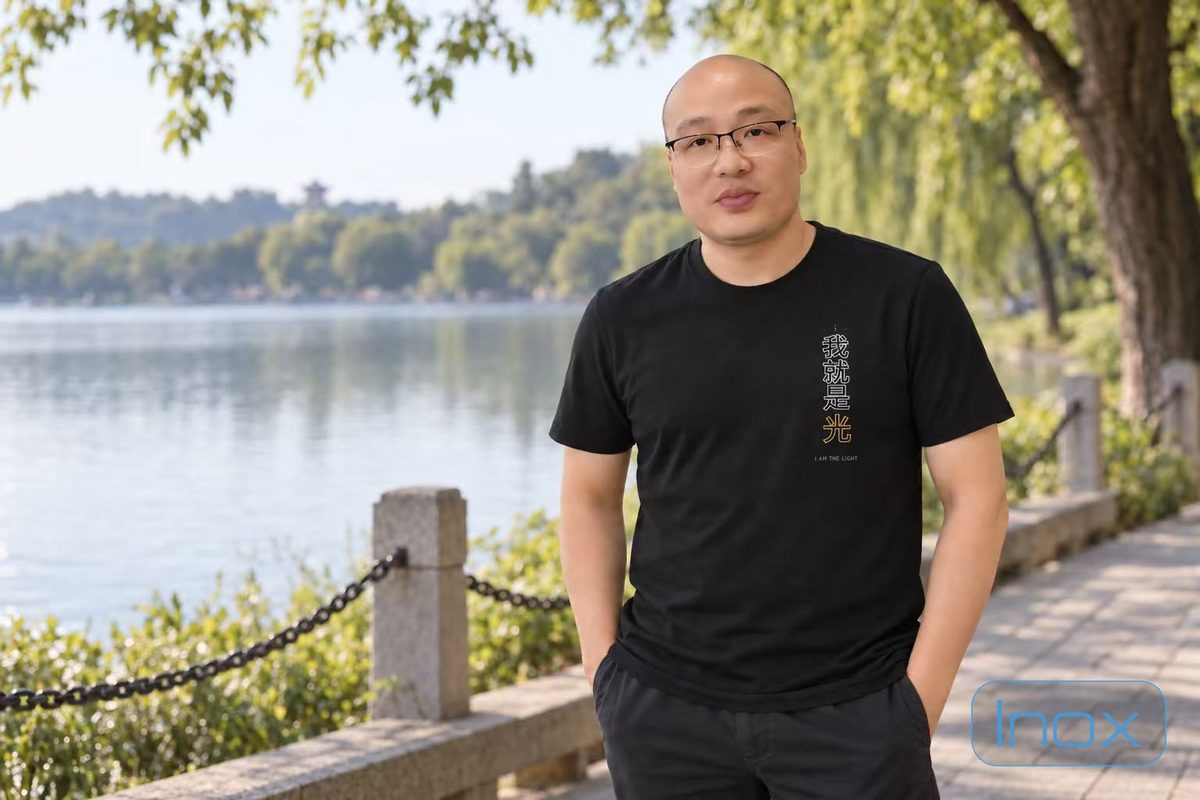
Who runs Inox Die Cast?
Mountain Xie, a hardware engineer who started on a Shenzhen factory floor in 1996 building heating cores for hair dryers, then spent twelve years as the buyer — inside Termozeta, an Italian appliance brand that owns no factories and has every product made under contract. He has been a partner in the SunOn manufacturing group since 2013. Every company and role named on this page can be checked. So can the two businesses he ran into the ground.
At a glance
- Twelve years as the customer — inside an Italian brand that outsources every product it sells
- On a factory floor since 1996 — heating cores for hair dryers, 600 yuan a month
- Supplier audits and line troubleshooting for a German-owned manufacturer in Shenzhen
- Partner in SunOn since 2013; founded Inox Appliances (Hong Kong) the same year
- Two failed businesses and one product nobody bought — all on this page
Polished Words Do Not Solve Problems
That sentence is not a slogan written for this website. It is how the person who runs this business describes his own working style, and friends gave him a nickname for it long before there was a factory to run: the conversation killer. He says the thing that ends the discussion — the real problem — before he has considered how it will land.
In most industries that is a flaw. In manufacturing it is the whole job. A buyer does not need to be agreed with. A buyer needs someone who has seen the problem before and will say so while the tooling can still be changed.
Everything else on this site comes from that disposition: the page that tells you when die casting is the wrong process for your part, the quarterly index that publishes our real factory rates, the case studies that open with our own reject rates. None of that is a marketing decision. It is a personality, and it is worth knowing whose.
Thirty yuan. In 1996 he left technical college in Guangzhou for a job in Shenzhen with thirty yuan in his pocket — not enough to finish the journey. He borrowed thirty more from a classmate in Dongguan to keep going. His new boss advanced sixty for the work uniform. He could not afford a sleeping mat or a washbasin, so a roommate in the dormitory pressed another thirty into his hand.
The job paid six hundred yuan a month with room and board. The work was heating-core assemblies for hair dryers: print the drawing, paste it to the mica sheet, saw the shape out by hand, then build the winding to the voltage and safety standard of whichever country the product was going to. That is where the habit of reading a drawing before quoting on it was formed — on the bench, one part at a time, for export markets whose standards were not negotiable.
Twelve Years on Your Side of the Table
From 2005 he spent twelve years with Termozeta — and the important thing about Termozeta is what it is not. It is an Italian appliance brand that owns no factories. Every product it sells is made under contract by someone else. Running its China side meant specifying the parts, choosing the factories, auditing them, arguing with them, and carrying programs from drawing to shipment with no plant of his own to fall back on.
That is the same job as the person reading this page. Twelve years of sending drawings to Chinese suppliers and living with what came back. Twelve years of being told a tolerance was fine and finding out at first article that it was not; of quotations with a line item nobody would explain; of a tool that needed correcting and a supplier who took three weeks to admit it. Every argument this site makes about what a buyer should ask a factory was learned from the asking end, not invented at the answering end.
It also explains the shape of this business. He did not start as a factory owner who later discovered customers. He spent over a decade as a customer and then went and bought into the factory — because the thing that kept going wrong was never the casting, it was the distance between the person who needed the part and the people who made it.
Before that, from 2003, he worked at Severin, a German-owned appliance manufacturer in Shenzhen, beginning in supplier audits and production-line troubleshooting before moving into product development and project management. That is where the audit discipline came from; Termozeta is where it got twelve years of use. The supplier selection guide published on this site is that checklist, written by someone who spent his career on the side of the table that needs it.
In 2017, when Termozeta restructured its China presence, he and a colleague founded YinFeng Technology Consulting in Shenzhen to carry that work forward. The relationship outlasted the employment, which in this trade is its own kind of reference.
Two Failures, and a Product Nobody Bought
In 2011 he co-founded Bohan Hardware in Dongguan — metal stamping, chosen because the process was simple and the equipment outlay modest. A low barrier to entry. They had projects, they had the skills, they had friends in the business. They lost money for a year and closed it.
A second venture, Ledor, ended differently and worse: a disagreement about how the business should be run, with the key people and resources increasingly on the other side of it. He left.
Then, after joining SunOn, his first product was a milk frother. A transparent Tritan jug so a customer could watch the foam form; a square body instead of the usual round one, on the theory that flat walls would disturb the flow and improve aeration. More than a thousand samples drew attention at the shows. The orders did not follow. He calls it the easiest mistake an engineer makes — designing the thing that is interesting to build rather than the thing the market was asking for.
None of that is here to seem humble. It is here because a supplier who has only ever succeeded has either had a short career or is editing. The most useful things he knows about getting a product into production were paid for with his own money, and a buyer is entitled to know which lessons were bought and which were only read about.
Representative application illustration — not a record of a specific customer program.
How the Companies Fit Together
Buyers who look us up find more than one name. Here is the structure, plainly:
| Entity | What it is | His role |
|---|---|---|
| SunOn Industrial Group · Dongguan | The manufacturing group — 32,000 m² plant, tool room, casting cells, machining and finishing. Manufacturing since 1997. | Partner since December 2013 |
| Inox Appliances Limited · Hong Kong | The customer-facing company, founded because the customers were all overseas. | Founder, September 2013 |
| inoxdiecast.com | This group's die casting channel. Die casting only — the group runs other processes, and they are not sold here. | The site you are reading |
Frequently Asked Questions
Why does a die casting factory have a page about one person?
Because the thing this site asks you to believe is accountability, and accountability without a name is a slogan. Plenty of suppliers promise that your engineering question reaches a real engineer. Far fewer will tell you which engineer, what he has failed at, and where to check the record.
Why does it matter that he worked for a brand rather than a factory?
Because Termozeta owns no factories. Everything it sells is made under contract, which meant twelve years of doing exactly what you are doing now — sending drawings to Chinese suppliers, judging which answers to believe, and owning the outcome when a program went wrong. Most factory owners have never been on that side of it. The arguments this site makes about what to ask a supplier were learned from asking, not from answering.
Can any of this be verified?
That is the point of naming it. Severin and Termozeta are real companies with public histories. SunOn Industrial Group and Inox Appliances Limited are registered entities in Dongguan and Hong Kong. The failed ventures are named too, which is the part nobody fabricates. If something here does not check out, we would rather hear it from you than have you quietly decide not to reply.
Does the founder actually see my project?
Not every drawing, and claiming otherwise would be the kind of thing this page exists to avoid — a plant this size runs on its engineers, not on one person. What he does own is the standard: what gets quoted, what gets refused, and what gets said when a program is in trouble. If a program here goes badly and you want it escalated, there is a name to escalate to.
Is Inox Die Cast a trading company?
No. Inox Appliances Limited is a Hong Kong company, and Hong Kong registration is exactly what buyers have learned to be suspicious of, because that is how many trading companies are structured. The difference is what sits behind it: a 32,000 m² plant in Dongguan that this company is part of, not a supplier list. The table above sets out the relationship, and you are welcome to ask for a live walkthrough of the floor before you commit a tool to it.
Why publish the factory's real cost data?
Because someone who spent years auditing suppliers knows what a buyer cannot see, and knows that the information gap is where most of the mistrust in this trade comes from. Publishing the alloy prices, machine rates and machining rates removes the part of a quotation that normally has to be taken on faith. It also means we can be caught, which is what makes it worth anything.
Where to Go Next
Ask the hard question
Send the Drawing — and the Doubt
If something in a quotation does not add up, ask about it. A direct answer is the one part of this business that has never needed a machine.
Last reviewed September 2026 · Inox Die Cast, Dongguan