Die Casting vs Injection Molding
These processes get confused because the machines look alike and the vocabulary overlaps — molds, gates, ejector pins, shot size. The difference is what goes into the mold, and almost every other consequence flows from that: what the part can do, what the tool costs, how long it lasts, and what each part costs at volume.
There are really two comparisons hiding in one search. Die casting versus plastic injection molding is a choice between metal and plastic. Die casting versus metal injection molding is a choice between two ways of making a metal part. This page takes them in turn. Our group runs plastic injection molding as well as die casting, so we have no reason to steer you to either — the part should decide.
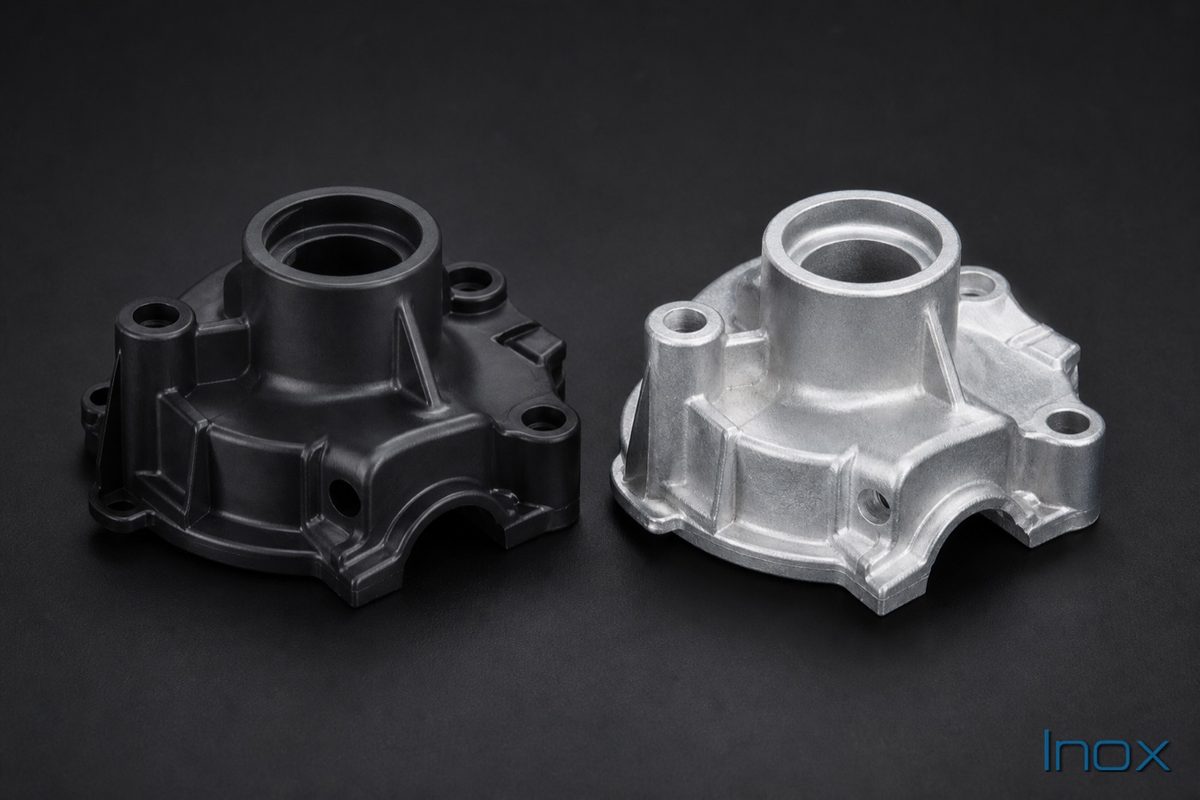
What is the difference between die casting and injection molding?
Both inject material into a steel mold at pressure, but die casting injects molten metal — aluminum, zinc or magnesium — while plastic injection molding injects molten polymer, and metal injection molding (MIM) injects metal powder in a binder that is later sintered. Die casting suits strong, stiff, heat-conducting metal parts; plastic molding suits lighter, cheaper, insulating parts; MIM suits small, intricate steel parts. The material your part needs usually decides it.
At a glance
- Die casting injects molten metal; injection molding injects polymer
- Metal wins on strength, stiffness, heat and shielding; plastic on weight and price
- MIM makes small, intricate steel parts; die casting larger aluminum and zinc ones
- Our group runs both die casting and plastic molding — the part decides
Same Machine Idea, Different Material
A die casting machine and an injection molding machine share a skeleton: a clamp holds two halves of a steel tool shut, material is forced in through gates, it solidifies, the tool opens and ejector pins push the part out. Cycle times are measured in seconds and a single tool can make hundreds of thousands of parts.
The difference starts with temperature. Plastic resins are molded at roughly 200 to 300 °C; aluminum is cast at around 650 to 700 °C. A die casting die lives through a thermal shock on every shot that a plastic mold never sees, which is why die casting tools are made from hot-work tool steels and wear out sooner. That gap in tool life is one of the main reasons die casting tooling costs more than a plastic mold of the same size.
Then comes what the part can do. A die cast aluminum or zinc part is stiff, strong, conducts heat, shields electromagnetic interference, survives temperatures that soften plastic, and takes plating and powder coat well. A molded plastic part is lighter, cheaper per part, insulates electrically, can be colored through, and can include snap fits and living hinges that metal cannot.
So the first question is not which process is better. It is whether the part needs to be metal. If it carries load near heat, sinks heat from electronics, needs EMI shielding, or has to feel solid in the hand, it is probably a casting. If it is an enclosure, a cover or a clip with no such demands, it is probably a molding, and paying for metal would be waste.
Where Each Process Wins
Plastic injection molding wins on unit cost and weight for parts that do not need metal's properties. Resin is cheap per part, cycles are fast, multi-cavity molds are routine, and colors, textures and over-molding come almost free. It also allows design features — snap fits, thin flexible sections, living hinges — that metal parts cannot provide.
Die casting wins wherever the part's job needs metal. Housings that must carry heat away from power electronics, brackets that take sustained load, enclosures that must shield EMI, parts near engines or motors, and products where a solid metal feel is part of the brand. It also wins when plastic would need so much ribbing and wall to reach stiffness that the part grows bulky; a thinner metal wall often does the same job in less space.
Metal injection molding is the third option, and the one most often confused with die casting. MIM mixes fine metal powder — usually steel or stainless — with a polymer binder, molds it like plastic, then removes the binder and sinters the part in a furnace, where it shrinks substantially to final size. The result is a small, intricate, high-strength steel part with fine detail.
MIM and die casting rarely compete for the same part. MIM is for small parts — typically a few grams to a few tens of grams — in steels and stainless that die casting cannot run at all. Die casting is for larger parts in aluminum, zinc and magnesium, where MIM's furnace step and powder cost would make it uneconomic. Where they overlap, on small precise parts, the deciding question is usually the alloy: if the part must be steel, it is MIM or machining; if zinc will do, zinc die casting is usually far cheaper and holds fine detail.
A practical boundary case is plastic-to-metal conversion: a molded part that keeps cracking, creeping or running hot is redesigned as a casting. That is a legitimate move, but only when the part's failure is something metal solves. Converting for perceived quality alone usually adds cost without fixing anything.
Typical Parts for Each
Die casting: heat sink housings for LED and power electronics, motor and gearbox housings, structural brackets, connector shells and lock hardware in zinc, appliance and telecom chassis, handles and trim that must feel like metal.
Plastic injection molding: covers, bezels and enclosures without thermal or shielding demands, clips and fasteners, consumer product housings, medical disposables, anything with snap fits or living hinges.
Metal injection molding: small steel and stainless parts with fine detail — firearm components, watch and phone hardware, surgical instrument parts, small gears and latches.
Representative application illustration — not a record of a specific customer program.
Three Processes Side by Side
Qualitative directions — every row is settled against your actual part at the engineering review:
| Dimension | Die casting | Plastic injection molding | Metal injection molding (MIM) |
|---|---|---|---|
| Material | Aluminum, zinc, magnesium | Thermoplastics | Steels, stainless, some other metals |
| Part size | Small to large housings | Small to large | Small — grams to tens of grams |
| Strength, stiffness, heat | High | Low to moderate | Very high |
| Heat conduction / EMI shielding | Yes | No (without additives or coatings) | Yes |
| Tooling cost | High — hot-work steel, thermal wear | Moderate — longest tool life | High — plus sintering development |
| Unit cost at volume | Moderate | Lowest | Higher — powder and furnace step |
| Secondary steps | Often machining and finishing | Often none | Debinding and sintering, sometimes machining |
Frequently Asked Questions
Is die casting more expensive than injection molding?
Usually, for the same part size. Die casting tools face thermal shock on every shot and are built from hot-work steel, so they cost more and wear sooner than plastic molds, and metal costs more per part than resin. But the comparison only matters if plastic can do the job. If the part needs metal's strength, heat conduction or shielding, the cheaper plastic part is the wrong part.
What is the difference between die casting and metal injection molding?
Die casting injects molten aluminum, zinc or magnesium and the part is finished when it leaves the die, apart from trimming and any machining. MIM injects metal powder in a binder, then removes the binder and sinters the part in a furnace. MIM makes small, intricate steel parts; die casting makes larger parts in lighter alloys. They rarely compete for the same part.
Can one tool be used for both die casting and injection molding?
No. A die casting die is built from hot-work tool steel to survive molten metal, with venting, overflows and cooling designed for metal. A plastic mold is designed around resin flow and shrinkage. The geometry of the part may be similar, but the tools are not interchangeable.
When should a plastic part be converted to a die casting?
When it is failing in a way metal fixes: cracking under load, creeping over time, running hot near electronics or motors, or needing EMI shielding. Converting for a premium feel can be justified too, but it should be a deliberate cost decision rather than an assumption that metal is better.
Do you do injection molding?
SunOn Industrial Group, which Inox Die Cast belongs to, runs plastic injection molding as a separate operation. Inox Die Cast itself is the die casting side. If your part belongs in plastic, the review will say so plainly.
Where to Go Next
Process review
Metal or Plastic? Let the Part Decide
Send the part and tell us what it has to survive. If it needs metal, we will show you how it casts; if plastic will do, you will hear that too.
Last reviewed October 2026 · Inox Die Cast, Dongguan